Are drugs real mean of satisfaction?

In the contemporary world, man, as a whole, has reached a high standard of achievement in material progress. Human society, no doubt, is benefiting from the fruits of today’s scientific progress. The rays of this progress have reached far and far and enlightened the darkest areas of the world. Nevertheless, man is not happy and content. Moreover, the world of today is riddled with a large number of problems.

Drug misuse is a massive problem facing the world today. Children are loosing their lives, dreams and futures to drugs; countless homes have been wrecked and drug related crimes are destroying families and ruining the social fabric of communities.

A recent study in UK shows that ‘Parents are more concerned about drugs than weapons’, it says: ‘‘Parents worry more about their children taking drugs than possessing knives or guns, research suggests. Four in 10 parents said drug use is their biggest fear for their youngsters – 10 times as many as those who say they are concerned about their children carrying weapons (4.7 per cent).’’http://www.yorkshireeveningpost.co.uk/news/Parents-more-concerned-about-drugs.6464884.jp

Governments are spending a large amount in tackling drug misuse and fighting the war on drugs. But, governments are not seems to be winning this fighting, as supposed, and worryingly, the number of people turning to drugs is dramatically rising. The fact is that the demand for illicit drugs has risen and is rising sharply. More and more people than ever before are taking drugs. The question arises why are people increasingly turning to drugs?

According to various drug related studies people normally take up drugs for one of the following reasons: deprivation and unemployment, emotional and physical abuse, trauma, pain, stress, boredom, peer pressure, curiosity, wanting to experiment with something new, addiction and the easy availability and cheap price of certain drugs. And the current economic depression is another contributory factor for more people to turn to drugs and gambling and thus lead to more crimes in the society.

Whilst the above explanations may all be valid, what they illustrate is that many people use drugs because there is a void in their lives. A person encountering problems, stress, trauma or even abuse in life turns to drugs as a type of escape boat, something to remove one’s anxieties and depression. Drugs provide a kind of temporary life raft, a relaxing and pleasurable ‘trip’ to escape the harsh realities of life. In times of need, a person may turn to drugs as a remedy for one’s ailments.

But in reality, all the above reasons in favour of drugs are like a mirage in a desert, as the thirsty one thinks it be water until, when he comes up to it, he finds it to be nothing. The drug addicted people also think that these drugs could quench their thirst, but these drugs are no more than a mirage in a desert.

If we ponder over the problem, we find that the man is lacking trust and faith in God, and when there is no trust in God then man tries to relax himself through the drugs. Unfortunately, the reality is, even from these drugs, man does not find himself relaxed and content. What is the way to be happy and to find satisfaction and lasting peace of mind?

The Almighty God says: “Aye! It is in the remembrance of Allah that hearts can find comfort.” O you the restless society, o you the restless world know for certain that true tranquillity, true peace of mind is in the remembrance of God and is in the relationship with God.

This is a great and extremely natural truth. The more the people of the world gain the paltry goods of this life, the greater becomes the hunger and the consequent burning of their hearts. But as for those who seek God, the more they turn to Him, the greater is their peace of mind. This shows that search after God is the innermost yearning of human nature and the real goal of man’s life, and that when that goal is attained man begins to enjoy perfect peace of mind, for then he rests, as it were, in the very lap of the All-Knowing and All-Powerful God, Maker and Controller of the universe. Would to God the people of the world realize this great secret of happiness!

Drug addiction does not only ruin life of someone but it also ruins children, families and societies. And moreover it becomes a social and international crime, which puts all the society at unrest. Drugs create hatred and enmity amongst people, causing murder, violence, immoral behaviour etc. and finally leading a man away from the Creator.

Drugs cause mental and physical damage, are the cause of many crimes, and lead to addiction and serious health issues. Instead it is instructed to establish a close relationship with God, and to ask His mercy in distress, seek His help to fulfill every desire and look for inspiration from Him alone. God, the Creator of the universe and everything in it, can surely remove all the depressions, miseries and sufferings. May God save the world from the threat of drug’s misuse and may the world become a place of lasting peace. Amen

Posted in www.ahmadija.org.mt | Leave a comment

HUMAN RIGHTS AND ISLAM

Assalamo Alaikum wa rahmatullahi wa barakatohu which say: ‘May you all live in peace, may you go on enjoying the mercy and infinite blessings of God Almighty.’

These greetings, which we exchange daily with each other, and which we are enjoined by the Holy Prophet Muhammad (peace and blessings of Allah be upon him) to extend to all Muslims, friends and strangers, contain the very essence of the teachings of Islam, which means nothing but the unqualified submission to the Will of God Almighty and peace for all.

Since times immemorial, man has, at the hand of man, been suffering all kinds of miseries and cruelties; his rights have been violated; he has become alienated from his own species.

Today, most of the evils humanity is confronted with are rooted in the violation and deprivation of human rights. No doubt in the dark corridors of history, we hear echoes reverberating protest against human sufferings and exploitation. No doubt in these very corridors sometimes we also see a chink of light of hope for man in the form of Charters, such as Magna Carta, English Petition of Rights, The Virginian Declaration of Rights, American Bill of Rights and so on and so forth. However, when we critically look at these various documents, we are a bit disappointed. We soon realise that they are not after all what humanity expected them to be. They disappoint not so much in what they say, but in what they leave out to say. They give no redeeming hope to man, or offer any source of perennial light for humanity. They, if not in their letter, at least in their spirit and the way in which they were composed, and have been understood, interpreted and applied, epitomise the Orwellian formula:

‘All are equal but some are more equal than others.’

(Adapted from Animal Form – Penguin Classic, by G. Orwell).

As far as the U.N.O’s Charter of Human Rights is concerned, by and large its value remains academic, in that it is a testimony to a very important historical fact; namely, that over the centuries man’s conception of human rights has gradually evolved to reach a stage where it could be documented in such detail as we find in the U.N. Charter and subsequent Declarations.

When we make a comparative study of Human Rights as prescribed by Islam and those found elsewhere, we are at once impressed by three facts:

Firstly, for Islam the question of Human Rights is part of a much wider question of rights of all creation of God, and for that matter the Rights of the Creator Himself. We cannot separate the question of Human Rights from the question of, say, the rights of animals. If we do so the very rationale of Human Rights would collapse.

Secondly, all kinds of rights as prescribed by Islam derive their significance from the moral and spiritual values of Islam in which they are firmly embedded and on which they are founded. These values are, in turn, based on the concept of the unity of God. No other view of rights has ever been able to provide such secure foundations for them. The assumptions and the principles on which secular doctrines base the concept of rights are, on examination, found to be either outright untenable or inadequate and flimsy.


Thirdly, Islam deals with all kinds of rights, including human rights, in such profound depth and in such wide range that no secular view has ever been able to cover them in such depth and in such range.

To expand on, and elaborate all these points, doing full justice to the subject is not possible in the short time available. So I shall be selective and brief in my humble presentation, hoping that I shall, in this short time, be able to do at least some justice to the subject.

In Surah Rahman (Ch. 55) verse 10 of the Holy Quran, God Almighty says:

‘Weigh all things with justice and fall not short of the measure.’

That is, God has set up the measure and balance so that order and harmony pervade and govern the entire Universe. It is the right of every creation of God that its order and balance should at no cost be disturbed. We are enjoined to weigh all things with justice and not to fall short of the measure.

Thus ‘Justice’ – the very principle and basis of all rights – is inexorably joined with measure, balance and order of the Universe. The fabric of rights surrounds the entire Universe and is bound up with God-created order, harmony and measure of the Universe; Violate rights in one area and you not only violate rights in other areas but also disturb the balance and order of the Universe.

As there is an all-comprehensive harmony in the whole Universe, man, the crown and the object of creation, is enjoined to maintain a just balance in everything and treat with equity and justice his fellow beings, giving everyone his due, and to avoid extremes and discharge his duties to his Creator and His creations.

Thus, the Islamic view of human rights is pivoted on the overall view of justice, harmony and order in the Universe. This is one foundation on which the entire edifice of Human Rights is built. The other foundation of this edifice is the moral and spiritual values of Islam.

The field of Islamic moral and spiritual values is vast. All other Islamic values, civic, political, social and economic, are determined by these.

However, this fabric of values is based on certain fundamental principles.

Once we grasp these principles we can have an idea of Islamic values. However, within the time available, I can just discuss two of them here.

The first principle can be derived from the following verse of the Holy Quran:

‘O mankind, We have created you from a

male and a female; and We have made you into tribes

and sub-tribes that you may recognise one another.

Verily, the most honourable among you,

in the sight of Allah, is he who is the most

righteous among you. Surely,

Allah is All-knowing, All-Aware.’ (49:14)

The subject we are discussing is vast and the time is short. But before I close I would like to draw your attention to a few excerpts from the writings and recorded sayings of the Promised Messiah, Hadrat Mirza Ghulam Ahmad (Peace be upon him), the Founder of the Ahmadiyya Community in Islam, which beautifully sum up the teachings of Islam regarding the rights and the brotherhood of mankind. He said:

‘A person can be held to be a Muslim when the whole of his being together with all his faculties, physical and spiritual, is devoted to God. This devotion has two aspects. First, that God Almighty should become the object of worship and the true goal and beloved, and that no one should be associated in His worship and in His love. The second, that one’s life should be devoted to the service of His creatures and to sympathise with them and to share their burdens and sorrows. One should suffer pain to bring them comfort, and one should experience grief to bring them consolation.’ (Aeena Kamalat-e-Islam pp. 559-62).

He further said:

‘Be the true well-wishers of every one. There should be nothing inside you except truth and there should be nothing outside you except truth and sympathy for mankind. If you desire that God should be pleased with you in Heaven, become to each other like real brothers. It is our principle to have sympathy for the whole of mankind. If a person sees that fire has broken out in the house of a Hindu neighbour and he does not get up to help in putting it out, I tell you truly he is not of me. If one of my followers sees a Christian being killed and he does not go to his assistance to rescue him, then I tell you quite truly that he is not of us.’                                             (Malfoozat, viii pp 26-27)

We Ahmadiyya Muslims, not only in Mauritius but everywhere in the world today, are striving to promote, support and create the environment where the dignity of all human beings without any discrimination of faith, race, colour, language or culture is respected and as prescribed in Islam their rights honoured and all kinds of injustice, depravation, oppression, exploitation, violence and brutality eradicated from which man suffers today.

Let us pray that with our slogan ‘Love for all Hatred for None’, we as models of true Islam, fulfil our obligations to God Almighty and to humanity.

And our last words are that all Praise belongs to Allah, the Lord of the Worlds!

Note: (If you want to get a copy or read the whole Essay – the summary of which is shown above, please contact: amjmalta@gmail.com OR 79320139)


Posted in www.ahmadija.org.mt | Leave a comment

The Urge for Real Peace

From the Archives:

The world at large is worried about future prospects of world peace.

The pace at which peace is fast disappearing from the world has caused every sane and sensible person to worry. Today, man is riddled with problems that promise a very ominous future for mankind as a whole, and the direction in which things are moving may cause troubles to mankind and may destroy world peace.

Therefore, it is very important to sit down and find a solution to save humanity from the brink of disaster and to spread a message of peace and harmony and of hope for mankind. And to achieve this goal, we should not leave any stone unturned.

Peace is a need of all times and ages. Mankind has always loved peace. Since the beginning of life on this earth, human beings have been struggling to achieve eternal and everlasting peace. So, today, man needs to seriously think about how true peace can be established and how this world can be made a haven of peace.

To bring about peace in the world we must understand the true concepts of justice and equality. The seeds of love, respect and universal brotherhood should be sown. Each other’s sentiments should be honoured and cared for and each other’s rights respected.

Peace requires justice and the rule of law. And if real and long-lasting peace is to be established, then not only justice is required but the strong should treat the weak with equity and in the same manner as one treats one’s dear and beloved ones. Problems cannot be solved with the use of force but through good and just treatment that fosters a feeling of bonding and trust.

The urge for real peace comes from the heart and what comes from the heart is what can be conducive to real peace because it is based on love and warmth.

The idea of universal brotherhood can also foster love, affection and equality. Peace and security cannot be established until people of each race and nation are able to recognise that they are indeed the children of Adam and are, therefore, equal. Different clans and tribes are right to recognise one another. And all mankind is like a family and it can look after the peace and security of each member only if it lives like a close-knit family. Peace and security will prevail when each other’s sentiments are cared for.

As the world draws closer and a global village begins to emerge, there is a need to replace hatred and malice with love, affection and forbearance.

We must be kind, therefore, to our own selves and to our children and generations to come! And we must try to bring about an atmo- sphere of peace, love and respect, so we can pass on something beautiful and valuable to the next generations.

To ensure lasting peace, we must love God because without God there can be no peace. If all human beings live in the love of God, then it will be possible to achieve eternal and everlasting peace. It is my fervent prayer that we all find everlasting peace in this world and in the life to come.

THE TIMES: Wednesday, 17th February 2010

http://www.timesofmalta.com/articles/view/20100217/letters/the-urge-for-real-peace
Posted in www.ahmadija.org.mt | Leave a comment

Flimkien kollox hu possibbli

Meta nħarsu lejn l-istorja tal-umanità nsibu li l-bnedmin dejjem kienu fit-tiftixa tal-paċi li tibqa’ għal dejjem. Il-bnedmin kellhom għatx kbir għall-paċi. Fil-qosor, il-paċi baqgħet maħbuba tan-nies ta’ kull età, f’kull żmien u ta’ kull pajjiż tad-dinja.

Aħna ngħixu f’dinja ta’ kompetizzjoni u ta’ għira. Ngħixu f’dinja fejn inċertezzi li qed jikbru kuljum iħassbuna dwar l-istat ta’ paċi fid-dinja. Nemmen, u jien konvint tassew, li dan huwa messaġġ universali, tkun liema tkun ir-reliġjon, ir-razza, in-nazzjonalità jew il-kulur tiegħek.

Illum il-ġurnata s-suġġett tal-paċi u s-sigurtà huwa importanti daqs kemm kien mijiet u eluf ta’ snin ilu. F’dan iż-żmien meta l-bniedem sar iktar ċiviliżat u rċieva ħafna barkiet ta’ Alla, għandna nkunu l-bnedmin tal-paċi. Imma, sfortunatament naraw li hemm ħafna demm tal-bnedmin li qed jixtered madwar id-dinja. Il-bniedem għandu l-għatx tad-demm ta’ ħuh. Hemm nies li qed joqtlu l-ġirien tagħhom, hemm nies li qed ixerrdu d-demm tan-nies ta’ pajjiżhom. Fil-qosor, hemm nuqqas kbir ta’ rispett u ta’ paċi fid-dinja.

Meta naqraw l-istorja tal-bniedem, naraw li sa mill-bidu tal-ħolqien il-bnedmin fuq l-art, Alla bagħat ħafna għalliema reliġjużi, profeti u messaġġiera Tiegħu għall-gwida tal-umanità. U kull wieħed minnhom li kien mibgħut minn Alla ġab il-messaġġ tal-paċi, tas-sigurtà, tal-armonija u tal-imħabba.

Dawn l-għalliema reliġjużi magħżulin minn Alla, li ntbagħtu mis-sema biex jirriformaw l-umanità u jistabbilixxu għaqda ma’ Alla – il-Ħallieq, dejjem ħadmu u talbu biex jagħmlu d-dinja kenn ta’ paċi u l-bnedmin isiru verament il-bnedmin tal-paċi; l-iktar li jħobbu lil Alla u l-iktar li jixtiequ l-paċi lill-oħrajn.

Il-Kotba Mqaddsa kollha għandhom il-messaġġ ċar tal-paċi u tal-imħabba. Fil-Bibbja Mqaddsa naqraw: “Henjin dawk li jġibu l-paċi, għax huma jissejħu wlied Alla. Henjin dawk li huma ppersegwitati minħabba s-sewwa, għax tagħhom hija s-Saltna tas-Smewwiet. Henjin intom, meta jgħajrukom u jippersegwitawkom u jaqilgħu kull xorta ta’ ħażen u gideb kontra tagħkom minħabba fija.” (San Mattew: 5:9-11)

Fil-Koran imqaddes Alla jgħid: “Alla jmexxi lejn it-toroq tal-paċi u tas-sliem lil dawk li jħabirku biex jogħġbu lilu, u bir-rieda Tiegħu joħroġhom mid-dlamijiet lejn id-dawl u jmexxihom lejn triq is-sewwa.” (5:17)

“Ma hemmx ġid f’ħafna konferenzi tagħhom, ħlief ta’ dak li jamar il-karità, jew l-għemil it-tajjeb, jew il-paċi bejn in-nies. Min jagħmel hekk, bix-xewqa li jogħġob lil Alla, se nagħtuh ħlas mill-kbar.” (4:115)

Dawn il-versi juru biċ-ċar li kemm hu sabiħ li naħdmu għall-paċi bejn in-nies, u nwasslu l-messaġġ ta’ paċi lil kulħadd. Dan huwa għemil tajjeb ħafna u għandu ħlas kbir mingħand Alla. Alla jħobb il-paċi, għalhekk jgħid li se jagħti ħlas kbir lil dawk li jħobbu u jipprattikaw il-paċi bejniethom.

Jekk inħarsu lejn is-sitwazzjoni tad-dinja nsibu li d-dinja għandha l-bżonn tal-paċi, tal-imħabba u tal-ħbiberija. Id-dinja trid it-tmiem tal-gwerer. Minflok il-ħitan tal-mibegħda għandna l-bżonn tal-pontijiet li jgħaqqdu, għandna bżonn li l-paċi tostor il-ħażen u dak kollu mnissel minnu, u għal dan biex isir, in-nies ta’ fidi, ta’ kulur, ta’ razza u ta’ nazzjonalità differenti għandhom jingħaqdu flimkien.

Jiena nemmen li aħna bħala bnedmin, jekk nixtiequ, nistgħu nistabbilixxu l-paċi f’soċjetajiet tagħna kif ukoll fid-dinja kollha. Ejjew naħdmu billejl u binhar sabiex nagħmlu d-dinja kenn ta’ paċi. Nemmen u jien konvint tassew li, flimkien kollox hu possibbli.

[Il-Mument: Il-Ħadd 21 ta’ Novembru 2010]

Posted in www.ahmadija.org.mt | Leave a comment

Churches in Muslim countries

The Times: Saturday, 20th November 2010

Churches, synago gues and mosques are all places of worship where the name of God the creator and lord of the entire universe is oft-commemorated. Thus, they all are very sacred and holy and deserve to be respected and honoured fully, irrespective of the denomination to which they belong.

But, unfortunately, there are some countries that do not allow the building of churches, mosques or other places of worship on their territory. Also, there are some people who are not paying full respect to the places of worship that do not belong to them or which are not the symbols of their religion. However, I believe all places of worship, whatever the religion they belong to, whoever the worshipers, whatever the way they worship God, are sacred and holy and must be respected fully, in every country, in every part of the world and by all people.

I always find it very discomforting reading about sanctions on building places of worship or attacks on such places. I feel a lot of sorrow whenever I read about a place of worship being attacked, damaged, demolished and disrespected. Or about any religious symbol having been dishonoured by the people of other faiths.

I have often been asked a question about a topic I also see many comments and writings on: “Why do Muslim countries not allow the building of churches?” This is a very important and valid question and I will try to shed some light on the matter.

First of all, I would like to say there are many churches in present-day Muslim countries, such as Egypt, Syria, Turkey, Pakistan and Indonesia. This is in line with the freedom of religion that Islam allows. Islam believes in full freedom of faith and rejects any sort of force or violence in matters of religion. The Holy Quran says: “There should be no compulsion in religion’’ (2:257)… “for you is your religion and for me is my religion’’ (109:7).

That is to say, no one has the right to force others into complying with their demands or compelling others to follow their line of thinking. These verses have clearly showed no one has the right to force anyone against his will to believe or to deny any faith or religion. The choice of faith is a personal matter and everyone is allowed to build the place of worship according to his beliefs and he can pray freely.

However, it is right to note that some Muslim countries have gone against this Islamic injunction and prohibited collective worship by non-Muslims.

This is wrong and completely unacceptable. Never did the Prophet Muhammad (peace be on him) forbid the building of a church, nor did he order the demolition of a church. There is not even a single example in his entire life when he ever prohibited the building of a church or he ever gave a permission to destroy or demolish a church.

His entire life is a clear example of the freedom of faith. When he migrated to Medina he signed a Constitution with the people of Medina that everyone will be free in his religious matters and they all will be equal in the eyes of the state.

Once, during the time of the Prophet Muhammad, a Christian delegation from Najran came to Medina to have interfaith dialogues with Muslims. The Prophet Muhammad extended to them warm hospitality and had discussions with them for many days in his mosque in Medina, called Mosque of the Prophet. At one time during the talks, the Christian delegation asked for permission to go out for some time. The Prophet Muhammad asked them: “Why do you want to go out?” and they replied: “It is our prayer time and we would like to go out and pray outside this mosque.’’ The Prophet said: “It is also a house of Allah and is built for the purpose of worship; you may pray and worship in this mosque’’. And he spared them the place in his mosque and went out with his companions so the Christians could pray easily according to their faith and beliefs.

This incident and the teachings of the Quran mentioned above clearly show that not only is building churches permitted in Muslim states but Christians are also free to pray in Muslim mosques. And any action against this clear teaching of religious freedom is unacceptable and is totally against the teachings of Islam.

In the light of these teachings, the Ahmadiyya Muslim Jamaat has opened the doors of its mosques to all, to the people of different faiths, and it always tries to tie the bonds of love, respect and brotherhood, which the world today needs more than ever before in the history of mankind.

http://www.timesofmalta.com/articles/view/20101120/opinion/churches-in-muslim-countries amjmalta@gmail.com
Posted in www.ahmadija.org.mt | Leave a comment

My aim and the desired objective is to serve mankind

The Founder of the Ahmadiyya Muslim Jamaat Hadhrat Mirza Ghulam Ahmad(as) – the Promised Messiah and Imam Mahdi says:

“The principle to which we adhere is that we have kindness at heart for the whole of mankind. If anyone sees the house of a Hindu neighbour on fire and does not come forward to help extinguish the fire, most truly I declare that he does not belong to me. If anyone of my followers, having seen someone attempting to murder a Christian does not endeavour to save him, I most truly declare that he does not belong to us. ……….. I love mankind with the love that a compassionate mother has for her children; even more so.”

“There are only two perfect parts of the faith. One is to love God and the other is to love His Creatures so much that you consider their pain to be your own, and to pray for them.’’

“The purpose of the advent of all prophets (peace be upon them all) is shared by them all, and it is to establish the true and real love of God Almighty and to create a special bond of love amongst mankind and one’s brethren and [to honour their] rights. As long as this is not so, all dealings will be mere rituals.’’

“Remember that, according to me, the circle of those to whom kindness must be shown, is vast. No people or individuals should be excluded. I do not tell you, like the ignorant people of this age, to confine your kindness to Muslims. No! I say that you must be kind to all of Allah’s Creatures, whoever or whatever it may be, be it a Hindu or a Muslim or anyone else. I never like the discourse of such people who seek to confine kindness to their own. I repeatedly admonish you that you should never ever restrict your circle of kindness.’’

“To show compassion and kindness to mankind is a great form of worship and is a potent source of winning the pleasure of God Almighty.’’ He describes his desired objective and says:

“My aim and the desired objective is to serve mankind”.

Posted in www.ahmadija.org.mt | Leave a comment

Poverty and Basic Human Rights

The Gracious God will be Merciful to those who show mercy to others. You show mercy to the dwellers of the earth, and the One in the heavens will have mercy on you.’

Throughout recorded history, philosophers and thinkers have sought to solve the problem of how to establish a balance between the rights and obligations of man. The European Union has dedicated the year 2010 as a year for fighting against poverty.

Poverty, the condition where human beings lack the basic necessities to sustain life, is a pervasive reality in our world. Poverty is generally defined as a situation where individuals lack essential resources to meet not only their material or economic, but also social, physiological and even spiritual needs.

Poverty is increasing all over the world; nearly all the continents are facing this problem and the current economic crises and credit crunch have added fuel to this problem.

When we keenly examine the problems of the world, we find that poverty is a base of many problems. When poverty arises, and rights of poor and needy people are ignored, people start committing crimes to fulfill their needs. Sometimes poverty even forces people on committing suicides, terrorism, killings and thefts etc.

So, it is very important to examine very deeply the reasons of this increasing poverty and to find out the remedies and solutions to this worldwide problem.

To solve this problem the basic principle of justice is required to be practiced in every section of the society. The Islamic concept of absolute justice is all-prevailing and all-pervading. It covers every aspect of Islamic teaching. But that is not all; it goes one step further and attempts to create an attitude whereby the governments and the wealthy are constantly reminded that it is in their own ultimate interest to establish an equitable economic system. They are also constantly exhorted to be on the lookout for the rights of others.

The weak and poor should not be denied their fundamental economic rights such as freedom to choose one’s profession, equal access to opportunities and the basic requirements of life. The lack of this very special attitude has already caused much misery, pain and disorder in the history of human struggle for survival.

There is thus greater emphasis on giving than on taking or keeping. The governments and the wealthy must constantly be on the lookout lest there be a section of society which is deprived of the fundamental human rights to live decently. A truly dedicated state would have felt the need and taken appropriate measures for its fulfilment. Before grief turns into cries and protest and before the need threatens peace and order, the cause of grief must be removed and the need fulfilled.

Among other things, Islam creates an atmosphere where the demand for one’s own rights gives way to regard for the rights of others. The level of consciousness and sensitivity to the suffering of fellow human beings is raised to a degree whereby members of society as a whole are concerned more about what they owe to society than what society owes to them.

In brief, to alleviate poverty from the world we must discharge the rights of others with full generosity and dedication. We must try to be the one who gives and not the one who takes. Everyone should be encouraged to spend money, and to present charity and voluntary services for the mankind. Justice shall not be compromised at any cost. And we must develop the love for humanity, kindness and generosity in our hearts, and a great passion to serve the suffering mankind, only for the sake of God.

May Allah the Almighty shower His great bounties and blessings on humanity, and may all mankind enjoy the paradise in this life and the life to come. Amen

Posted in www.ahmadija.org.mt | Leave a comment

Muslim fasting during Ramadan

I saw a photo of a child wearing a cap before Friday prayers, on The Times of September 20, page 24, which drew my attention to the need to write something about Ramadan and Muslim fasting. It is obligatory for Muslims to fast one month every year in the month of Ramadan. The Holy Quran states: “O ye who believe, fasting is prescribed for you during a fixed number of days as it was prescribed for those before you, so that you may safeguard yourselves against every kind of ill and become righteous.”

The true purpose of Ramadan, as of all forms of Islamic worship, is to draw people closer to Allah and closer to mankind. Though normal pursuits and occupations are carried on as usual, the emphasis on moral and spiritual values and concentration on them are intensified, and everything is subordinated to the main purpose. The hearing, the sight, the tongue, the mind are all under stricter control. For instance, not only vain talk, but much talk is also eschewed, so that there should be greater concentration on remembrance of Allah and reflection upon His attributes.

Fasting in Islam begins everywhere at the first appearance of dawn, and ends with sunset. During this period one is expected to abstain from all food and drink completely.

It is not just physical hunger and thirst that constitute the Muslim fast, but the nights prior to the beginning of the fast acquire a far more important character and play a central role in the institution of fasting. The Muslims wake up many hours before dawn for individual prayer and the remembrance of God.

Also the Holy Quran is recited in every Muslim house much more than in ordinary days. A greater part of the night is thus spent in spiritual exercises which make up the very essence of fasting. During the day, apart from restraining oneself from food and water, all Muslims are particularly exhorted to avoid vain talk, quarrels and fights, or any such occupation as is below the dignity of a true believer.

In Islam, alms-giving and care for the destitute is so highly emphasised that it becomes part of a Muslim’s daily life. However when it comes to Ramadan, the month of fasting, Muslims are required to redouble their efforts in this field. It is reported of the Holy Prophet that spending in the cause of the poor was a routine daily practice with him which has been likened unto a breeze, never ceasing to bring comfort and solace to the needy. However during Ramadan, the reporters of the Ahadith – the sayings of the Holy Prophet (Peace be on him) – remind us that the breeze seemed to pick up speed and began to blow like strong winds. Alms-giving and care for the destitute are so highly emphasised, that in no period during the year do Muslims engage in such philanthropic purposes as they do during the month of Ramadan.

The institution of fasting is extremely important because it cultivates the believer in almost every area of his spiritual life. Among other things, he learns through personal experience about what hunger, poverty, loneliness and discomfort mean to the less fortunate sections of society. Abstention from even such practices during the month of Ramadan as are permissible in everyday life plays a constructive role in refining the human character.

Laiq Ahmed Atif

Ahmadiyya Muslim Association Malta, Ta’Xbiex

The Times of Malta

Posted in Ahmadiyya Malta | Leave a comment

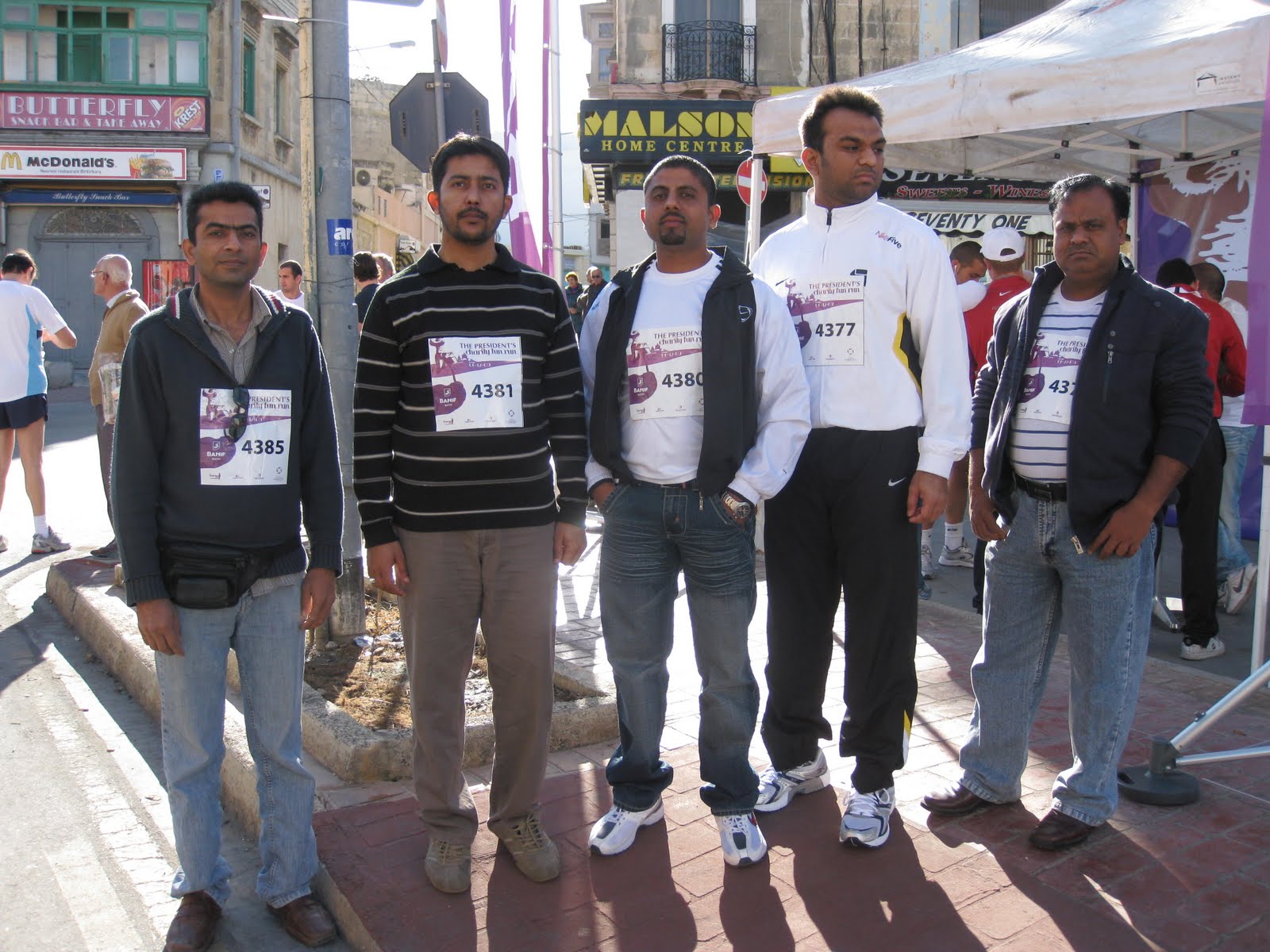
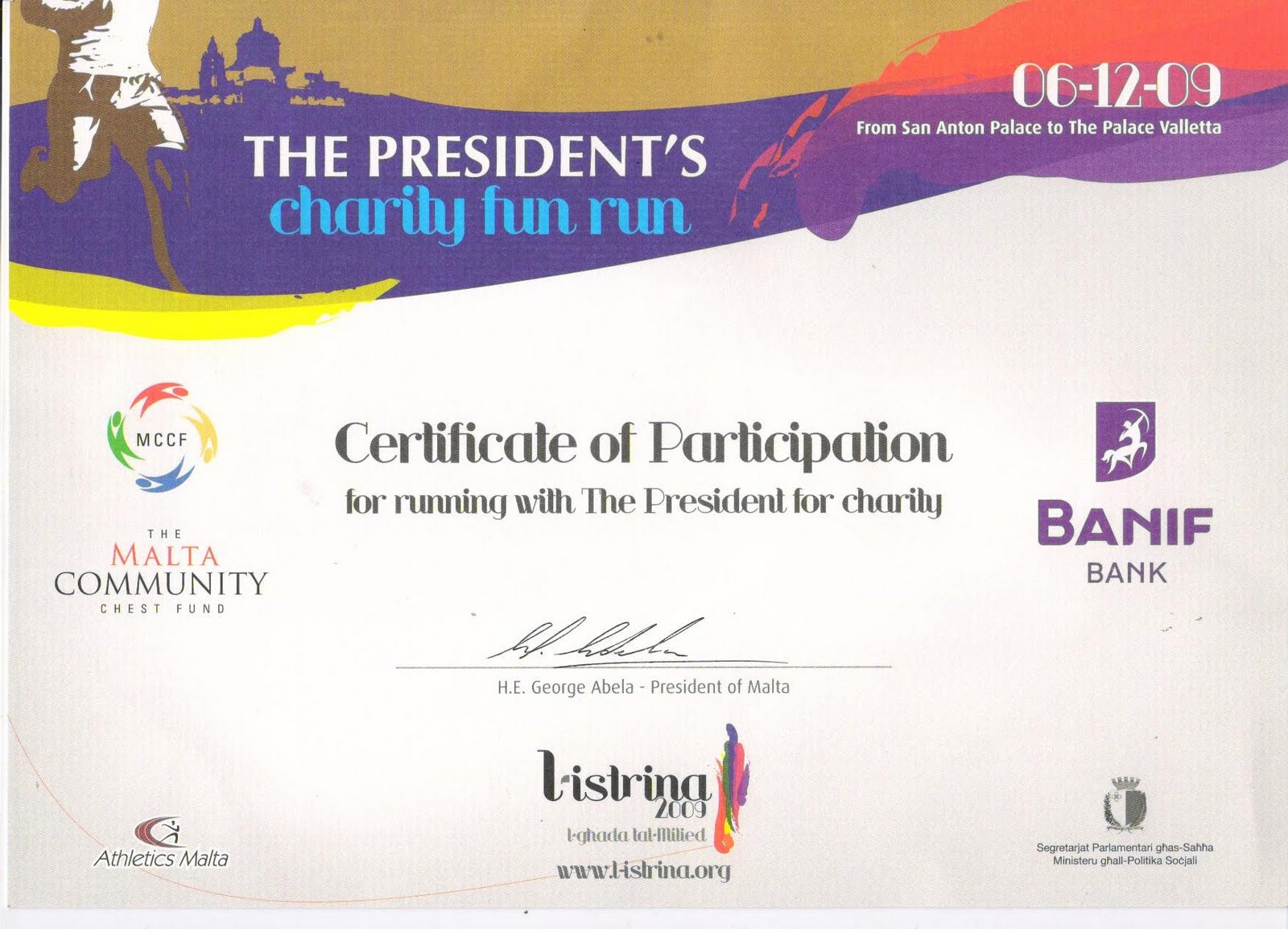
The President’s Charity Fun Run

The President’s Charity Fun Run

For The Malta Community Chest Fund

THE FIRST EDITION OF THE PRESIDENT’S CHARITY RUN (MILL-PALAZZ TA’ SAN ANTON GĦALL-PALAZZ TAL-BELT) WAS ORGANISED ON 6th DECEMBER 2009, WITH THE MAIN SCOPE OF RAISING FUNDS FOR THE MALTA COMMUNITY CHEST FUND.

THE AHMADIYYA MUSLIM COMMUNITY MALTA ALSO PARTICIPATED IN THE ‘PRESIDENT’S CHARITY FUN RUN’.[From left to right] Sohail Zafar, Laiq Ahmed Atif, Mohammad Anees, Muhammad Suleman, Shakil Akhtar

Posted in Ahmadiyya Malta | Leave a comment

Pakistan minorities nervous

BBC: Pakistan minorities nervous after Ahmadi mosque attacks

(Clerics declare that Ahmadis deserve to be killed)

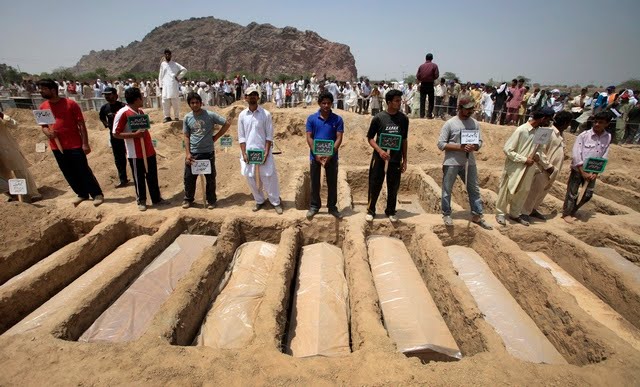
Many members of Pakistan’s minorities are uneasy about the future and their concerns have been heightened by the storming of two mosques in the Pakistani city of Lahore in May.
Nearly 100 people died in the sectarian attack on the Ahmadi sect and it is making other minority religions think hard about their safety.

There have been statements from clerics like Maulana Ismail declaring Ahmadis non-Muslims and deserving of death. “We have never condoned attacks by individuals on Ahmadis but its right that they should be killed through the courts for insulting Islam.” [Maulana Ismail- a Muslim cleric]

Aleem Maqbool reports from the town of Rabwah, in Punjab: Watch full Video on BBC: 30 June 2010

http://news.bbc.co.uk/2/hi/10431069.stm

Posted in Ahmadiyya Malta | Leave a comment

Terrorism and Suicide Attacks

It-Terroriżmu u l-Attakki Suwiċidji

Wieħed mill-karatteristiċi distinti taż-żmien li aħna ngħixu fih huwa l-preżenza tal-vjolenza kbira fis-soċjetajiet tagħna. Xi drabi naraw splużjonijiet ta’ bombi fis-swieq; xi drabi ħajġeks ta’ ajruplani fejn nies huma miżmuma għall-skopijiet politiċi jew personali. Ngħixu fi żmien fejn il-manipulazzjoni u t-telfien ta’ ħajjiet innoċenti saret xi ħaġa tas-soltu. Din il-problema tal-vjolenza qiegħda ddur kullimkien u t-terroriżmu huwa kkunsidrat bħala wieħed mill-ikbar perikli għall-paċi u s-sigurtà fis-soċjetajiet tagħna.

Il-kelma terroriżmu ġiet fl-użu wiesa’ ftit snin ilu biss, pero, issa t-terroriżmu fil-fatt idawwar id-dinja kollha u jidher f’forom varji. Xi drabi nsibu xi Musulmani jew xi gruppi ta’ Musulmani nvoluti f’dawn l-attakki terroristiċi u suwiċidji. U minħabba dawk il-ftit Musulmani, u l-azzjonijiet ħżiena li jwettqu, b’xorti ħażina r-reliġjon tal-Iżlam hija miżmuma responsabbli għall-atti ta’ grupp żgħir ta’ Musulmani, kif ukoll għall-atti ta’ dawk li mhumiex Musulmani.

Nammetti, bla dubju ta’ xejn, li hemm Musulmani wkoll involuti f’attakki terroristiċi u suwiċidji madwar id-dinja f’isem l-Iżlam. B’xorti ħażina, dawk terroristi għandhom appoġġ kbir mill-mexxejja u mill-organizzazzjonijiet reliġjużi. Imma t-terroristi huma grupp żgħir ta’ Musulmani, u fl-aħħar mill-aħħar mhumiex l-ambaxxaturi tal-Iżlam, għaliex huma jaħdmu fuq l-aġendi u l-interessi politiċi jew personali tagħhom biss. Dawk huma n-nies li jkissru l-ftehim u l-liġi u jistħoqqilhom li jiġu kkundannati bil-qawwa u jiġu kkastigati severament skont il-liġi tal-pajjiż għall-atti ħorox u aggressivi tagħhom.

B’xorti ħażina, issa t-terroristi bedew jattakkaw il-Komunità Aħmadija li temmen fil-paċi u diġà qed tbati mill-persekuzzjoni u vjolenza kbira f’ċerti pajjiżi. U ħafna membri ta’ din il-Komunità diġà nqatlu fil-passat.

Il-Komunità Aħmadija tħaddan il-prinċipji tal-paċi, tat-tolleranza, tal-imħabba u r-rispett bejn segwaċi ta’ twemmin differenti. Hija żżomm sod u taġixxi fuq it-tagħlim Koraniku. “Mhemmx sfurzar fir-reliġijon.” (Il-Koran Imqaddes: 2:257)

Fid-28 ta’ Mejju fill-belt ta’ Lahore, fil-Pakistan, it-terroristi attakkaw żewġ moskej tal-Komunità Aħmadija u qatlu aktar minn 95 ruħ u weġġgħu iktar minn 125 Aħmadin innoċenti meta kienu miġburin fit-Talb tal-Ġimgħa. Il-persekuzzjoni kontra l-Komunità Aħmadija ilha tiġri għal ħafna snin, f’ċerti pajjiżi. Ħafna gvernijiet u awtoritajiet huma wkoll involuti f’din il-persekuzzjoni. Ħafna liġijiet diskriminatorji ġew introdotti kontra l-Komunità.

Fil-Pakistan, ħafna konfrenzi ġew organizzati fejn il-mexxejja reliġjużi jagħmlu d-diskorsi tagħhom, u ħafna pamflets u banners jiġu ppublikati bil-messaġġ ċar li l-Aħmadin huma “waġbul qatl” – jiġifieri li għandhom jinqatlu. Huma jinċitaw lin-nies u jgħidulhom li jekk xi ħadd joqtol Aħmadi jmur dritt fil-ġenna.

Jaħasra! Meta sejrin il-bnedmin itemmu l-persekuzzjoni u l-vjolenza kontra xulxin sabiex kulħadd jista’ jemmen u jipprattika r-reliġjon li jħobb għalih innifsu b’independenza, b’ħelsien u bil-libertà kollha.

Il-Musulman veru qatt ma jista’ jagħmel dawk l-affarijiet ħżiena, għaliex fl-Iżlam m’hemm l-ebda spazju għat-terroriżmu u huwa ma jaqbilx mal-idea tat-terroriżmu, jew oħrajn simili bħall-fanatiżmu, fundamentaliżmu u l-attakki suwiċidji u l-Iżlam dejjem jitkellem kontrihom.

Fil-Koran Imqaddes insibu t-tagħlim veru kontra t-terroriżmu kif ukoll attakki suwiċidji. Alla jgħid: ‘Alla ma jħobbx il-ksur tal-paċi’ (K.2 : V.206); ‘Dawk li jagħmlu l-ħsara fl-art huma t-telliefa’ (K.2: V.28); ‘U la tagħmlux inġustizzja fl-art bil-ħsara u bil-ksur tal-paċi’ (K.2 : V.61); ‘Intom li temmnu, obdu lil Alla u obdu lill-Messaġġier, u lil dawk li għandhom l-awtorità fuqkom’ (K.4 : V.60)

Din l-aħħar kwotazzjoni tfisser li kulmin għandu l-awtorità fuqkom, Musulman jew mhux, il-gvern Iżlamiku jew mhux, huwa importanti li jiġu obduti u qatt ma jinkisru l-liġijiet tal-pajjiż.

Kontra l-attakki suwiċida, Alla jgħid: “La toqtlux lilkom infuskom! Alla tabilħaqq huwa Ħanin magħkom. U min jagħmel hekk b’aggressjoni u b’inġustizzja, se naħarquh fin-Nar.” (K.4 : V.30-31).

Wara dan it-tagħlim ċar, dawk il-Musulmani li huma nvoluti fit-terroriżmu jew fl-attakki suwiċidji m’għandhomx ġustifikazzjoni għall-atti tagħhom.

Fil-qosor, l-Iżlam bħala reliġjon huwa r-reliġjon tal-paċi u l-imħabba bħar-reliġjonijiet oħrajn, u jikkundanna attakki krudili u barbari ta’ dix-xorta. Sa ma dak li għandu x’jaqsam mal-Iżlam, l-Iżlam kategorikament jiċħad u jikkundanna kull forma ta’ terroriżmu. Ma jipprovdi l-ebda għata jew ġustifikazzjoni għal kwalunkwe att ta’ vjolenza, kemm jekk issir minn xi indvidwu kif ukoll minn xi grupp jew gvern. Aħna nikkundannaw bil-qawwa kollha kull att u kull forma ta’ terroriżmu għaliex hu t-twemmin tagħna profond li mhux biss l-Iżlam iżda wkoll l-ebda reliġjon vera, hu x’inhu l-isem tagħha, ma tista’ tapprova l-vjolenza u t-tixrid tad-demm ta’ rġiel, nisa u tfal innoċenti f’isem Alla.

Aħna, il-Komunità Aħmadija nwarrbu u nikkundannaw kull forma ta’ terroriżmu, b’mod kategoriku. Aħna, dejjem, mill-bidu sal-lum, b’qawwa kbira nikkundannaw l-użu tal-forza hi x’inhi r-raġuni. U nemmnu fl-imħabba, fil-paċi, fl-armonija, fit-tolleranza u fil-ħbiberija. Il-motto tagħna “Imħabba għal kulħadd, mibegħda għal ħadd” huwa t-tifsira vera tal-fidi tagħna.

Issa, wasal iż-żmien li aħna bħala bnedmin nikkundannaw it-terroriżmu li qed idawwar id-dinja kollha u jagħmel ħsara lis-soċjetajiet sbieħ tagħna bil-kliem u bl-għemil tagħna, u nistabbilixxu l-paċi, l-imħabba, it-tolleranza u l-ħbiberija f’kull naħa tad-dinja.

Laiq Ahmed Atif

President Ahmadiyya Muslim Jamaat Malta

Illum: Il-Ħadd 04 ta’ Lulju 2010, paġni 18-19: http://newspaper.maltatoday.com.mt/latest_illum

Posted in www.ahmadija.org.mt | Leave a comment

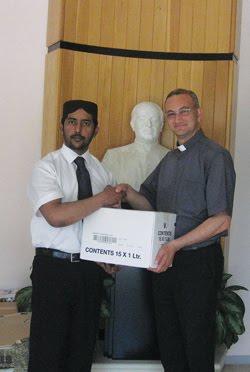
Donation by Ahmadiyya Muslim Jamaat to Dar tal-Providenza

Donation by Ahmadiyya Muslim Jamaat 5/07/2010

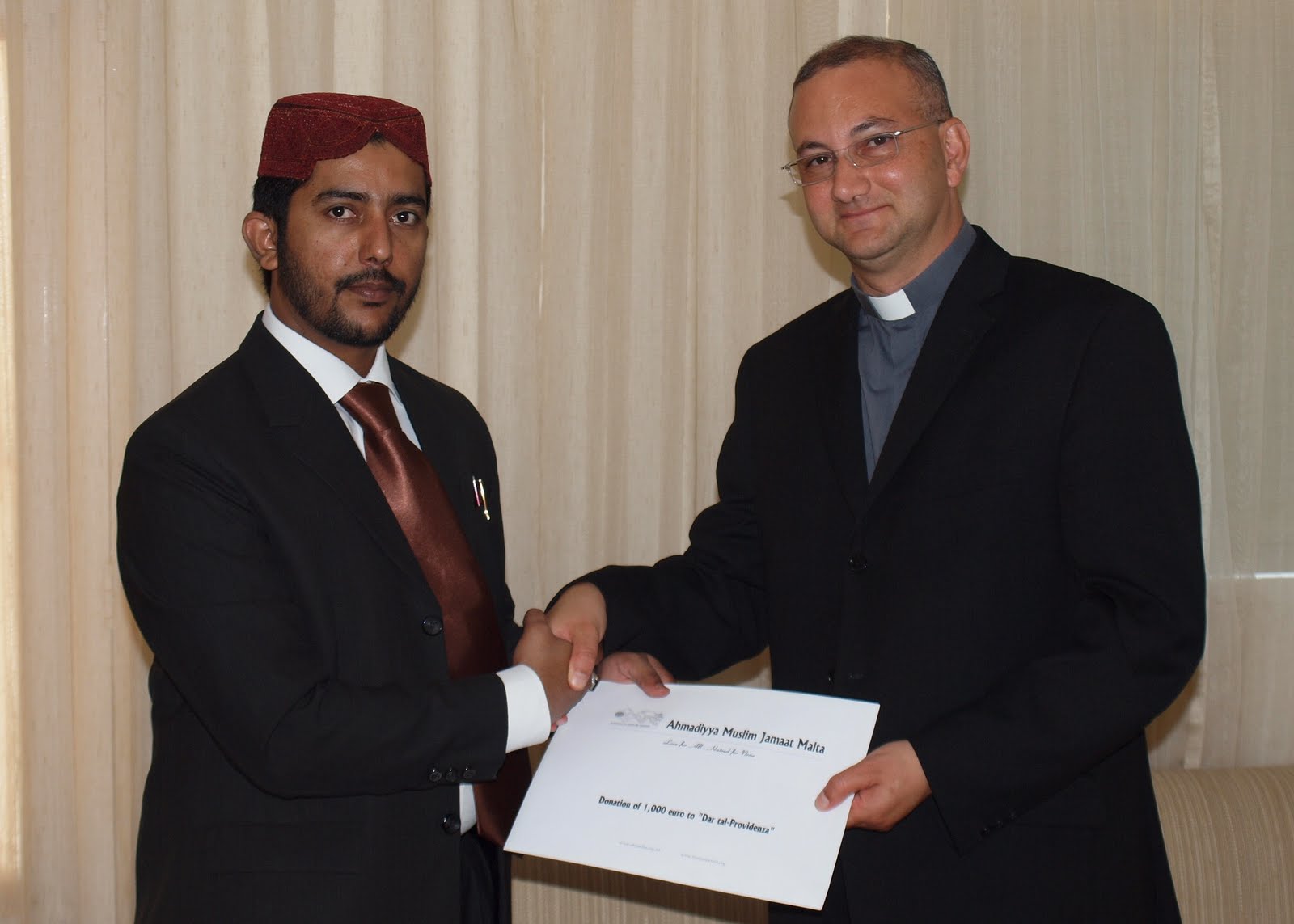
The director of Dar tal-Providenza, Fr Martin Micallef, was presented with a donation of €1,000 in aid of Id-Dar tal-Providenza by Laid Ahmed Atif, the president and director of the Ahmadiyya Muslim Association Malta.

The Ahmadiyya Muslim Jamaat is a universal religious organisation, with members in over 195 countries. It is the most dynamic denomination of Islam in modern history. It advocates peace, tolerance, love and understanding among followers of different faiths. It firmly believes in and acts upon the Qur’anic teaching: “There is no compulsion in religion.” (2:257). It strongly rejects violence and terrorism in any form and for any reason.

http://stocks.timesofmalta.com/articles/view/20090809/social/donation-by-ahmadiyya-muslim-jamaat

Posted in Ahmadiyya Malta | Leave a comment

With His Excellency Prof. Guido de Marco

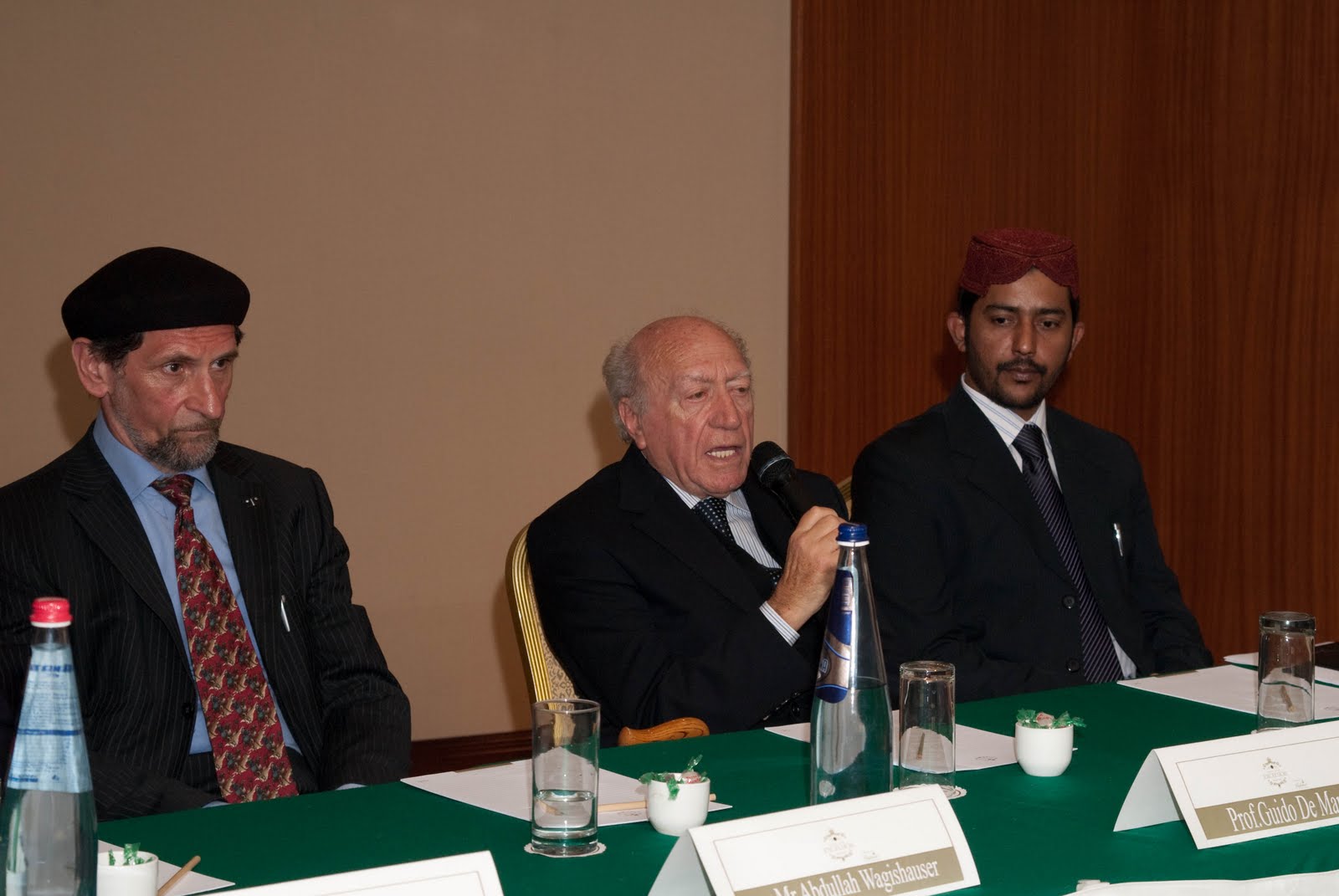
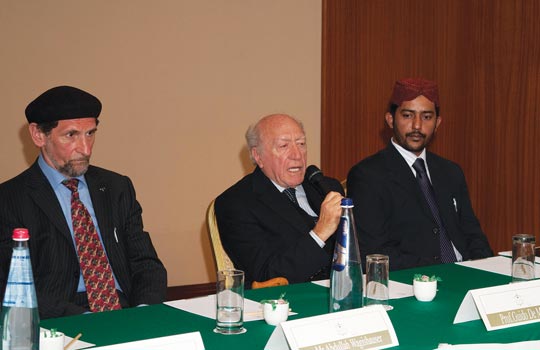
Mr. Abdullah Wagishauser president Ahmadiyya Community Germany, Prof. Guido de Marco, President Emeritus Malta, Laiq Ahmed Atif, president Ahmadiyya Community Malta

Posted in Ahmadiyya Malta | Leave a comment

ISLAM: A fresh perspective

L-Iżlam – Perspettiva Ġdida

Lealtà

Ħelsien

Ugwaljanza

Rispett

Paċi

Sa mill-bidu tagħha fl-1889, il-Komunità Aħmadija fl-Iżlam ilha tmexxi sforz globali biex tarġa’ tqajjem mill-ġdid il-messaġġ veru u ta’ paċi tal-Iżlam kif mgħallem mill-Profeta Qaddis Muħammad (il-paċi u l-barka ta’ Alla jkunu miegħu).

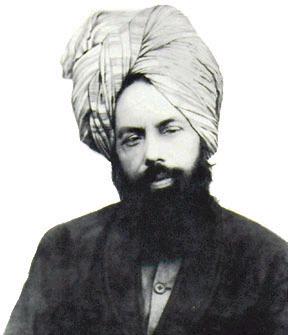
Dan il-qawmien tat-tagħlim veru Iżlamiku nbeda mill-fundatur tal-komunità, Ħażrat Mirża Gulam Aħmad (il-paċi tkun miegħu) li qal:

“Il-missjoni li għaliha jien ġejt inkarigat hi li nneħħi dik il-qasma li qed tikber fir-relazzjoni bejn Alla u l-ħolqien Tiegħu u li nissostitwiha bir-relazzjoni ta’ mħabba u sinċerità, u billi nħalli l-verità turi lilha nnifisha bid-dieher, tgħin biex jieqfu l-gwerer reliġjużi u n-nuqqas ta’ armonija u b’hekk tqiegħed il-pedament għall-paċi.”

Hu sostna taħt it-tmexxija Divina li hu l-Messija Mwiegħed u l-Imam Maħdi (Gwida), li l-wasla tiegħu kienet mistennija għal dan iż-żmien.

Posted in Ahmadiyya Malta | Leave a comment

The 100 most influential persons in History

The 100

A Ranking of The Most Influential Persons In History

By Michael H. Hart

“My choice of Muhammad to lead the list of the worlds’ most influential persons and may be questioned by others, but he was the only man in history who was supremely successful on both the religious and secular levels. It is this unparalleled combination of secular and religious influence which I feel entitles Muhammad to be considered the most influential single figure in human history.”

Posted in Ahmadiyya Malta | Tagged , | Leave a comment

Serving humanity

Servizz għall-umanità

Illum ħafna problemi jdawru l-umanità, bħal dawk ekonomiċi, soċjali, fiżiċi u sentimentali, flimkien ma’ diżastri naturali jew ikkawżati u l-bqija. Il-faqar jiżdied kuljum madwar id-dinja. L-oġġettiv tas-servizz għall-umanità u t-tixrid tat-tbissim fuq uċuh in-nies hu importanti wisq.


Meta nistudjaw ir-reliġjonijiet kbar tad-dinja nsibu żewġ punti komuni ħafna fit-tagħlim tagħhom: l-imħabba u l-qima lil Alla u s-servizz għall-umanità. Is-servizz għall-umanità hu l-iktar kwalità importanti ta’ reliġjon.


Dik ir-reliġjon mhix reliġjon vera jekk m’għandhiex is-simpatija, bħalma lanqas dak ir-raġel ma jistħoqqlu jitqies bi bniedem jekk m’għandux is-simpatija u l-imħabba fih innifsu.


Il-kwalitajiet fundamentali li aħna nakkwistaw bilfors biex inservu l-umanità u niżviluppaw il-passjoni biex nagħtu għajnuna lill-bnedmin huma l-imħabba għall-umanità, il-ħniena u t-tjieba f’qalbna għall-oħrajn, id-dispożizzjoni tal-karità, l-umilità, l-onestà, is-sempliċità fil-ħajja, l-għatx tal-għerf u meta hemm bżonn ix-xewqa kbira biex naqsmu mal-oħrajn, u xewqa sħiħa biex tħabrikna għall-kawża ta’ Alla bil-għemil tajjeb u biex jiġi evitat il-ħażen. Hu importanti li aħna nsiru poplu li minnu toħroġ t-tjieba għall-oħrajn.


Uħud mill-iktar ingredjenti importanti li għandna bżonn fir-riċetta biex inservu lill-oħrajn huma l-imħabba u s-simpatija f’qalbna għal bnedmin oħrajn.


Il-kbar juru ħniena liż-żgħar; is-sinjuri jservu lill-fqar imma bla sens ta’ kburija; wieħed li għandu saħħa tajba jagħti appoġġ u juri mġiba tajba u umilità lid-dgħajjef.


Fil-Koran Imqaddes Alla li jista’ kollox jikkmanda li nittrattaw lill-aħwa tagħkom, lill-qraba tagħkom, lill-ħbieb tagħkom, lill-konoxxenza tagħkom u l-ġirien tagħkom b’qalb tajba. Imma wkoll kunu ħanina lejhom, għinuhom jekk huma fil-bżonn u kunu ta’ ġid bl-aħjar kapaċitajiet ukoll ma’ dawk in-nies li ma tafuhomx u m’għandkomx relazzjonijiet, konnessjonijiet u qrubija magħhom. Kunu ta’ ġid lil dawk ukoll li għandkom relazzjoni temporali. Jekk huma fil-bżonn għas-simpatija u għall-għajnuna tagħkom allura hu importanti li tgħinuhom.


B’dawk l-għemejjel tajba nistgħu nistabbilixxu kultura sabiħa u tajba. Għandna niżviluppaw kompassjoni għall-kreatura ta’ Alla bil-fehma li din hi xi ħaġa ikbar mill-għemil it-tajjeb. Din taqa’ fil-qasam tal-benevolenza. Benevolenza tfisser li ma tkun trid xejn lura għall-favur tiegħek u tagħmel kollox għall-imħabba u l-pjaċir ta’ Alla.


Minħabba f’hekk soċjetà sabiħa se tiġi stabbilita fejn ma jkunx hemm diżgwid u problemi. Kulħadd se jipprova jkun twajjeb mal-oħrajn.


Kulħadd se jipprova jagħti d-drittijiet tal-oħrajn bl-imħabba u bil-ħsieb u jagħmel minn kollox biex jirbaħ il-ferħ ta’ Alla li jista’ kollox. Fis-soċjetà tal-lum hu l-iktar meħtieġ minn qatt qabel.
Alla jitlob minna biex inkunu ħanina mal-kreatura Tiegħu. B’dak il-mod nistgħu nsiru tajbin quddiemu u nirċievu l-premju f’din id-dinja kif ukoll fl-oħra.


Il-ħniena li nuru lejn l-oħrajn hi importanti li tiġi mill-qalb u ma nitolbux ir-rikonoxximent min-nies għall-għajnuna. Alla jħobb għemejjel tajbin u jixtieq li nuru s-simpatija lejn il-kreatura Tiegħu.


Għalhekk hu dmir tagħna li nuru l-kompassjoni għal kulħadd bla ma naraw ir-reliġjon imħaddna, il-kulur, ir-razza jew in-nazzjonalità tagħhom u nkunu tajbin
ma’ kulħadd bla diskriminazzjoni.


Il-Komunità Aħmadija dejjem tipprattika dawn il-valuri u tipprova tissodisfa x-xewqa tal-Fundatur tagħha li kien jgħid: “Il-mira u l-oġġettiv mixtieq u mitlub tiegħi hu s-servizz għall-umanità.”
Ejjew niddedikaw lilna nfusna u naħdmu b’qawwa kbira u mingħajr għejja biex inservu l-umanità kollha u biex neħilsu l-umanità maħqura mill-uġigħ u l-mard tagħha.

{Illum: Ittri | 25 ta’ April 2010 • Nr 183} http://www.illum.com.mt/2010/04/25/l2.html

Posted in Ahmadiyya Malta | Leave a comment

Ahmadiyya Muslim Jamaat community in Malta condemns attack on Baghdad church

The Ahmadiyya Muslim Jamaat community in Malta has strongly condemned the attack on a Baghdad church by extremists on Sunday.

The attack resulted in the death of 58 Christian worshipers, including three priests.

The Ahmadiyya Community said it believed in the Quranic teaching of freedom of faith and worship that: “There should be no compulsion in religion”.

It believed in human dignity and condemned killing for any reason whatsoever – there is no place in Islam for violence, it said adding that Islam strongly establishes freedom of belief and worship and urged protection of places of worship of all faiths.

The community said Muslims were commanded to honour human dignity, and in the early times of Islam when Muslims were given permission for defensive wars, it was forbidden to kill religious leaders – priests or rabbis – in their respective places of worship, and to attack and demolish places of worship.

Muslims were made to promise that they would also help defend the followers of other faiths from unjust and cruel attacks.

“As members of the Ahmadiyya Community, we call on all Muslims to follow the example of the Holy Prophet Muhammad (peace be on him) and work to live in harmony with our non-Muslim brothers and sisters.

“We, the members of Ahmadiyya Muslim Jamaat express our condolences to the victims’ families in this difficult time and hope for swift action against the perpetrators of this heinous, inhuman and barbaric act.

“And we pray to God the Almighty that He makes this world a haven of peace, tolerance, harmony, liberty and universal brotherhood,” they said.

The Times of Malta : Friday, 5th November 2010

http://www.timesofmalta.com/articles/view/20101105/local/ahmadiyya-muslim-jamaat-community-in-malta-condemns-attack-on-baghdad-church
Posted in www.ahmadija.org.mt | Leave a comment

Charity work at Ħal Far Refugee camps

Ahmadiyya Muslim Association donates

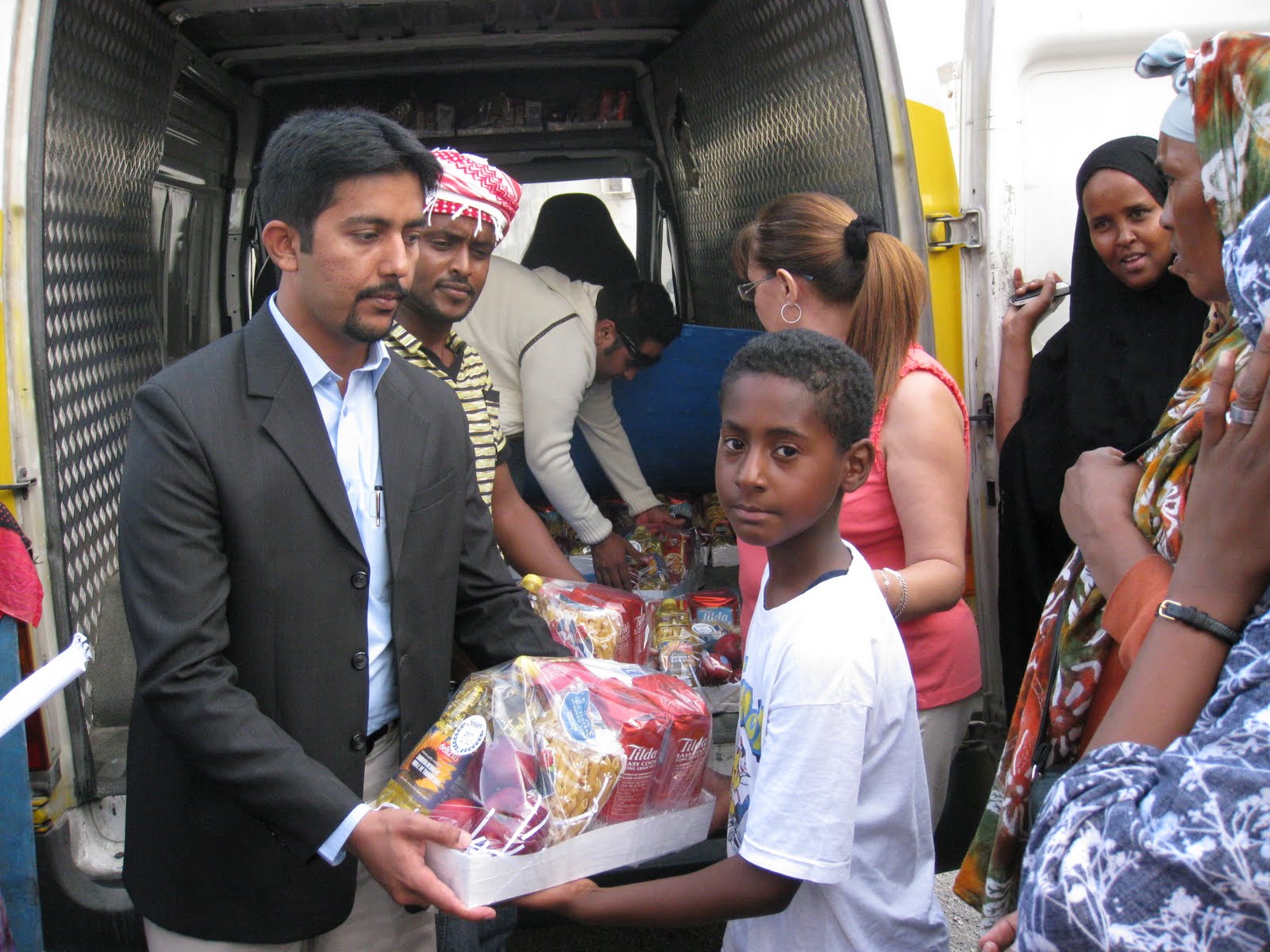
On behalf of the Ahmadiyya Muslim Association Malta, Laiq Ahmed Atif distributed packets of food to 45 families and 100 single women living at Hal Far refugee camp on September 29. The global Ahmadiyya Community organises charity events around the world prior to the celebration of the feast of Eid.

(The Sunday Times, October 5, 2008)

Posted in Ahmadiyya Malta | Leave a comment

Ahmadiyya condemns attack on church

The Ahmadiyya Muslim Jamaat strongly condemns the attack on a Baghdad church by extremists on Sunday, which resulted in the death of 58 Christian worshipers, including three priests. The Ahmadiyya Community condemns the attack with strongest terms.

The Ahmadiyya Community believes in the Quranic teaching of freedom of faith and worship that: “There should be no compulsion in religion”. It believes in human dignity and condemns their killing for any reason whatsoever; there is no place in Islam for violence. Islam strongly establishes freedom of belief and worship and urges protection of places of worship of all faiths. God the Almighty says:

“Whosoever killed a person — unless it be for killing a person or for creating disorder in the land — it shall be as if he had killed all mankind; and whoso gave life to one, it shall be as if he had given life to all mankind.” (5:33)

This is the clear teaching that the unlawful killing or the shedding of innocent blood of someone is like the killing of the entire human race, that is to say, the taking of a single life is like the massacre of thousands of innocent lives. Now, everyone can very well imagine what kind of sentence would be passed on someone who is found guilty of the taking of thousands of innocent lives. So this is the beautiful teaching given to us by God, and whosoever acts against this, acts against the teachings of God – the Creator.

Muslims are commanded to honour human dignity, and in the early times of Islam when Muslims were given permission for defensive wars, it was forbidden to kill religious leaders – priests or rabbis – in their respective places of worship, and to attack and demolish places of worship. Muslims have been made to promise that they will help defend the followers of other faiths from unjust and cruel attacks as well. For example, in his charter for all time to come addressed to all Christians living as citizens under Muslim rule, the Holy Founder of Islam, states:

“I promise that any monk or wayfarer who will seek my help on the mountains, in forests, deserts or habitations, or in places of worship, I will repel his enemies with my friends and helpers, with all my relatives and with all those who profess to follow me and will defend them, because they are my covenant.

And I will defend the covenanted against the persecution, injury and embarrassment of their enemies in lieu of the poll tax they have promised to pay. If they prefer to defend their properties and persons themselves, they will be allowed to do so and will not be put to any inconvenience on that account.

No bishop will be expelled from his bishopric, no monk from his monastery, no priest from his place of worship, and no pilgrim will be detained in his pilgrimage.

None of their churches and other places of worship will be desolated or destroyed or demolished. No material of their churches will be used to build mosques or houses for the Muslims; any Muslim doing so will be regarded as recalcitrant to Allah and His Prophet.

Every help shall be given them in the repair of their churches. They shall be absolved of wearing arms. They shall be protected by the Muslims. Let this document not be disobeyed till Judgment Day.”

As members of the Ahmadiyya Community, we call on all Muslims to follow the example of the Holy Prophet Muhammad (peace be on him) and work to live in harmony with our non-Muslim brothers and sisters.

We, the members of Ahmadiyya Muslim Jamaat express my condolences to the victims’ families in this difficult time and hope for swift action against the perpetrators of this heinous, inhuman and barbaric act. And we pray to God the Almighty that He makes this world a haven of peace, tolerance, harmony, liberty and universal brotherhood. Ammen.

Posted in www.ahmadija.org.mt | Leave a comment

Ahmadiyya organised peace symposium 2010

Peace conference

Ahmadiyya Muslim Jamaat organised a peace conference on February 27, at the Grand Hotel Excelsior, Floriana.

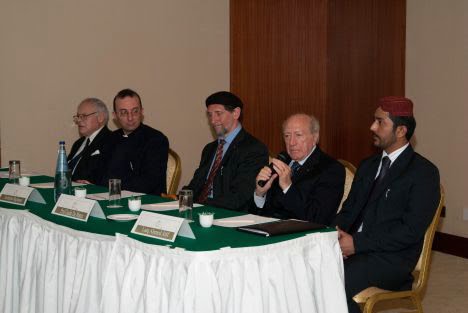
During the event, Prof Guido de Marco – President Emeritus of Malta, Rabbi Richer Herbert – Rabbi Emeritus Temple Israel Johannesburg, Fr Hector Scerri – Head of the Department of Dogmatic Theology at the University of Malta and Abdullah Wagishauser – president Ahmadiyya Muslim Jamaat Germany, delivered talks on the importance of peace and how this can be establish within society.

Around 60 persons attended the conference and took an active part in the discussion by asking questions to the speakers.

The Ahmadiyya Community organises such meetings all around the world. The aim of these gatherings is to meet and discuss and contribute in making the world we live in a better place full of love, peace, harmony and understanding.

by di-ve.com – editorial@di-ve.com
Life — 27 March 2010 — 16:00CEST

http://www.di-ve.com/Default.aspx?ID=71&Action=1&NewsId=70886

Abdullah Wagishauser, Guido de Marco and Ahmadiyya Muslim Jamaat (Malta) president Laiq Ahmed Atif.

Peace conference

Ahmadiyya Muslim Jamaat organised a ‘Peace Conference’ at the Grand Hotel Excelsior, Floriana, last weekend. President Emeritus Guido de Marco, Temple Israel Johannesburg Rabbi Emeritus Richer Herbert, head of the department of University of Malta department of Dogmatic Theology head Fr Hector Scerri, and Ahmadiyya Muslim Jamaat (Germany) president Abdullah Wagishauser delivered their talks on the importance of peace and how to establish peace in our societies.

The Times: Sunday, 7th March 2010

http://www.timesofmalta.com.mt/articles/view/20100307/social/peace-conference

Posted in Ahmadiyya Malta | Leave a comment

Peace Conference 2010

Peace Conference

Ahmadiyya Muslim Jamaat Malta will be holding a Peace Conference at the Grand Hotel Excelsior, Floriana, on Saturday, at 6.30pm. In this conference Prof. Guido de Marco, President Emeritus of Malta, Rabbi Richer Herbert, Rabbi Emeritus Temple Israel Johannesburg, Fr Hector Scerri Head of the Department of Dogmatic Theology at the University of Malta, and Mr Abdullah Wagishauser, president Ahmadiyya Muslim Jamaat Germany will deliver their talks on the importance of peace and how to establish peace in our society.
Those interested in participating should e-mail amjmalta@gmail.com or call 7932-0139 or fax 2732-2105 and confirm their participation at least two days prior to the programme. Entry and refreshments to participants will be offered free of charge.

SUNDAY, JUNE 6, 2010 The Independent: http://www.independent.com.mt/news.asp?newsitemid=102018

Peace conference

Ahmadiyya Muslim Jamaat Malta will be holding a “peace conference” at the Grand Hotel Excelsior, Floriana, on Saturday, February 27 at 1830h.

During the conference President Emeritus Prof Guido de Marco, Rabbi Richer Herbert, Rabbi Emeritus Temple Israel Johannesburg, Fr Hector Scerri Head of the Department of Dogmatic Theology at the University of Malta, and Mr Abdullah Wagishauser, President Ahmadiyya Muslim Jamaat Germany will deliver talks on the importance of peace and how to establish peace in society.


Those interested in participating should send an email to amjmalta@gmail.com or call 7932 0139 and confirm their participation preferably by Thursday, February 25.

Entrance is free of charge.

By di-ve.com – editorial@di-ve.com
Life — 23 February 2010 — 15:30CEST http://di-ve.com/Default.aspx?ID=71&Action=1&NewsId=69818&currentPage=10

Posted in Ahmadiyya Malta | Leave a comment

Islam condemns all forms of terrorism

From the Archives | Laiq Ahmed Atif, president, Ahmadiyya Malta | Times Of Malta

Today the world is facing great threats of terrorism. Thousands of innocent people have been killed and still there seems to be no end to this cruelty. Some blame Islam as a religion of grave terror and bloodshed. But, in reality, there is no connection between Islam and terrorism at all; Islam is as closely related to terrorism as light is to darkness or life is to death or peace is to war. Islam very strongly condemns terrorism and encourages establishing peace and order in the land.

However, one cannot deny that on many occasions some Muslims are found involved in terrorist activities either individually, on behalf of a group or on behalf of a country with a predominately Muslim population.

And very recently, a similar attempt of bombing was planned in Times Square, New York. But, still, there are plenty of others who are also involved in such barbaric actions, who are not Muslims.

But let it be very clear that we do not justify terrorism of any kind whatsoever, whatever the colour, religion, sentiment or objective the terrorist may claim to represent. Islam does not approve of disorder in any form. Islam does far from teach terrorism. It teaches rule of law, obedience to the authorities and does not let anyone take the law into his own hands. The Holy Quran states:

“O ye who believe! Obey Allah, and obey His Messenger and those who are in authority over you.’ (Ch.4: V.60)

The word “obey”, which has been repeated before the words “Allah” and “Messenger” has been omitted before the words, those who are in authority, in order to point out that obedience to the authority properly constituted by law is in reality obedience to God and His Messenger.

The words, those in authority, in their wider significance include even such non-Muslims as may happen to be in authority over Muslims.

The practice of the Holy Prophet as well as his sayings make it clear that in secular matters Muslims should obey even such of their rulers as are not Muslims. And if some people say that it is not necessary for a Muslim to follow any non-Islamic government, this is utterly false and against Islamic teachings as mentioned above.

The Holy Quran further states that “those who create disorder in the earth, they are the real losers”; “and commit not iniquity in the earth, creating disorder”; “and Allah loves not disorder”. Such words and phrases are found in the Holy Quran repeatedly.

After this clear teaching such terrorist actions of some Muslim individuals or groups have no cover or justification at all, and they must be condemned widely. And those who are involved must be brought in front of justice.

As far as Islam is concerned, it categorically rejects and condemns every form of terrorism. It does not provide any cover or justification for any act of violence, be it committed by an individual, a group or a government.

The Ahmadiyya Muslim Community, which is a peace loving and law abiding community, strongly condemns the attempted bombing in New York City and all acts of terrorism anywhere in the world. The Ahmadiyya Community very boldly and loudly, without any fear, speaks against terrorism. We also call on all Muslims in the world to join us in condemning all actions of violence and terror caused or carried out by anyone whoever he or she may be. We call on all of them to boldly claim and express with their tongue and action that they are loyal and law-abiding and obedient citizens, and join us in spreading a message of peace, love, harmony, tolerance and brotherhood.

We reject and condemn all acts and forms of violence and terrorism unreservedly and totally, because it is our deeply rooted belief that not only Islam but also no true religion, whatever its name, can sanction violence and the bloodshed of innocent men, women and children in the name of God.

God is love, God is peace!

Love can never beget hatred, and peace can never lead to war.

[The Times: Monday, 24th May 2010] :

http://www.timesofmalta.com/articles/view/20100524/letters/islam-condemns-all-forms-of-terrorism

Posted in www.ahmadija.org.mt | Leave a comment

Donazzjoni mill-Komunità Aħmadija Musulmana

Donazzjoni mill-Komunità Aħmadija

Laiq Aħmed Atif, President tal-Komunità Aħmadija Musulmana f’Malta ppreżenta għotja ta’ 13-il pakketti ta’ ikel bħala għajnuna għad-Dar tal-Providenza lil Fr. Martin Micallef, Direttur tad-Dar tal-Providenza.

Il-Komunità Aħmadija hi organizzazzjoni internazzjonali reliġjuża, mhux politika u mhux settarja, li taħdem biex ittejjeb il-kwalità ta’ ħajja tan-nies l-iktar foqra u l-iktar vulnerabbli tad-dinja.

Il-Komunità Aħmadija hija denominazzjoni moderna b’fergħat f’aktar minn 195 pajjiż tad-dinja, li tinkoraġġixxi d-djalogu bejn reliġjonijiet differenti. Hi tħaddan il-prinċipji tal-paċi, tat-tolleranza, tal-imħabba u r-rispett bejn segwaċi ta’ twemmin differenti. Hija żżomm sod ukoll u taġixxi fuq it-tagħlim Koraniku: “Mhemmx sfurzar fir-reliġjon” u tipprattika l-motto tagħha “Imħabba għal kulħadd, mibegħda għal ħadd”.

(illum , il-Ħadd 11 ta’ Lulju 2010)

Posted in Ahmadiyya Malta | Leave a comment

Honouring human liberty and freedom

The Times, Friday, 16th July 2010

Honouring human liberty and freedom

Laiq Ahmed Atif, The author is president, Ahmadiyya Muslim Jamaat Malta.

One common and most cherished fruit of life is liberty and freedom. Freedom is a basic right of all living things, man being no exception. Man is the embodiment of liberty, which is deeply rooted in him.

But, very amazingly, we find that certain man-made laws are against the liberty and freedom of man in the final analysis and such laws deprive a man of his fundamental human rights.

Sometimes, laws are made against displaying Christian crucifixes; sometimes against building minarets on mosques; and sometimes we find that some countries stand against building places of worship, such as synagogues, churches or mosques. And, most recently, laws are being introduced against the hijab or veil in certain countries.

Is this a definition of modern democratic governments that claim to safeguard the rights of their peoples? Is this the way to bring together people of different nations? Is this the way to foster love and affection among people? Most certainly, every just-minded person will oppose this because these things will build the walls of hatred ever higher and destroy the peace of the world.

These issues, thus, have become a source of sarcasm. However, there are some sober-minded people in whose hands are the reins of the Executive and Legislature who should not interfere with such matters. Should legislation be passed against Christians and Jewish ladies who also adopt religious attire? If bans are imposed against the Muslims, then Muslim countries may impose restrictions on some forms of Western dress in response. This issue has the potential to snowball and it will affect the peace of the world.

Let me make it very clear, the Ahmadiyya community does not support any such motion against human rights, whether in Muslim countries or in Christian countries or anywhere else in the world. We support and believe in full freedom and liberty for all human beings.

By all means, if there is any covering that hides the identity of a person and it is necessary to remove it to identify a person, then the governments or the authorities have the right to do so.

But what a travesty that a woman may be deprived from travelling simply because she is wearing the hijab!

Or a human life may be deprived of care in a hospital and left in the jaws of death because she was wearing a veil. Or to deprive a girl of education, however intelligent she may be, thus losing a national talent of a country only because she chooses to observe hijab or veil (a religious duty) not out of any compulsion but out of her own free will.

It is true that some Muslim women observe these teachings of Islam in such a manner that they have put on themselves some burdens that Islam did not prescribe. The purpose of the veil is to give women respect, honour and peace and not to burden them.

And Islam speaks in terms of a very moderate veil to provide protection to women and it does not say that women should be kept only at home or that they should wear those kinds of garments that even cover their eyes, hands, feet etc. and cause problems for them even to walk easily in the streets. Islam says you must remain moderate in the way you talk and behave.

The Ahmadiyya Muslim Jamaat believes that a person’s choice of dress is a personal matter and a basic human right as are other rights. It believes that every human being must be given full liberty and freedom to practise his or her faith in every country, be it a Christian or a Muslim country. Islam teaches modesty for both men and women but underlying all Islamic injunctions is the Qur’anic principle that “There is no compulsion in religion”. Thus, if a woman, whether Muslim or non-Muslim, chooses not to cover her head then that is her right but, on the other hand, if a woman, whether Muslim or non-Muslim, chooses to cover her head or face then that too is her right and ought never to be interfered with.

amjmalta@gmail.com http://www.timesofmalta.com/articles/view/20100716/opinion/honouring-human-liberty-and-freedom

Posted in Ahmadiyya Malta | Leave a comment

Donation to Dar tal-Providenza

Dar tal-Providenza donation

Ahmadiyya Muslim Jamaat Malta president and director Laiq Ahmed Atif recently donated 13 packets of food items to Dar tal-Providenza director Fr Martin Micallef. The Ahmadiyya Muslim Jamaat helps people in need, irrespective of faith, colour, creed or nationality.

http://www.timesofmalta.com/articles/view/20100718/social/dar-tal-providenza-donation

http://www.dartalprovidenza.org/News.aspx?newsid=70&lid=1

Posted in Ahmadiyya Malta | Leave a comment

Murder in the name of Religion

Laiq Ahmed Atif

The history of man is full of killing and bloodshed. Since the first murder on this earth, so much blood has been spilled throughout history that the whole world could be painted red with it – with plenty to spare. When will man stop killing his fellow men? When will his thirst for blood ever be quenched?

Throughout human history man has remained thirsty for the blood of others. His aggressiveness has remained unchanged. Assassination of individuals and the annihilation of whole groups of peoples are a repetitive theme of history. States have attacked states; countries have fought against their neighbours and against nations far from their borders. Hordes of people living in the steppes and deserts conquered nations with ancient civilisations.

Sometimes blood was spilled in the name of honour, sometimes in the name of revenge for supposed wrongs. Sometimes angry hordes overran peaceful lands in search of food, sometimes in search of world domination. But more often the blood of man – created in God’s image – was shed in the name of his creator. Religion was used as an excuse for mass murder.

In the last few months we have seen some painful and heart-breaking incidents of killing in the name of religion. On May 28, 86 members of Ahmadiyya Community were brutally killed in Lahore, Pakistan and are being severely persecuted and sentenced for years only because of their religion.

This is happening in many other countries. Seven Christians were killed in Gojra and two other were killed in Faisalabad, Pakistan and eight Christians were put to death in a village in Nigeria only because of their faith.

The history of religion in any part of the world at any time is the history of torture, repression, execution and crucifixion. It is disappointing indeed to find that religion, which is supposed to be the last refuge of peace in a world of war and conflict, is a cause of destruction and bloodshed. Religion itself is not the real cause of mass murder, however, and it is a great mistake to think it is. Religion was not given to man to encourage killing.

The Holy Quran points out very clearly why a cursory glance at history can lead one to such a conclusion. It cites the past to show that those who perpetuate brutality in religion’s name are either anti-religious or people whose religion has been corrupted. There are also religious leaders who have no warmth, compassion, mercy or piety. To be honest, they are hypocrites with a lust for power – cruelty is their ruling passion. It would be a great mistake to associate religion with the misdeeds of such men. The real truth is that God – the fountainhead of mercy – does not allow the followers of any religion to oppress His people.

The purpose of any religion is the spread of peace, tolerance and understanding. And the future of mankind depends on the intrinsic values of love, tolerance and freedom of conscience and of belief. A few months ago in a programme about peace organised by Ahmadiyya Community Malta, Prof. Guido de Marco, President Emeritus, spoke very beautiful words to describe religion: “Religions are a great weapon for peace”.

All religions have taught peace, respect and love towards all human beings, and discouraged the killing of men. The Holy Quran gives absolute honour and respect to human life and states very clearly: “Whosoever killed a person – unless it be for killing a person or for creating disorder in the land – it shall be as if he had killed all mankind; and who so gave life to one, it shall be as if he had given life to all mankind.” (Ch. 5: V.33)

After this great teaching, if someone sheds the blood of innocent people in the name of religion, he has no protection in religion, his actions must be strongly condemned and he should be brought to justice and be punished according to the law.

Thus, this is a very beautiful teaching of Islam – that the unlawful killing or the shedding of innocent blood of someone is like the killing of the entire human race, that is to say, the taking of a single life is like the massacre of thousands of innocent lives; and saving a single human life is like the saving of thousands of lives. This is the beautiful teaching of religion and it truly proves that religion is not the weapon of disorder, killing or bloodshed but is the most powerful weapon of love, respect and peace.

amjmalta@gmail.com

The author is president, Ahmadiyya Muslim Jamaat Malta.

The Times: Tuesday, 10th August 2010

http://www.timesofmalta.com/articles/view/20100810/opinion/murder-in-the-name-of-religion

Posted in Ahmadiyya Malta | Leave a comment

75th Anniversary of The Times

75th anniversary of a wonderful paper

Laiq Ahmed Atif, president, Ahmadiyya Muslim Jamaat Malta, Ta’ Xbiex

I would like to congratulate the management and staff of The Times on its 75th anniversary. The Times is one of the leading newspapers of this island, keeping the nation very well informed.

Once I read a report of a survey in which it was shown that everyday more than 75,000 people read The Times and on Sunday this number goes up to more than 125,000. This figure is enough to show the quality and popularity of this wonderful and remarkable newspaper.

This newspaper is providing very well-balanced journalism. Its staff is really working very hard and sincerely, with full devotion and dedication and they deserve to be shown great appreciation.

Congratulations. Keep up the wonderful work. May God bless you all.

Prosit tassew!

The Times: Saturday, 7th August 2010

http://www.timesofmalta.com/articles/view/20100807/letters/75th-anniversary-of-a-wonderful-paper

Posted in Ahmadiyya Malta | Tagged | Leave a comment

Dear Guido de Marco rest in peace

Dear Prof. Guido de Marco rest in peace

An ingrained love for humanity

The first time I met Prof. Guido de Marco was last January at his office in Ħamrun. I was there to ask him to deliver a speech in the “Peace Conference” which was to be organised by Ahmadiyya Muslim Jamaat Malta. He very kindly accepted and told me that his health was not very good but he would do his best to attend.

In the few minutes we had for the meeting, I also introduced him to Ahmadiyya Jamaat and told him that we were promoting inter-faith dialogue so that people of different faiths could share their teachings and ideas with each other, so that a better atmosphere of love, respect and understanding could be developed.

I told him that we believe every human being has the right to accept and practise the religion of his own choice and there should be no compulsion and force in religion. He replied: “That’s what I believe too.”

When I was preparing his brief introduction to present it before his speech, I found his very detailed biography. It was very difficult for me to summarise it because he had worked so much in very prestigious capacities, nationally and internationally. On February 27 he gave a wonderful speech in the Peace Conference which was liked and very much appreciated by all. In this speech he spoke very beautiful words to describe religion: “Religions are a great weapon for peace”.

During these two meetings with him I found him very humble, sincere, wise, intelligent, courageous, hard working, always ready to face challenges, always ready to contribute and a person of great respect for others. He was always willing to share smiles with others. He had a great love for humanity which was ingrained in him.

Prof. de Marco has contributed so much to this beautiful island and to the world in general which will be remembered for ages. The death of His Excellency is a great loss for the country.

We want to show our sincerest condolences to his wife, his son Mario de Marco, Parliamentary Secretary for Tourism, daughters, and his friends and to all his dear ones. May God bless them with the strength to deal with this tragedy. We pray that his soul will rest in peace forever and may God bless him with His everlasting love and pleasure. Amen

Laiq Ahmed AtifMr Atif is president, Ahmadiyya Muslim Jamaat Malta. 17/08/2010  

http://www.timesofmalta.com/articles/view/20100817/opinion/an-ingrained-love-for-humanity

Posted in Ahmadiyya Malta | Leave a comment

Let us all plant a tree

In the contemporary world, man, as a whole, is benefiting from scientific inventions that have considerably changed human life. These inventions are very useful and have now become an important part of our lives, and no doubt their benefits are huge. But we also suffer negative effects.

Among the problems of today’s world are climate change, global warming and increasing pollution. Many conferences are being held, nationally and internationally, to discuss solutions to this environmental issue. Many solutions have been proposed. One is to plant as many trees as possible.

What is a tree? How can we benefit from it? How can it play an important role in the environment?

A tree is commonly described as a perennial woody plant. It is most often defined as a woody plant that has many secondary branches supported clear of the ground on a single main stem or trunk with clear apical dominance. …Compared with most other plants, trees are long-lived, some reaching several thousand years old and growing to up to 115 m high.

Trees are an important component of the natural landscape because of their prevention of erosion and the provision of a weather-sheltered ecosystem in and under their foliage. They also play an important role in producing oxygen and reducing carbon dioxide in the atmosphere, as well as moderating ground temperatures.

They are also elements in landscaping and agriculture, both for their aesthetic appeal and their orchard crops (such as apples). Wood from trees is a building material, as well as a primary energy source in many developing countries. Trees also play a role in many of the world’s mythologies.

Alfred Joyce Kilmer, American journalist, lecturer and poet, wrote a beautiful poem about a tree:

“I think that I shall never see

A poem lovely as a tree

A tree whose hungry mouth is prest

Against the earth’s sweet flowing breast;

A tree that looks at God all day

And lifts her leafy arms to pray;

A tree that may in summer wear

A nest of robins in her hair;

Upon whose bosom snow has lain;

Who intimately lives with rain.

Poems are made by fools like me

But only God can make a tree.”

The following is a story about how important it is to plant a tree:

Once upon a time a king was passing through fields and was surprised to see a very old man planting a tree. The king stood nearby and asked him, ‘‘Why are you planting this tree?’’

He replied: “For fruit, shade and fresh air.”

The king said, “You are very old, and maybe your health is not very good too, so before it starts giving fruit, shade and fresh air you may pass away. So why do you want to plant this tree?”

The man replied: “Your majesty, I know I am very old and I may not benefit from this tree, but I am not planting it only for myself; I want to plant it for generations to come. I want to give a long-lasting gift to the people who will come after me.

“I believe this tree will be beneficial to mankind. It will be a charity that will last for ages. And as long as people will benefit out of this tree, it will be considered a gift, a good deed and a charity from me to the people and future generations.’’

This story really has a great message – that we should pass something valuable and everlasting for generations to come. We should leave behind us something beneficial, so that when we are remembered people may speak well of us.

Now that the problems of climate change and pollution are increasing sharply, planting trees is more important than ever in human history.

On September 16, Resources Minister George Pullicino attended a tree-planting event held by the Ahmadiyya Muslim Jamaat at Salina national park whereby 30 trees were planted, including some olive trees. The olive branch is a symbol of peace and love.

A tree is a gift for life, a gift for generations, a gift liked by all, a gift which has nothing harmful. We can benefit greatly from a tree – from its leaves, fruit, shade and wood. Moreover it gives us oxygen, without which we cannot live.

During its lifetime a tree can absorb 100,000 tons of carbon dioxide. If we have enough trees, it will be a great step forward for our environment.

So, let us all plant a tree, let us take care of trees, and let us save trees, which are a source of life. Let us also serve humanity by planting trees on this beautiful planet.

The Sunday Times: Sunday, 10th October 2010

http://www.timesofmalta.com/articles/view/20101010/environment/let-us-all-plant-a-tree

Posted in Ahmadiyya Malta | Tagged , | Leave a comment

Everybody’s right to use religious terms

Word Allah

In recent days, a Malaysian court permitted Roman Catholics to use the word Allah as translation for God.

Many Malaysian Muslims are outraged at this decision, claiming that Allah is a religious word that only Muslims can use. Since the court ruling, many comments based on hatred and intolerance and a large number of threats against Christians have been posted widely and, finally, such threats took the shape of physical violence and three churches were attacked and set on fire.

The Ahmadiyya Muslim Community, which believes and acts on the true teachings of Islam and promotes peace, love, tolerance and mutual respect towards all mankind, strongly rejects and condemns this violence towards the Malaysian Christian Community. The very idea that Allah or any other religious term should be reserved only for Muslims is absurd.

The Ahmadiyya Community also strongly supports the court’s decision to grant Christians the right to use the word Allah to refer to God.

There are verses in the Holy Quran in which people identified by the Holy Quran as being Jews and Christians used this word to refer to God prior to the advent of Islam.

The concept of reserving the religious terminology as a patent of someone is totally based on illogic. In the very beginning of the Holy Quran, Allah Almighty says: “All praise belongs to Allah, Lord of all the worlds” (Holy Quran: 1:2). As Allah is the Lord of all the worlds then the word Allah is also for all the worlds and for all the people. Every human being has the right to say Allah.

The words Allah, God, Il-Mulej, Bhagwan and Alla, as we say in Maltese, are to describe the Creator and Lord of all the creatures. The Holy Quran states: “Say, ‘call upon Allah or call upon Rahman (the Gracious); by which ever name you call Him, His are the most beautiful names” (17:111).

It further elaborates and expresses the need of building bridges that unite us, not walls that separate us, and says: “Say, ‘O people of the Book! Come to a word, equal between us and you” (3:65).

How beautiful the idea to share the good values and work for the common good is! We invite you to those values that are common between you and us; in those let us cooperate and collaborate with one another. This is the vastness of Islamic teachings and there is no meanness of sight here, nor straitened (false) hearts. The bounties of God are there, open for all to benefit from. There is no idea that Allah or any religious term is reserved for Muslims only, but the idea of common good and sharing such values is absolutely clear here.

Almighty Allah

Regarding force and violent actions against Christians after the court’s ruling, these are also completely against Islamic teachings. How can Islam permit such actions against the freedom of a man when it made absolutely clear that: “There should be no compulsion in religion” (2:257)?

Addressing the Holy Founder of Islam, God clearly warns him of entertaining any idea of force in an attempt to reform society. Allah says: “Admonish, therefore, for thou art but an admonisher; thou hast no authority to compel them” (88:22-23).

The Ahmadiyya Community believes in absolute freedom of faith and condemns any sort of force in religion because swords can only win territories but not hearts, force can only bend heads but not minds.

Force against religious freedom of people can only create disruption, but the words of respect and love can give all sorts of peace to the world. The time requires from us to live by “Love for all – hatred for none”.

Laiq Ahmed Atif | Times of Malta | 01 February 2010 | READ ORIGINAL POST: 

Posted in Ahmadiyya Muslim Jamaat Malta, Ahmadiyya: The True Islam, Islam means Peace | Tagged , , , , , , , , , | 1 Comment

Ahmadis are loyal to their countries

“Religious extremism has no place in society” – Hadhrat Mirza Masroor Ahmad the Head of the worldwide Ahmadiyya Community

The Head of the Ahmadiyya Muslim Jamaat, Hadhrat Mirza Masroor Ahmad has repeated his call for Muslims the world over to show loyalty to their respective countries. In a speech delivered before thousands of Ahmadi Muslims in London he said that love and loyalty to one’s country was a fundamental principle of Islam. His Holiness also spoke with regret about the widespread problems faced by Pakistan. He said the fundamental cause for its current state was a failure to maintain a separation of religion and State. In particular, extremist elements had permeated all segments of society.

Speaking about the current situation in Pakistan, His Holiness said that every day there was news of killings, protests and strife. The entire country had become engulfed in discord. He said that the Ahmadiyya Muslim Jamaat had always counselled the Pakistani leaders to maintain a distance from extremist elements. However out of a fear of losing their grip on power the majority of leaders had failed to heed such warnings and had involved themselves with various forms of negotiation and deals with the extremist religious right. He said that any system that bowed down to such religious elements was bound to fail and lead to turmoil and despair.

It was the duty of every Ahmadi Muslim to profess love to his chosen country. Each Ahmadi Muslim had an obligation towards working for a better future for his country and his fellow citizens. Citing Pakistan as an example he said Ahmadis were treated as inferior citizens and had suffered the most barbaric cruelty, however this had never stopped them from being utterly loyal to the nation. He said that Pakistan had been founded upon the sacrifice of thousands of lives and the Ahmadiyya Muslim Jamaat would always do its utmost to make sure that those lost lives were not taken in vain. He said:

“As citizens of any country, we Ahmadi Muslims will always show absolute love and loyalty to the State. Every Ahmadi Muslim has a desire for his chosen country to excel and should always endeavour towards this objective. Whenever a country requires its citizens to make sacrifices the Ahmadiyya Muslim Jamaat will always be ready to bear such sacrifices for the sake of the nation.”

His Holiness continued:

“We feel pain and distress when any nation suffers and we share the grief and pain of others. Thus whenever any country faces difficulty we try our utmost to alleviate their suffering. That is what the founder of Islam, the Holy Prophet Muhammad, taught us. It was the Holy Prophet who counselled that you should put your own pain to one side in an effort to alleviate the suffering of all of mankind. It is thus that the Ahmadiyya Muslim Jamaat is involved in spreading humility, love and kindness.”

Posted in www.ahmadija.org.mt | Leave a comment

Quran burning plan in Florida September 2010

Posted in Ahmadiyya Muslim Jamaat Malta, Ahmadiyya: The True Islam, The Holy Quran - A Guidance for all mankind | Leave a comment

Plan of burning the Holy Quran

Today the world is riddled with problems; East to West, North to South, everywhere there are countless troubles and difficulties; in brief, every part of this planet is surrounded with huge discomfort. Human beings are suffering through poverty, fighting, killing, unrest, disorder, as well as with social and economical crisis. Natural disasters such as earthquakes, floods, rains, famine, lack of food, etc. are also seen in large numbers and on a huge scale.

But, unfortunately, and very amazingly, for man who is already riddled with endless problems, there are certain powers, certain organisations, and certain groups of people who are building walls of hatred. And these walls are getting higher nowadays, even more now than ever before in the history of mankind.

Now there are reports in the media that the members of the ‘Dove World Outreach Centre’, based in the United States, are planning to burn copies of the Holy Quran on 11 September, on the occasion of the 9th anniversary of the 9/11 terrorist attacks on the World Trade Centre. They claim that “Islam is a danger” and “are using this act to warn about the teaching and ideology of Islam, which we do hate as it is hateful”.

Aren’t the walls of hatred already too high; is there any need to make them even higher? Aren’t the bridges, which can unite us, already lacking? Isn’t the world already full of unrest, instability and uncertainty? Aren’t these walls of hatred already causing so many troubles on this planet?

In these circumstances such actions will only help in destroying world peace. This would be a most provocative act and would achieve nothing but to cause distress and anger to millions of peace-loving persons worldwide. Burning any religious scripture is a horrific act and is directly contrary to the teachings of all the world’s major religions.

The Holy Quran and the Holy Bible are both sacred books and were revealed by the Almighty God for the guidance of mankind, and they both deserve to be respected and shown great honour.They are sacred to the people so we should not offend them. I think tolerance and respect for each other is very important.

But, I am afraid, if however the burning of the Holy Quran will take place maybe some Muslims in return may try to harm or burn the Holy Bible, thus more troubles may occupy the world.

Here, let me make it very clear that the Ahmadiyya Muslim Jamaat condemns in the strongest terms any such action done by Muslims, Christian, Jews or anyone else. And strongly discourages any plan to burn or damage any sacred book or scripture of any religion, for any reason whatsoever. If someone tries to burn the Holy Quran still there is no reason why any Muslim should burn the Holy Bible or any sacred book of any other religion; because Islam like other religions teaches to respect and honour all the sacred books and scriptures. Two of the six articles of faith of a Muslim are, to believe in the Prophets of God and to believe in the Divine Scriptures. So, how can a true Muslim harm or disrespect any sacred book or divine scripture? And if someone does so, truly he is not following the true teachings of Islam.

These actions are not a service to humanity or to any religion, but they will surely destroy the peace, tranquility and serenity of the world. We have to show great respect to all the sacred books of all the religions, whatever the name is.

However, it is true that there are some differences in the teachings of every religion, but this is also a reality that there are hundreds commonalities among them; we have so much in common. How nice and decent it would be if believers of all the religions would focus on commonalities rather than on differences, to create the atmosphere of harmony and tolerance.

But, if someone wants to discuss and to get answers to his questions, still this is not the way to disrespect the Sacred and Holy Books and to play with the sentiments of their believers. These discussions, exchange of ideas, experiences and teachings can take place; and I think they must take place, so we come to know more about each other, but in a very decent and respectful way, with the aim of knowledge and establishing harmony amongst believers of different faiths.

There is nothing wrong with intellectual or theological debate but this should be conducted with the bounds of decency and tolerance. These discussions should take place in a peaceful and respectful environment.

Today the world needs peace, love and brotherhood. The world needs an end to wars. Instead of walls of hatred being erected we need peace to prevail and for this to occur people of all faiths must join together.

The Ahmadiyya Muslim Jamaat with great sympathy and sincerity appeals to the world that this is not a time to sow the seed of hatred, malice, disrespect and intolerance because they will ultimately destroy the peace of our societies and will create disorder on this beautiful planet. But, please, let us sow the seed of love, harmony, tolerance and universal brotherhood, because these values will grow fruitful trees and gardens of peace, tranquility and serenity for the whole mankind.

It also appeals to different schools of thought and people of different religions and faiths to join together in building bridges which will unite us, and let us demolish all the walls of hatred and malice which separate us from each other. Let us all carry the message of peace and brotherhood to everyone, and let us spread the message of love for all and hatred for none to all corners of the world so we can all enjoy security and peace of mind, and pass something valuable to our children and generations to come, and let us save humanity.

Posted in Ahmadiyya Muslim Jamaat Malta, Ahmadiyya: The True Islam, The Holy Quran - A Guidance for all mankind | Leave a comment