WOMEN IN ISLAM


Part: 2

Women in Islam, speech delivered by by Laiq Ahmed Atif, president Ahmadiyya Muslim Jamaat Malta, in the ‘Seminar about Women’, on Friday 17th June 2011. This especial event was organised to commemorate the “International Women’s Day Centenary 1911-2011”, by the Ahmadiyya Muslim Jamaat Malta.

Posted in www.ahmadija.org.mt | 1 Comment

Terror legacy and ideology

BY: Laiq Ahmed Atif, President Ahmadiyya Muslim Jamaat, Malta

We live in an age of competition, threats and challenges; surviving between problems, material as well as spiritual.

At different times, there were different problems; there were always hurdles to be overcome and threatening dangers to be conquered. But, the peaceful and secure life on earth has never been such a great challenge as today.

One of the distinctive characteristics of the times we live in is the overwhelming presence of violence and aggressiveness in some societies and countries around the world. Sometimes bombs explode in markets, sometimes in schools, sometimes hotels are attacked and sometimes people are under attack during their prayer time. The hijackings of aircrafts where people are held at ransom for someone to achieve his personal and political ends are also among the sad aspects of the recent human history. We live in an age where the manipulation and loss of innocent lives has become commonplace.

In recent years thousands of innocent men, women and children have been killed very brutally. Thousands of families have been destroyed, thousands of women became widows, thousands of children have been made orphans and millions have lost all their belongings. So many buildings were destroyed and the world witnessed huge economic loss. This is one of the main reasons for the increase of poverty in many parts of the world. In these attacks many talented persons have been killed, thus a huge loss had happened to the national and international talent. Moreover, these terrorist and suicide attacks have destroyed the world peace.

Terrorism, the extreme of violence and aggressiveness, is considered one of the prime threats to the peace and security of our societies. If we look back towards human history, we can easily find that the word “terrorism” came into wide use a few decades ago.

What do the words ‘terrorist’ and ‘terrorism’ mean? Dictionaries will define a terrorist as one who systematically uses violence and intimidation to achieve political ends – or one who controls or forces others to do something by violence, fear or threats. ‘Terrorism’ means the use of violent action in order to achieve political aims or to force a government to act accordingly.

These definitions show that the use of every sort of aggressiveness, intolerance and violence for gaining political or personal ends is terrorism. Those who do not believe in tolerance, harmony and dialogue and try to get whatever they want by using force are to be called terrorists. Those who have lost every shred of human decency are the ones who will eventually resort to terrorising others, forcing them into complying with their demands.

Difference of opinions and ideology always existed in the world, and it is good and healthy for the improvements. However, it becomes unacceptable when it is translated into violence and intolerance. And some people become violent to gain their personal interests, and to spread their ideology, they rely on violence and extremism. An evident example to that is of the Al-Qaeda and its late chief bin Laden. The killing of bin Laden obviously has huge symbolic implications; his death was a cold breath for all those who stand against his terrorist and extremist ideology.

Although, the death of the chief left a psychological effect and the backbone of the organisation was considered to be shaken, it is also a reality that he left his legacy and ideology behind. Al-Qaeda has appointed Zawahiri as its new leader, who will carry this legacy. Terrorist attacks on Karachi Naval base, attacks in Peshawar, a suicide attack in Hangu, a suicide attack by a female on a police station in Pakistan; and an attack on a wedding, on a hospital and on a hotel in Afghanistan, just to name a few, are clear examples of this legacy.

To change the whole scenario, all the stakeholders of a society should work together hand in hand as we say in Maltese ‘id f’id’. Especially in those countries where this phenomenon is getting shape, all the stake holders should shoulder this responsibility of fostering love and kindness instead of hatred and malice.

I think, as these people are using religion in support of their ideology, it is the duty and responsibility of religious leaders to denounce this legacy and ideology, categorically and unreservedly. They should distance themselves from such violent phenomena through their words and more importantly, practically. It is also their duty to guide and teach their people affection, tolerance and harmony to eliminate this terror ideology and legacy from the world.

Find original post:

Posted in www.ahmadija.org.mt | Leave a comment

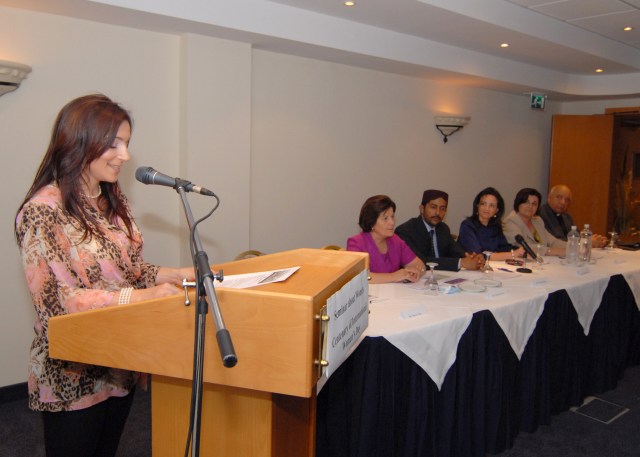
Mrs Catherine Gonzi addressing in the Seminar about women

Mrs. Catherine Gonzi, the wife of the Prime Minister of Malta, delivering speech in the “Seminar about Women”, organised by the Ahmadiyya Muslim Jamaat Malta.

Mr Atif, Mrs Muscat, Respected speakers, Ladies and Gentleman

It is a pleasure for me to share with you this opportunity to take stock of women’s issues. I thank all the previous speakers for their extremely informative and enlightening interventions about women and their roles and relations from various perspectives.

We are marking a 100 year old quest for respect towards women, which is represented by Women’s Day – an international observance introduced at a time when women in America and in Europe were struggling to secure for themselves more civil and economic rights, and for a better quality of life.

At the time, social circumstances had rendered women to be considered as inferior and subordinate to men. Back then in the early 20th century, Governments embarked on a process to endorse women’s quest for recognition. This process – officiated 100 years ago, and which is still ongoing today- actually represents an issue which is as old as humankind, disguised in a myriad of representations.

As the previous speakers have so aptly referred, respect for women features strongly in the main religions, as it also does in mythology and in history.

Read Complete Speech:

Posted in www.ahmadija.org.mt | Leave a comment

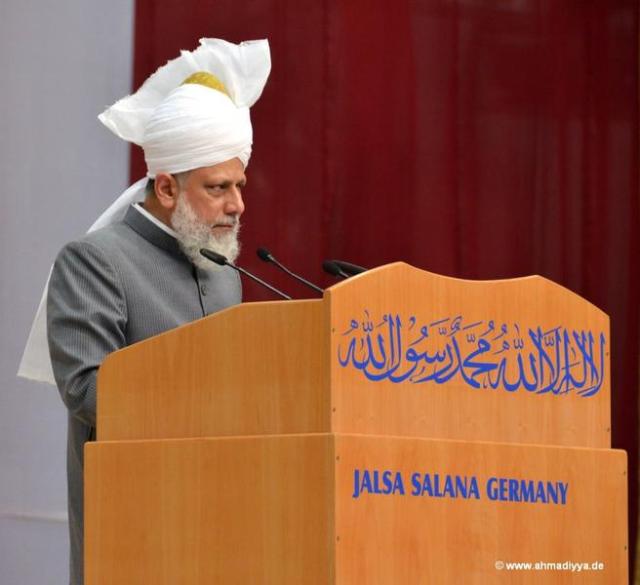
The True Understanding of Islam: Keynote address of His Holiness, the worldwide Leader of the Ahmadiyya Community

His Holiness, Hadhrat Mirza Masroor Ahmad, the worldwide Head of the Ahmadiyya Muslim Community delivered his keynote address to the German and Foreign guests, at the Annual Convention on Saturday 25th June, 2011.

His Holiness elaborated different subjects such as, loyalty to the country, separation of religion and state, terrorism, suicide bombing and freedom of faith. His Holiness also presented the True Teachings of Islam in these matters; and highlighted the beauties of the Islamic teachings.

Posted in www.ahmadija.org.mt | Leave a comment

Ahmadiyya launched national loyalty, freedom, respect, equality and peace campaign

“A true Muslim can never raise his voice in hatred against his fellow citizens, nor for that matter against the ruling authority or government of the time.”

National President of Ahmadiyya Muslim Jama’at Malta, Laiq Ahmed Atif, distributes peace pamphlets
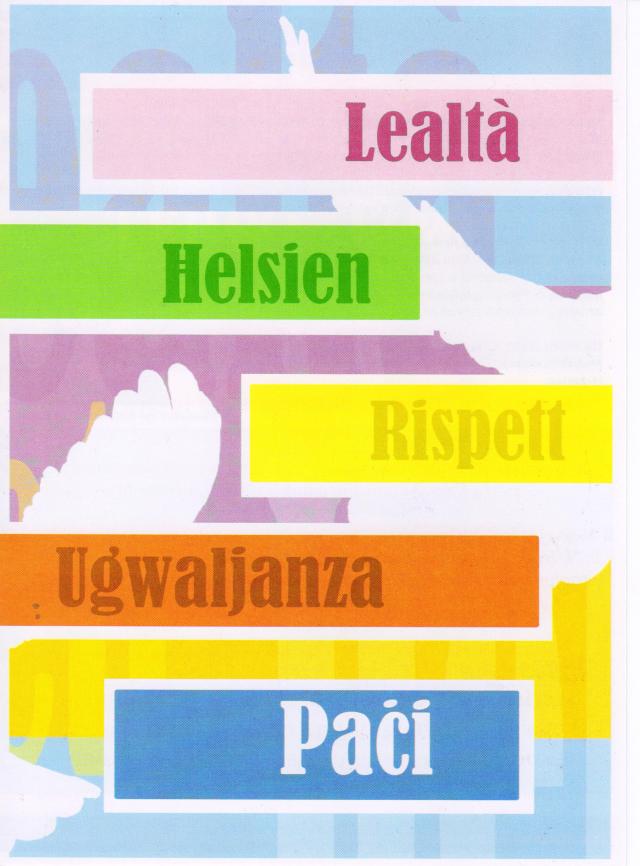
Ahmadiyya Muslim Jamaat Malta, one of Malta’s peaceful Muslim communities, continue with their national doorstep and publicity campaign to reassert true Islamic principles of peace and loyalty.The campaign bearing the slogan of: Lealà – Ħelsien – Rispett – Ugwaljanza – Paċi; was rolled out  on Friday 25th February 2011, with the Annual Peace Conference 2011.

Members of Ahmadiyya Community are presenting people the leaflets that highlight the Islam’s commitment of fundamental values and principles of loyalty, freedom, respect, equality and peace. The community is trying to show the true picture of Jihad and categorically condemns all sorts of extremism, fundamentalism and terrorism. And promote its famous slogan of “Love for all – Hatred for none”.
This drive to promote peace is repeatedly emphasized by the worldwide leader of the Ahmadiyya Muslim Jamaat, his Holiness, Hadhrat Mirza Masroor Ahmad, who said:
“A true Muslim can never raise his voice in hatred against his fellow citizens, nor for that matter against the ruling authority or government of the time. It is the responsibility of a true Muslim that he should remain loyal and fully abide by the laws of the land of which he is a subject.”Download the leaflet of peace: Malta: Ahmadiyya launched national loyalty, freedom, respect, equality and peace campaign

Posted in www.ahmadija.org.mt | Leave a comment

Ahmadiyya plants trees

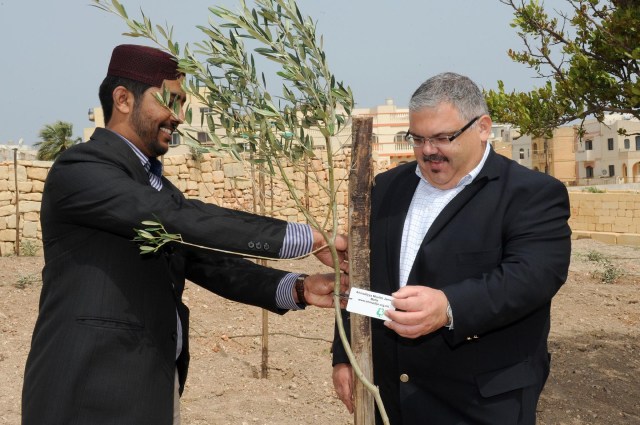
Ahmadiyya Muslim Jamaat Malta recently participated in a tree-planting event at Selmun Family Park, Mellieħa. Ahmadiyya president Laiq Ahmed Atif (left) planted an olive tree together with Rural Affairs Minister George Pullicino (right) to initiate the event. The Ahmadiyya Muslim Community planted 33 olive trees, one of which is dedicated to women, in commemoration of Woman’s Day.

THe Sunday Times Logo : Sunday, June 26, 2011 : Read original post:
Posted in www.ahmadija.org.mt | Leave a comment

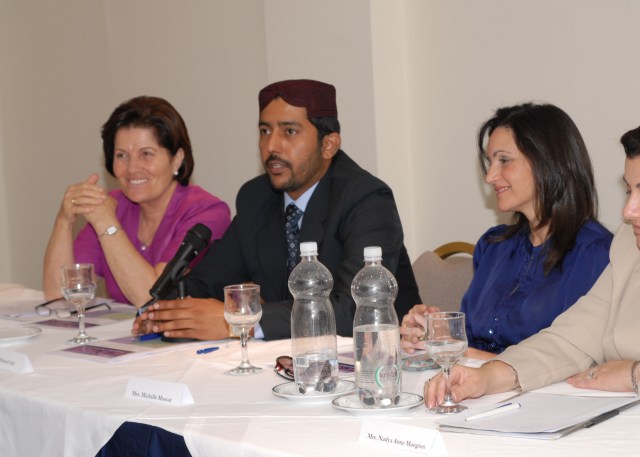
Ahmadiyya commemorated international women’s day centenary by organising a “Seminar about Women”


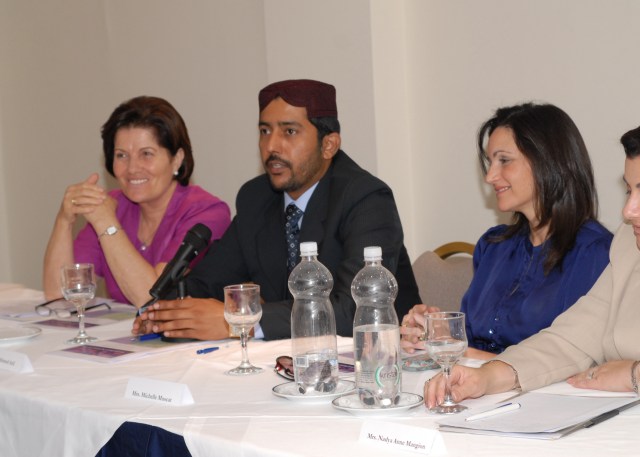
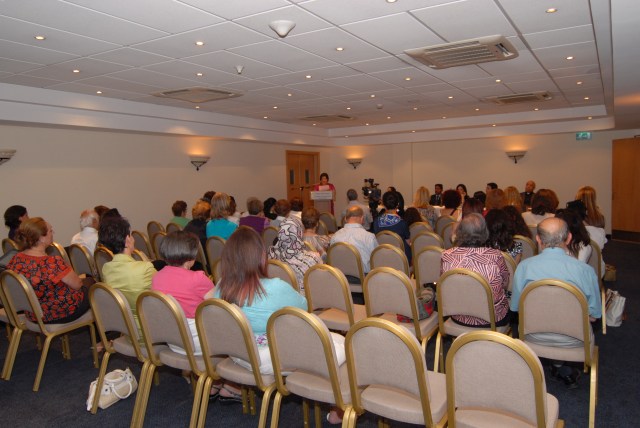
Ahmadiyya Muslim Jamaat Malta organised a historic event titled “Seminar about women”, in commemoration of “International Women’s Day Centenary 1911-2011”; on Friday 17thJune at the Waterfront Hotel Gzira, Malta.

In this respectful gathering Mrs. Catherine Gonzi, the spouse of the Prime Minister of Malta and Mrs. Michelle Muscat, the spouse of the Leader of the Opposition of Malta also delivered their talks together with other speakers. Mrs. Nadya Anne Mangion, the vice president of the National Women’s Council Malta, introduced the council and also shared the work and services of the council. Rev. Lawrence Attard, delivered his talk on the topic of “Women in Christianity”.

“Women in Islam” was the topic of the presentation of Imam Laiq Ahmed Atif, President Ahmadiyya Muslim Jamaat Malta. In his presentation he addressed the situation of women before the advent of Islam, and then showed the beautiful teachings of Islam about the dignity and honour of women. Through Verses of the Holy Quran and sayings of the Holy Prophet Muhammad, peace be on him, he spoke about the role of women as wives, daughters and mothers. He concluded his speech with the message of:

“The Ahmadiyya Muslim Community, as moderate and the most dynamic denomination of Islam in modern history, immensely believes in respect for women, and continues to advocate for the equality, education, and empowerment of women.”

In this programme more than fifty people from different denominations and backgrounds participated, spouses of four Members of Parliament also attended the event; and press gave coverage to this event. Find original post: 

Maltreatment of women ‘misinterpretation’ of Islam

The treatment of women in “so-called Islamic states” is not according to the spirit of Islam, the president of the Ahmadiyya Mulslim Jamaat in Malta said today.

Speaking in a seminar organised by the Islamic denomination to commemorate 100 years of Women’s Day, Laiq Ahmed Atif said that Islam favoured equality between both sexes and that the subjugation and cruelty to some women in the Arab world was “a misrepresentation of Islam”. Find details reported in The Times:

Posted in www.ahmadija.org.mt | Leave a comment

Ahmadiyya commemorated international women’s day centenary: Maltreatment of women ‘misinterpretation’ of Islam

The treatment of women in “so-called Islamic states” is not according to the spirit of Islam, the president of the Ahmadiyya Mulslim Jamaat in Malta said today.

Speaking in a seminar organised by the Islamic denomination to commemorate 100 years of Women’s Day, Laiq Ahmed Atif said that Islam favoured equality between both sexes and that the subjugation and cruelty to some women in the Arab world was “a misrepresentation of Islam”.

Opening the conference, Michelle Muscat, wife of the opposition leader, said the current state of affairs made it difficult – if not impossible – for women to aspire to a career or politics and raise a family.

The point was also raised by Kate Gonzi, who said that the government and political parties, “made up mostly of men” “need to appreciate the different, albeit complementary contribution that women can make, and embrace female participation”.

Find more:

Posted in www.ahmadija.org.mt | Leave a comment

“Seminar about women” – commemorating international women’s day centenary 1911-2011

“Verily, the most honourable among you, in the sight of Allah, is he who is the most righteous among you.” (The Holy Quran)

The Ahmadiyya Muslim Jamaat Malta will be hosting a seminar to commemorate the centenary of International Woman’s Day, at the Waterfront Hotel, Gżira, on Friday 17th June at 5 p.m. Respected Mrs. Catherine Gonzi, the wife of the Hon. Prime Minister of Malta and respected Mrs. Michelle Muscat, the wife of the Leader of the Opposition in Malta together with other speakers will be participating in the event. The programme will be presented by Ms. Valerie Vella. Refreshments will be served at the end of the seminar. Entrance is free and everyone is invited. To confirm attendance, call 7932 0139 or send an e-mail to amjmalta@gmail.com.

Venue: The Waterfront Hotel Gzira
Friday 17th June 2011 at 5.00pm (17hrs)
Ms. Valerie Vella:                              Presenter
Mrs. Michelle Muscat:                    Women in general
Mrs. Nadya Anne Mangion:        Work of the council of women
Rev. Lawrence Attard:                 Women in Christianity
Mr. Laiq Ahmed Atif:                     Women in Islam
Mrs. Catharine Gonzi:                   Women in general
Questions and Anwers
Refreshment
For more information please click the links below:
The Sunday Times:               –         DI-VE.COM :         –          THE TIMES:
Posted in www.ahmadija.org.mt | 1 Comment

Murder in the name of God

A policy debate on the rise of extremism internationally and its impact on Britain, House of Commons, 18 May 2011. The event was co-hosted by the Ahmadiyya Muslim Community UK and the All Party Parliamentary Group for the Community. Speakers were:

The Attorney General, The Rt Hon DOMINIC GRIEVE QC MP; Writer, broadcaster and cultural critic ZIAUDDIN SARDAR; Co-Director of the International Centre for the Study of radicalisation DR JOHN BEW; Director of Asia Pacific at Amnesty International SAM ZARIFI; and daughter of assassinated Governor of Punjab Pakistan Salman Taseer SHEHRBANO TASEER. In the absence of Siobhain McDonagh MP (Chair APPG), Rt Hon Hazel Blears MP chaired the event.

Posted in www.ahmadija.org.mt | Leave a comment

Cruelty to animals and the conduct of the Holy Prophet, peace be on him, – the mercy for all the worlds

The Holy Prophet Muhammad, peace be on him, was Rahmatullil Almeen – mercy for all the worlds, his entire life is manifestation of great love and mercy towards all mankind as well as animals. Few examples of his mercy towards animals are presented below.

“He warned people against cruelty to animals and enjoined kind treatment to them. He used to relate the instance of a Jewish woman who was punished by God for having starved her cat to death. He also used to relate the story of a woman who found a dog suffering from thirst near a deep well. She took off her shoe and lowered it into the well and thus drew up some water. She gave the water to the thirsty dog to drink. This good deed earned her God’s forgiveness for all her previous sins.

‘Abdullah bin Mas‘ud ra relates: “While we were in the course of a journey along with the Holy Prophet sa we saw two young doves in a nest and we caught them. They were still very small. When their mother returned to the nest, not finding her little ones in it, she began to fly wildly round and round. When the Holy Prophet sa arrived at the spot he observed the dove and said,  ‘If any one of you has caught its young ones he must release them at once to comfort it’ ” (Abu Dawud).  ‘Abdullah bin Mas‘ud ra also relates that on one occasion they observed an ant-hill and, placing some straw on top of it, they set fire to it; whereupon they were rebuked by the Holy Prophet sa.

On one occasion the Prophet sa observed a donkey being branded on the face. He inquired the reason for this and was told that the Romans had recourse to this practice for the purpose of identifying high-bred animals. The Prophet (saw) said that as the face was a very sensitive part of the body, an animal should not be branded on the face and that if it had to be done the branding should be done on its haunches (Abu Dawud  and Tirmidhi). Since then Muslims always brand animals on their haunches and, following this Muslim practice, Europeans also do the same.” (Life of Muhammad sa; p 372-373)

Posted in www.ahmadija.org.mt | Leave a comment

The history of religious persecution: Commemorating martyrdom of 86 Ahmadis on May 28, 2010

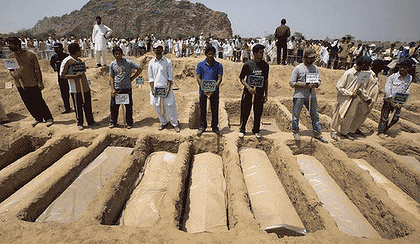
(From the archives: On May 28, 2010 in Lahore Pakistan two mosques of Ahmadiyya Muslim Jamaat were attacked by terrorists which resulted the death of 86 innocent worshippers who were gathered to perform their Friday Prayers. The following article was written after the attacks about the ‘history of religious persecution’, is reposted below for the readers.)

The history of persecution is as old as human life on this earth. The religious history is full of examples of force and violence used in the name of religion by people who had no religion. People were tortured because of their love for God by those who had not the faintest clue about God. Every prophet and messenger of God and their people suffered from persecution and violence. And their enemies always raised the voices against them.

God gives the example of the prophet Shuaib, peace be on him, when the persecutors told him: “Assuredly we will drive you out and the believers with you from our town or you shall have to return to our religion.” (7:89)

Shuaib’s reply to the threats typifies the attitude of all God’s prophets. He said: “Even though we be unwilling?” (7:89).

Is it possible to change hearts by force? Can a man be reconverted to a religion he has discarded after discovering the truth of a new religion?

No dictator has ever been able to escape this logic. The historical fact is that the sword has never ruled and will never rule men’s hearts. If the human body can be subdued by force, then the soul cannot. Belief is a thing of the heart.

The history of religious persecution, as told by the Quran, clearly shows that followers of true religion are the victims of violence. The Quran gives the examples of Noah, Abraham, Lot, Shuaib, Moses, Jesus and Muhammad, peace be on them all, who called the people to God by using love, sympathy and humility.

The Holy Quran narrates the story of the people of the cave, the Christians who were persecuted for 300 years. They used to be kept in the places for torture, the amphitheatres intended for gladiatorial combat with bulls and lions. It was in these places that naked Christians were thrown to hungry wild animals. The animals howled and made short shrift of the defenceless Christians. Sometimes these “apostates” were thrown to bulls which had been starved for several days. The starving creatures bellowed and snorted and, with hissing screeches, attacked. The Christians were gored or trampled to death.

The history of persecution repeated itself when early Muslims were laid out in the blazing sun. Burning stones were put on their chests; they were dragged through the streets of Mecca like dead animals. They were shunned and kept hungry and thirsty. They were thrown into dungeons, their belongings were seized and their families were broken up. Pregnant women were thrown off camels, their inevitable deaths the cause of merriment. Their dead bodies were cut asunder; the liver of the Prophet’s uncle was even eaten. They were pierced by arrows and cut down with swords.

The Prophet was stoned by ruffians and vagabonds and was chased and pelted by urchins till the cobblestones of Taif ran red with his blood. This bloodshed and persecution took place in the name of religion.

The painful history of persecution still continues today. In many countries, Ahmadiyya Muslim Jamaat, which is a peace-loving community that believes in love, peace, respect, harmony, tolerance and universal brotherhood, is suffering through violence and persecution. On May 28, in Lahore, Pakistan, two mosques of an Ahmadiyya community were attacked during Friday prayer. More than 95 innocent Ahmadis were killed and 125 were injured in these barbaric and inhuman attacks.

This persecution has been going on for a long time. Ahmadis are being persecuted in many countries; even certain governments and authorities are involved in this violence and persecution and laws have been made against Ahmadis.

In many cities of Pakistan, every day conferences are being held where speeches are made, banners are displayed, discussions are held and printed posters carry the message that Ahmadis ”wajibul katl” – they should be killed. They should be taken out of Pakistan, given three days to repent and change their ways and faith or else put into a firing line. Posters in this sense have been printed and are on record.

All of this is happening under the eyes and nose of the authorities.

A glance at the history of religions would more than prove that true religion does not cause hatred, persecution, repression or the suppression of thought. It is their enemies who are persecuting and using violence against the followers of that true religion.

When will man understand and stop persecution and violence against others?

(By Laiq Ahmed Atif, president AMJ-Malta) Photo: Google-images

Read Archives Post:

Posted in www.ahmadija.org.mt | Leave a comment

Second Tree planting event: Ahmadiyya plants 33 olive trees

Laiq Ahmed Atif & Hon. George Pullicino, Minister for Resources & Rural Affairs

The Ahmadiyya Muslim Jamaat Malta has participated in the tree planting event on Sunday 22nd May at Selmun Family Park Mellieha. The Hon George Pullicino Minister for Resources and Rural Affairs attended the event; also the Prime Minister visited the tree planting area.

Laiq Ahmed Atif, president Ahmadiyya Muslim Jamaat Malta planted an olive tree together with Hon. Minister George Pullicino to initiate the event, and said that tree planting was important to effectively change the environment into a better place.

In this activity the Ahmadiyya Muslim Community planted 33 olive trees as a contribution in the environmental section; it has also dedicated one tree to women to commemorate “International Women’s Day Centenary 1911 – 2011”. This was the second tree planting event by the Ahmadiyya Community.

The community believes to contribute in every social, charitable, humanitarian and welfare activity. And as there is a big climate change and pollution is on the increase, so there cannot be any better gift than to planting trees for the nation and this beautiful country, Malta. Planting olive trees is also to extend the message of peace, love and brotherhood to the entire nation; and to extend our motto, “Love for all – Hatred for none”.

Fid-dinja kontemporanja tal-lum, in-nies qed jibbenifikaw mill-invenzjonijiet xjentifiċi, li bidlu l-ħajja tagħna kompletament. Dawn l-invenzjonijiet xjentifiċi huma  ta’ benefiċċju kbir għalina lkoll. U issa ma naħsbux li nistgħu ngħixu mingħajrhom. U minħabba dawn l-invenzjonijiet naraw bidla kbira fil-klima u t-tniġġis qed jiżdied kuljum. 

Kif nafu, dawn l-invenzjonijiet għandhom effetti negattivi għal saħħitna wkoll, kif ukoll mard ta’ tip differenti qed jaffetwa n-nies. Ħafna nies qed ibatu minn allerġiji, kanċers, problemi tan-nifs, problemi ta’ ġilda, eċċ. In-numru tan-nies li jużaw inhalers qed jiżdied.

Naraw ħafa laqgħat dwar l-ambjent fil-pajjiż kif ukoll madwar id-dinja, sabiex naslu li nsalvaw il-problemi dwar l-ambjent. Ħafna diskuzzjonijiet qed jiġu organizzati biex insibu s-soluzzjonijiet ta’ kif nistgħu nagħmlu l-ambjent aħjar.

Waħda mis-soluzzjonijiet hi li nibdew inħawlu ħafna siġar kemm nistgħu f’kull pajjiż tad-dinja. Il-mistoqsija hi, għaliex is-siġra hija ta’ importanza kbira? X’inhuma l-benefiċċji tas-siġra?

Meta naqraw dwar is-siġra insibu li siġra hi vera importanti għall-ambjent kif ukoll għal saħħitna. Is-siġra tagħtina frott, kenn, injam, arja friska kif ukoll l-ossiġnu li huwa importanti ħafna għall-ħajja tagħna fuq l-art.

Hawn irrid nikteb l-istorja li qrajt ħafna snin ilu, iżda l-messaġġ tagħha huwa importanti l-istess illum kif kien qabel, anki aktar minn qatt qabel.

Qrajt li darba waħda r-re ta’ xi pajjiż kien għaddej minn qalb għelieqi u ra raġel li kien xiħ ħafna u li kien qed ħawwel siġra. Ir-re kien sorpriż u mar ħdejh u qallu:

‘‘Għalxiex inti qed tħawwel din is-siġra?’’

Ir-raġel qal: ‘‘Għall-frott, għall-kenn, għall-ossiġnu u għall-arja safja.’’

Ir-re qal: ‘‘Int taf li inti raġel xiħ ħafna u ma tafx kemm se tgħix aktar, hu possibbli li tmut qabel din is-siġra tikber, issir siġra kbira u tibda tagħti l-frott u l-kenn.’’

Ir-raġel qal: ‘‘Maestà! Din is-siġra mhux għalija. Naf li aktarx immut fil-futur qrib iżda rrid li nħalli xi ħaġa tajba lill-ġenerazzjonijiet ta’ warajja u nagħti rigal ta’ valur kbir lin-nies li ġejjin warajja.’’

U kompla jgħid li: ‘‘Din se tkun karità u rigal minni għas-snin li ġejjin, u se nirċievi l-barkiet ta’ Alla sa dak iż-żmien li din is-siġra se tibqa’ tagħti benefiċċji lin-nies.’’

Din l-istorja għandha messaġġ sabiħ ħafna; li wara l-mewt in-nies jispiċċaw imma l-affarijiet u l-għemil tajbin tagħhom jibqgħu għal dejjem. Is-siġar li jagħtu l-frott, il-kenn u l-arja safja huma wkoll wieħed mill-għemejjel tajbin li se jibqa’ għal dejjem. Għalhekk, jekk aħna rridu li n-nies jitkellmu tajjeb dwarna, wara l-mewt tagħna, allura hija importanti li aħna nħawlu ħafna siġar, kemm nistgħu.

Jekk aħna rridu li ngħixu ħajja tajba, jekk rridu li uliedna jgħixu ħajja kuntenta, jekk irridu li nħallu xi ħaġa tajba warajna għall-ġenerazzjonijiet li ġejjini, hu wisq importanti li nħawlu ħafna siġar kemm nistgħu. U nagħtu importanza kbira lil dan il-pjan.

Wasal il-ħin, li kull wieħed minna jipprova iħawwel is-siġar f’pajjiżna, li hi gżira daqstant ċkejkna iżda ħafna għażiż għalina, sabiex inħallu warajna pajjiż sabiħ, ambjent aħjar u uliedna ferħanin. Ejjew niddedikaw ruħna sabiex insalvaw l-umanità mill-problemi tal-ambjent u nagħtu dan ir-rigal prezzjuż lill-ġenerazzjonijiet li ġejjin.

By: Laiq Ahmed Atif, President Ahmadiyya Muslim Jamaat Malta
Find Original post of It-Torca:
Posted in www.ahmadija.org.mt | Leave a comment

Women in Islam: Women are inferior to no one! Girls are blessings

Islam is a universal religion. Islam is the religion that provides true understanding of God and prescribes His true worship. Islam is inherent in human nature and humans are created in accord with Islam.

Islam is a very comprehensive religion. It presents a way of life and gives guidance under all possible situations. Islam covers the entire sphere of human activities. Furthermore, in Islam, the beliefs must be reflected in actions. Islam delivers a message of peace to its adherents in their relationship to fellow human beings as well as in their relationship to God. Islam condemns discrimination based on nationality, colour or social class. There can be no master-race or aristocracy. The Holy Quran states:

O mankind, We have created you from a male and a female; and We have made you into tribes and sub-tribes that you may recognize one another. Verily, the most honourable among you, in the sight of Allah, is he who is the most righteous among you. (The Holy Quran: 49:14)

But, very unfortunately, there is one huge misconception about Islam as a large number of people believe that Islam does not give any right to women, and women are considered inferior, and they have often regarded Islamic women as being backward in a male-dominated world.

On the contrary, Islam was the first religion to formally grant the women a status never known before. In the Holy Quran hundreds of teachings which both apply to men and women are explained. The moral, spiritual and economic equality of men and women as ruled by Islam is unquestionable. The study of the Holy Quran shows that the divine scheme of regulation of the relationship between men and women, Islam has assigned a position of dignity and honour to women. Such beneficent regulation is essential for peace, comfort, happiness, and the continuation of the species and progress.

Before the advent of Islam, women were considered as a worthless creature. Women were not given any rights, they were considered as the property of man. Men had a full right and authority over women, and women had no authority whatsoever. Before Islam, women were sold as personal commodities, people used to marry their mothers, women were being divided as inheritance and people used to marry as many women as they liked.

The birth of a girl was considered to be a matter of disgrace and extreme shame. In Arab many tribes used to bury their newborn daughters alive and some ‘proud’ Arabs are even reported to have buried their newborn daughters with their own hands to escape this ignominy.

The role which women play in the Islamic social system is certainly not of concubines in harems nor of a society imprisoned in the four walls of their homes, barred from progress and deprived of the four walls of the light of knowledge. This ugly picture of the Islamic social system is only painted by internal or external enemies of Islam or by scholars who grossly misunderstand the Islamic way of life.

The only thing, which Islam would not endorse, would be to turn women into playthings, to be exploited or left at the mercy of male vulgarity. Islam does not promote such attitudes towards women.

In Islam, the status of women was simultaneously raised to such high standards that they could no longer be treated as helpless commodities. They were given an equal share in the affairs of life. Whereas previously they were distributed as chattels of inheritance, now they could inherit not only the estate of their fathers but also of their husbands, children and next of kin.

They could now stand up to their husbands and talk back to them. They could reason with them and, of course, had the full right to disagree. They could not only be divorced but they had equal rights to divorce their husbands if they so pleased.

As mothers, they were treated with such profound respect in Islam as is hard to find a similar example in other societies of the world. It was the Holy Founder (peace be on him) of Islam who was to stand for the rights of women by declaring under Divine instructions, that, ‘Paradise lies under the feet of your mothers.’

What a great tribute and honour has given to women as mothers. Can human history present any similar example to this?

The Holy Prophet has admonished:

The best amongst you is he who treats his wife best.

He who brings up his daughters well, and makes no distinction between them and his sons, will be close to me in Paradise.

These sayings alone refute the misconception that women are inferior to men in Islam, and in particular it demonstrates how much importance Islam gives to the respect for women. May the world realise the beauty of Islamic teachings and make these teachings their guide. Ameen

(By: Laiq Ahmed Atif, President AMJ – MALTA)

Posted in www.ahmadija.org.mt | 1 Comment

Islam a Fresh Perspective:Spreading the message of loyalty, freedom, respect, equality and peace

Imħabba għal Kulħadd Mibegħda għal Ħadd 

Il-Komunità Aħmadija Musulmana, temmen fil-Messija u l-Maħdi mwiegħed ta’ dan iż-żmien. Aħna, bħala komunità mnissla mill-Messija nnifsu, nemmnu fil-lealtà, fil-ħelsien, fir-rispett, l-ugwaljanza u l-paċi bla ebda kundizzjoni. Nikkundannaw kategorikament kull forma ta’ terroriżmu u azzjonijiet oħra ta’ terroriżmu li jmorru kontra l-għan tal-komunità.

Il-Koran Imqaddes jisħaq li “min joqtol bniedem, ikun bħallikieku qatel il-bnedmin kollha”. Id-dinjità tal-bniedem, għalina hija missjoni li għaliha ngħixu kuljum sabiex insaħħu. L-emmna tagħna ma tistrieħx biss fuq dan it-tagħlim sabiħ, iżda nfittxu l-okkażjoni li ngħixuh fil-ħajja tagħna ta’ kuljum. Għal din ir-raġuni, il-komunità f’Malta qiegħda xxerred dan il-messaġġ ta’ imħabba u paċi lil kulħadd; hu min hu, hi min hi.

Is-simpatija għall-umanità hija parti integrali tal-fidi tagħna. Għalhekk, il-komunità Aħmadija dejjem iżżomm ħaj it-tifsir veru tal-umanità billi tippromwovi l-motto tagħha: Imħabba għal kulħadd, mibegħda għal ħadd. Dan huwa l-prinċipju li għalih il-komunità taħdem sabiex twessa’ l-messaġġ li l-Messija Mwiegħed ta lill-umanità.

Għal iktar informazzjoni: www.ahmadija.org.mt  ;  Call: +356-79320139

Posted in www.ahmadija.org.mt | Leave a comment

PEACE Message Campaign Initiated by Ahmadiyya Muslim Jamaat

The Ahmadiyya Muslim Jamaat has initiated a Peace Message campaign worldwide. The Ahmadiyya Community in Malta is also spreading the message of Loyalty, Freedom, Respect, Equality and Peace throughout the country, and recently a campaign of distributing of leaflets has longed.

Posted in www.ahmadija.org.mt | Leave a comment

Uprising in Arab World and a Real Solution

The situation in the Middle East and in the African countries is worsening day by day. Since, the problems are increasing and people are dramatically being affected, it is but natural to have grave concerns about it. Although at present the entire world feels deep pain and there is an extreme restless feeling among the people.

The current uprisings have shaken all the Middle East and African Arab countries. The leaders, who are ruling these countries for decades, have not given proper attention to the problems of people, but, monarchs have used the opportunities to divert people’s attention to rob their own national wealth and expand grip over people.

I feel that this is my moral duty, as belonging to the Ahmadiyya Muslim Community, which is free of all kinds of politics and is exclusively dedicated to serve humanity all over the world, and we are experiencing the greatest agony on the situation of contemporary world, to show my absolute sincerity at this time of great pain and to write some sincere words with the hope that they may be a guiding-line for the Arab world to get rid out of this massacre.

These problems first sparked in Tunisia, moved to Egypt and then translated into Libya, Bahrain, Yemen and indeed Syria, and seem to be domino affects sweeping across the Middle East. As human beings how grieved we are on the current situation in these countries, and the havoc and the difficulties that are been created for the ordinary men and women on the streets and their children, are the heart rending. And we see the news and come to know what is happening there, our hearts bleed for the innocent people. And we pray that their suffering would come to an end and peace would be promoted.

The rulers of these countries are there for decades, and also their families have been closely associated with their rule of power, they all ignored the rights of their people and have taken their eyes off the sufferings of their nations. They have not ruled the country with justice, they have not thought about what the best is for their citizens, and how wealth should be distributed amongst those citizens and how their welfare should be looked after. They did not utilize the national talent; they did not provide them standard education, jobs and medical facilities. They had their own interests at their hearts which they tried to fulfil during their long years in power.

The prophet Muhammad, peace be with him, has mentioned something very beautiful, very touching, he says that: “Each one of you is a ruler and will be answerable in respect of his subjects”; “A true leader of a nation is the one who serves the nation”. And he further emphasised on this matter and said: “Your best leader is the one whom you love and who loves you, and whom you pray for and who prays for you. And the worst leader is the one you hate and who hates you, and whom you curse and who curses you.”

I believe that these few sayings are enough for the leaders of the Arab world to judge their position, where they stand today. Are they the true servants of the nation? Do the people love and pray for them? I think all the problems have cropped up in these countries by neglecting these beautiful principles.

The real solution to this horrible situation in the Arab world is clearly mentioned in the Holy Quran and that is to observe absolute justice, equally enforced from top to bottom, leaders and ordinary people and kings and beggars, no one should be superior or excluded from the justice:  “Verily, Allah enjoins justice, and the doing of good to others; and giving like kindred”; “Verily, Allah commands you to give over the trusts to those entitled to them, and that, when you judge between men, you judge with justice”; “O ye who believe! be strict in observing justiceand be witnesses for Allah, even though it be against yourselves or against parents and kindred.”

Thus, the rulers and kings of the Arab countries should do justice to the offices they hold. And the people too should realize their responsibility and not allow their countries to fall into the hands of extremists or fundamentalists. And the rulers should not arrogantly cause disorder in the land, and not be unjust, not to ignore the rights of the people, and not to allow the gap between the rich and poor to increase so much that it causes unease and paves the way for rebellion. The only path is that of righteousness and absolute justice and if both the people and rulers adhere to it, they will all prosper. 

It is my fervent prayer, and that is the greatest weapon I believe, that may God make the leaders to recognise their responsibilities and obligations; they should fulfil their duties with righteousness and establish absolute justice in their countries. And may peace prevail. Amen 

(By: Laiq Ahmed Atif, President AMJ – MALTA) 
Posted in www.ahmadija.org.mt | Leave a comment

Punishment for Apostasy and ISLAM

It is extremely unfortunate that there are many people and scholars, including, some Muslims, who believe that the punishment for apostasy in Islam is a death penalty. In some Muslim countries they practise this and punish the apostate with killing.

As I have mentioned above that Islam declares that “There is no compulsion in religion”, it clearly gives the commandment that under no circumstances may force be resorted to for the purpose of converting non-Muslims to Islam. It makes no difference whether non-belief was before or after one’s acceptance of Islam. Compelling a person to believe in Islam and to punish a person for leaving and disbelieving Islam is absolutely forbidden. The non-believers and apostates are free to accept any religion, and there is no punishment in Islam.

The Holy Quran says:

Those who believe, then disbelieve, then again believe, then disbelieve, and then increase in disbelief, Allah will never forgive them nor will He guide them to the way. (4:138)

Just ponder over this verse and think that if it had been the punishment of apostasy a death, then how can a person who disbelieved Islam come back into the fold of Islam for the second time? In this verse it is not mentioned once, but for three times, that if a person disbelieves for three times still there is no worldly punishment for him. Not even a lesser punishment is mentioned.

Religion is a matter of choice, and everybody can believe or disbelieve any religion.

The Holy Quran says:
O ye who believe, whoso from among you turns back from his religion let him remember that in place of such a person, Allah will soon bring a people whom He will love and who will love Him, who will be kind and considerate towards the believers and firm and unyielding towards the disbelievers. They will strive hard in the cause of Allah and will not at all take to heart the reproaches of fault finders. That is Allah’s grace; He bestows it upon whosoever He pleases. Allah is the Lord of vast bounty, All-Knowing. (5.55)

Whoso disbelieves in Allah after he has believed — save him who is forced thereto while his heart finds peace in the faith — but such as open their breasts to disbelief, on them is Allah’s wrath; and they shall have a severe punishment. [16:107]

And Muhammad is only a Messenger. Verily, all Messengers have passed away before him. If then he die or be slain, will you turn back on your heels? And he who turns back on his heels shall not harm Allah at all. And Allah will certainly reward the grateful. [3:145]

No corporal punishment can be understood to have been mentioned by any stretch of imagination in these verses of the Holy Quran.

“To conclude, apostasy is the clear repudiation of a faith by a person who formerly held it. Doctrinal differences, however grave, cannot be deemed to be apostasy. The punishment for apostasy lies in the hand of God Almighty, against whom the offence has been committed.” (Murder in the name of Allah, page 92, revised edition 1990)

(By: LAIQ AHMED ATIF) 
Posted in www.ahmadija.org.mt | 1 Comment

Documentary Film The Message of Islam English Full

Posted in www.ahmadija.org.mt | Leave a comment

FATWA (Documentary)

Posted in www.ahmadija.org.mt | Leave a comment

‘International Families Day’: Prosperous societies depend on healthy families

Healthy and established families are the strength of a nation and the backbone of the prosperity of a society. But the question arises: What makes a family healthy, and how we can strengthen our families?

This is a very important question that comes across to mind while discussing the issue of families. To find the answer to this question the United Nations has dedicated a day the 15th of May as the “International Day of Families”.

This dedication of a day for families by the United Nations reflects the importance and beauty of families, and alone bears witness to the greatness of our families and societies.  The International Day provides an opportunity to promote awareness of issues relating to families and increases the knowledge of the social, economic and demographic processes affecting families; to find solutions to strengthen the bonds of families; and to improve the position and well-being of our families.

I believe that strong and stable families lead to social and national consolidation and economical stability. And when there will be economical stability in the country, there will be peace in the country and that finally will lead to economical progress. In brief, for a prosperous society, strengthened families are very crucial and inevitable.

The first very important point in this regard is to try to maintain genuine peace at home, because as I have already mentioned families make a society, and families leave great effects on the life of a nation. And if the homes of a nation are in an uncertain situation, their streets also cannot be at peace and serene. Thus, it is very important to make our homes a haven of peace so that the whole country and nation at large can be at peace.

Another factor which is very important for establishing strong families is to understand that both husband and wife are equal, no one is superior or inferior to the other, they possess the same and equal rights, their feelings and emotions are the same, and both should respect the sentiments of each other. Difference of obligations and duties does not mean good or better, but it only means that with the pure sense of equality two persons are carrying and performing different duties.

The sense of commitment, tolerance, patience and forgiveness are extremely important characteristics of a valuable family life. These qualities should be exhibited by both the husband and wife. There is no doubt, that while living together in a house, on many occasions different arguments and problems crop up, and that is a part of daily life. But the best way is to respect each other’s point view, as difference of opinion also helps to build strong relations. However, feelings of respect should always prevail.

A happy family life requires that the both partners should show great morals and good values at home. They should create an atmosphere of smiling. They should not become harsh to each other. They must spend time with each other, watch TV or any programme together, join each other at the dining table, share their daily works, share some jokes and light moments, share their good and bad, and go for outings together.

A husband should help his wife at home in household chores – in cooking, cleaning and washing etc. And a wife should also try to help her husband. Some people find it strange working at home and helping in cooking and cleaning etc. But there is no harm in helping at home; it will establish a better atmosphere of love and respect at home.

Once, I came to know that a child went to his uncle’s home and found him washing plates. He was astonished and asked his mother, why uncle was washing plates, wasn’t that the job of women? This question that came in the mind of the child was because in his surroundings, he always saw women working in the kitchen, and men distancing themselves from work in kitchen or at home, and secondly because his parents did not teach him how to help at home.

Marriage and family life is an agreement of give and take and acceptance. Thus, one should not consider himself or herself always right, but, rather should admit when one at fault. And both should try to avoid those matters that are not common between them, and always try to focus on the commonalities rather than differences. And we should try to avoid those issues which may bring scratches to our relationship.

Rising social and economic disparities are also one of the factors weakening the bonds of families. There is no doubt it is a difficult time for the families to meet their ends and to manage their daily needs, but the commitment of self-sacrifice from both sides can help to overcome these hardships.

On this International Day of Families, let us renew our commitment to efforts that guarantee the prosperity of our nation, society and country at large. And let us dedicate this day really as a day for our families, a unique opportunity to renew our pledge to strengthen our families and let us spread the message far and wide as prosperous societies depend on healthy families. 

(By: Laiq Ahmed Atif, president Ahmadiyya Muslim Jamaat, Malta)

Posted in www.ahmadija.org.mt | Leave a comment

Terrorism, suicide bombing and Islam

A little glance at the recent history shows that hardly a day passes in which an Islamic event does not make headlines. Very unfortunately, in the world today, Islam is portrayed as a religion sanctioning violence, bloodshed, extremism, fundamentalism, fanaticism and terrorism.

But, in reality, there is no connection between Islam and terrorism at all; Islam is as closely related to terrorism as light is to darkness or life is to death or peace is to war. Islam very strongly condemns terrorism and encourages establishing peace and order in the land; and any act related to violence or disrupting the peace is to incite the wrath of God the Almighty.

However, one cannot deny that on many occasions some Muslims are found involved in terrorist activities either individually, on behalf of a group or on behalf of a country with a predominately Muslim population.

But, let it be very clear that we do not justify terrorism of any kind whatsoever, whatever the colour, religion, sentiment or objective the terrorist may claim to represent. Islam does not approve of disorder in any form. Islam is far from teaching terrorism. It teaches rule of law, obedience to the authorities and does not let anyone to take the law in his own hands. The Holy Quran clearly states:

“Those who create disorder in the earth, they are the real losers”; “and commit not iniquity in the earth, creating disorder”; “and Allah loves not disorder”. 

The Holy Quran in fact champions the sanctity of human life and states:

“…whosoever killed a person — unless it be for killing a person or for creating disorder in the land — it shall be as if he had killed all mankind; and whoso gave life to one, it shall be as if he had given life to all mankind.” (5:33)

 As far as suicide bombing is concerned, the Holy Quran clearly sets out its prohibition.

“And kill not yourselves. Surely, Allah is Merciful to you. And whosoever does that by way of transgression and injustice, We shall cast him into Fire; and that is easy with Allah.” (Ch.4: V.30-31)

Suicide is therefore unconditionally forbidden. When it is used as a mechanism to murder others then it becomes an even greater sin. As a protest against intentional suicide the Holy Prophet (peace be on him) has forbidden observing funeral prayer for a person who commits suicide, [unless the person was mentally ill].

After this clear teaching such terrorist actions and suicide bombing of some Muslim individuals or groups has no cover or justification at all, and they must be condemned widely.

The Fourth Caliph of the Ahmadiyya Muslim Community, Hadhrat Mirza Tahir Ahmad (ra), has explained Islam’s view on terrorism in the clearest terms. He said:

“As far as Islam is concerned, it categorically rejects and condemns every form of terrorism. It does not provide any cover or justification for any act of violence, be it committed by an individual, group or government… I most strongly condemn all acts and form of terrorism because it is my deeply rooted belief that not only Islam but also no true religion, whatever its name, can sanction violence and bloodshed of innocent men, women and children in the name of God.

God is love, God is peace!
Love can never beget hatred,
and peace can never lead to war.” (Murder in the name of Allah)

The Founder of the Ahmadiyya Community in Islam, Hadhrat Mirza Ghulam Ahmad, peace be with him, the Promised Messiah and Imam Mahdi – the Rightly-Guided by God, beautifully sums up the teachings of Islam. He said:

Be the true well-wishers of every one. There should be nothing inside you except truth and there should be nothing outside you except truth and sympathy for mankind. If you desire that God should be pleased with you in Heaven, become to each other like real brothers. 

It is our principle to have sympathy for the whole of mankind. If a person sees that fire has broken out in the house of a Hindu neighbour and he does not get up to help in putting it out, I tell you truly he is not of me. If one of my followers sees a Christian being killed and he does not go to his assistance to rescue him, then I tell you quite truly that he is not of us. (Malfoozat, viii pp 26-27)

(By: Laiq Ahmed Atif, president Ahmadiyya Malta)

Posted in www.ahmadija.org.mt | 1 Comment

Friendship in time of need

Every human life is precious and worthy, and the loss of a single human life is a tragedy and great loss, whoever the person is. The recent drowning of dozens of immigrants while trying to cross the Mediterranean Sea towards Europe was one of the biggest tragedies. There is a crucial need to find solutions to avoid the loss of innocent human lives, to examine the situation in their countries and to solve the problems which become the reason for them to put their lives at great risk.

The subject I am going to write about today is related to this issue, but it is dedicated to showing admiration and great appreciation to the wonderful and admirable rescue operations by the Armed Forces of Malta and Malta at large. And while I was writing this article I remembered a story, which I’ll be sharing to shed more light on my subject.

Once upon a time a son and his father were discussing their friends. The son said his friend was very honest and loyal to him. His father wanted to teach him what real friendship was. So, at night the father said to his son that he wanted to accompany him to see his son’s friend. The son agreed and very happily and proudly he took his father to see his friend and knocked on his door. The friend came out and asked what the matter was. When they said they were in need and asked for help, he replied that at this time of night he couldn’t help them, because it was too late.

The father then told his son that he wanted to show him his own friend and they started walking. Finally, after walking for an hour they reached a hut in the forest. The father knocked; his friend came out immediately and met them passionately, then asked if they could give him a few moments. He went back to his home and when some time passed and he didn’t return, the son spoke to his father: “We are standing outside in this dark night and he went back to his home without asking us why we are here.” His father replied, “Wait and see, wait for a few moments”.

After a few minutes the friend emerged from his home, carrying a sack full of food items, clothes, blankets and holding some medicines and money in his hand. First he apologised for the delay, and explained the reason for being late.

His lamp was not working well because there was not enough oil in it, taking him long to find the things. Then he said: “I thought that if you came at this time of night, you must be in need, so I have brought all the necessary things I had at home – food, medicine, clothing, money etc. I am also ready to go with you, because I did not know what you were in need of. I brought everything and also made myself ready to go with you. Now tell me what you need, everything is here for you.”

At that moment, the father looked at his son. This is real friendship, he told him: “A friend in need is a friend indeed!” This story has a great message, that real friendship is not one that is limited to the happy and comfortable moments, but that true friendship is indeed a friendship in a time of need and difficulty. The main purpose of writing this story is to pay great tribute to the wonderful work Malta has done for the evacuation and salvation of human beings in this difficult time of crises in African countries.

Malta really deserves great appreciation and help in this hard time. The island has done a lot for the sake of humanity, and helped vulnerable and destitute people in the sea and saved their lives. And at a time when there was little hope for them, Malta became a hope of light for those people.

Malta has once again proved that yes “a friend in need is a friend indeed”; yes we love humanity, yes we have sincere feelings for mankind, yes we feel the pain of the destitute and vulnerable humans and yes we are there to show our friendship and solidarity. May God reward this beautiful island with His everlasting favours, bounties and blessings.

Well done Malta. Long live Malta.

Read original post:

Laiq Ahmed Atif. The author is president of the Ahmadiyya Muslim Jamaat Malta. amjmalta@gmail.com

Posted in www.ahmadija.org.mt | 1 Comment

THE IDEAL FAMILY LIFE

Strengthening families is a subject which is one of the core issues of the contemporary world. Hundreds and thousands families are breaking every year around the world. Lack of stable and long-lasting families is a reality which cannot be denied. But the important point to discuss is to find the reason why marriages are breaking. What are the problems? And how we can establish strong, faithful and lasting marriages and families?

I think it is very important and crucial to look for the solutions to strengthen our families. And I believe that strong families guarantee strong societies and stable and peaceful countries. If people are happy and content they can contribute much in the building of better societies and communities. 

First of all it must be understood that what marriage is. Marriage or wedding is a legal union between a man and woman, in other words, it is an agreement under which a man and a woman live as husband and wife by legal or religious commitments.

Marriage is a divine bond between husband and wife so as to enjoy social and intimate relationship with each other and to have children. It is one of the most sacred divine contracts between them, so it must be a source of peace and comfort for both of them. Marriage is a part of a social system, which lays down detailed guidelines about the relationship between the two genders. This all makes a family.

One of the main purposes of marriage is to guard against evils and immoralities, to establish a loving and peaceful society and the procreation and protection of human race. And that a mutual love would develop between the couple safeguarding them against the distress of loneliness.

But a question arises: How can we make this relationship of a family stronger and lasting? This is a very important question which should be given great importance. Please permit me to write a few basic points which are the basis of a strong and faithful family.

In status men and women are equal; no one is superior or inferior to the other. But, of course, responsibilities and obligations are different. Therefore respect and love must always be exhibited for the other partner.

The selection of a faithful life partner is a very important factor, for that one must pray to God for a faithful life-partner. In selecting a life partner compatibility is one of the most important factors. In connection with compatibility, there are many things to be considered but faithfulness, morals, human values, religion and spiritual status should be preferred. This is so because, all other things are for a period of time and they are mortal but spirituality and faithfulness will last throughout their life. Consideration is given to social and economic position and worldly means of livelihood. In the same way, family background, education, age and health status are also considered. There is no doubt that the whole world is full of blessings, but there is no greater blessing of the world than a pious life partner.

The relationship between husband and wife should be as between two true, sincere and faithful friends. The husband should treat his wife with great love and respect; the same should be done by the wife. Everyone should try to be the first to help. However, unfortunately, there are those who treat their spouse with such severity and strictness and do not behave with decency and politeness. Such an attitude is most objectionable and is the enemy of a good family life. Respect, love, tolerance are the great weapons to kill such attitude, the enemy of the family.

The role of parents is also very crucial, and they should act in a benevolent manner towards their children. And when children have grown up, the parents, as they are the best well-wishers of their children and that they have a great personal experience of married life, have to play a vital role to teach their children in a most appropriate manner about marriage, and what a suitable and faithful spouse has to be. However, children should be free to take their decisions.

Husband and wife should never keep secrets from each other. They should never do anything that they feel the need to hide from each other. They must keep it in mind that although the spouse does not know about such behaviour, God does see, and they will lose respect for each other when the matter is finally discovered. But as human beings, if someone has done anything against the wish of the partner, it should not be hidden but they should inform clearly one another, as that is the way to retain respect. To hide it leads to disgrace and disrespect. So, a better understanding and sharing everything is also very important.

When one of the partners is angry with his/her spouse, one should not start arguing immediately but should wait for the right time to make the spouse realise his/her error. This will surely bring more harmony, respect and understanding between them. Showing patience is very important in a married life, as it is a great factor to solve many arguments and problems. One should keep in mind that, there are always problems in married life when there is criticism, and lack of trust and confidence in each other.

Husband and wife as life partners and have great responsibilities and obligations. Both of them must have a great concern and feelings of love and compassion for each other. Their sentiments and emotions must reflect love and respect for each other. They must become the garment for each other, and as garments are used to cover and protect one from extreme climatic conditions, to look civilized, nice and elegant and to cover weaknesses, faults and blemishes, husband and wife should show these qualities for each other, they should also exhibit these qualities between themselves.

As every person likes to have a pretty garment, to look nicer, the marriage partners playing the role of good garments should bring out and enhance each other’s beauty and should make every effort to make the spouse cheerful and happy.

As garments cover any fault or blemish of the body, in the same way, the marriage partner must cover the faults or weaknesses of the spouse. This is only possible if there is open-mindedness, forbearance and patience. These qualities must be exhibited by both sides. It is not possible that one partner shows patience and the other criticism, one overlooks and the other nags.

When playing the role of perfect garment covering the weaknesses or faults of the other, none of the two should disclose or advertise the shortcomings of the other. Each partner should compensate for the weaknesses of the other and fill the voids of the other to make a beautiful whole.

To take care of the simile of the garment’s role in safeguarding one from the effects of bad weather, both should help each other in sailing through occasions of grief, pain and loss to either or both parties, and in consoling and supporting each other during physical and emotional adversities.

Better atmosphere and reasonable bringing up of the children is also very important for strong and lasting families, because if the children are not treated with respect and values, how can it be possible that they will build their strong and valuable relationships? But, I am very certain that if children are brought up in a family atmosphere with teachings of values, they will succeed in building strong families when they will reach that time. Here, it should be clear as well that it is not enough to teach children good values; showing such valuable values is even more important. And as it is said that ‘actions speak louder than words’, it is very important and crucial that parents should be practical in what they teach; while children should be brought up in a practical atmosphere of values.

Children are the future of any society and community, thus they must be treated and educated very well, and we must respect our children and cultivate in them the best of manners. A valuable upbringing of the children is important for healthy families, because a healthy fruit depends upon a healthy tree, and a healthy tree depends upon a healthy soil. If the family is healthy the children will be enriched with values and great moral qualities.

We hope and pray that Almighty God may enable everyone to live a happy and prosperous ideal family life. 

By: Laiq Ahmed Atif, President Ahmadiyya Muslim Jamaat. amjmalta@gmail.com
Posted in www.ahmadija.org.mt | 1 Comment

Peace Conference AMJ-Malta Alfzal Report

{Alfzal Rabwah, Monday, May 02, 2011. Pages:3,4 & 6}

Read More:

Please also find the report of 1st Peace Conference of AMJ-Malta 2010: 

Posted in www.ahmadija.org.mt | Leave a comment

Love and respect towards Mother

Why do we celebrate Mother’s Day? May be for many of us, the answer is very simple. We do it because we are expected to, and if we didn’t acknowledge Mom on Mother’s Day, she would feel very hurt and disappointed. But how many people stop to really think about this day and what it means? Although the date varies from year to year, Mother’s Day is celebrated all over the world, on one day or another, with many different traditions.

Mother is a very beautiful and priceless gift of God. Mother is a name of deep love, passion, service, sympathy, generosity and great kindness. Mother’s lap is the best place for a child where he finds himself fully satisfied, confident and safe from all the dangers of the world. In our daily relationships there is no alternative of mother.

This is mother who bears all the difficulties to create comfort and to provide all the necessities for her child, and sacrifices even her rest and sleep during the nights for the child. And she takes care of the child with deep emotions, and with pure and dedicated spirit, without seeking any reward.

This is mother who prays days and nights for the betterment, good health and prosperous future of her child. The love of mother is so pure and deep that, it has no example at all in worldly relationships. Permit me to write some quotes of some noble personalities of the world, who have described the mother in such beautiful words.

“Mothers are fonder than fathers of their children because they are more certain they are their own.” (Aristotle). “I remember my mother’s prayers and they have always followed me.  They have clung to me all my life.” (Abraham Lincoln)

“A mother is the truest friend we have, when trials heavy and sudden, fall upon us; when adversity takes the place of prosperity; when friends who rejoice with us in our sunshine desert us; when trouble thickens around us, still will she cling to us, and endeavour by her kind precepts and counsels to dissipate the clouds of darkness, and cause peace to return to our hearts.” (Washington Irving)

Because of the mother’s important role in human life, every religion and civilized society assigns a position of great honour and respect to a mother. The love, devotion and tenderness due to parents, and especially to the mother, are repeatedly stressed in all the religions. The Holy Bible states:

“Hearken unto thy father that begat thee, and despise not thy mother when she is old.” (Proverbs 23:22).

“Children! Obey your parents in the Lord: for this is right. Honour thy father and mother; which is the first commandment with promise; that it may be well with thee, and thou mayest live long on the earth.” (Ephesians 6:1-3)

The Holy Quran says: “We have enjoined on man benevolence towards his parents.” (The Quran 29:9). “Show kindness to parents. Should either or both of them attain old age in thy lifetime, never say unto them any word expressive of disgust nor reproach them, but always speak gently to them. Be humbly tender with them and pray: My Lord, have mercy on them even as they nurtured me when I was little.” (The Quran 17:24-25).

Mother’s day comes to remind us and to check that do we are taking enough care of our mothers? If not, then, we must start to show a great respect, love and care to our parents and then never stop this kindness. The care a mother shows for her children cannot be repaid ever, not even, in the whole life. But, we must be thankful for her kindness and always take care of her, and try to win the pleasure and love of God.

May God always bless our mothers, may He shower His endless bounties and favours to our mothers. Ammen

By: Laiq Ahmed Atif, President Ahmadiyya Muslim Jamaat Malta (The Times Supplement for Mother’s Day: Friday 29th April 2011)

Posted in www.ahmadija.org.mt | Tagged , | 2 Comments

Bridges, not walls

The pace at which peace is fast disappearing from the world today has caused each sane and sensible person to worry.

This includes religious people, politicians, civil society, and leaders of different countries and institutions. Everyone has valid concerns about peace and stability of the world. Man, who considers himself to be educated and civilized, is reverting to the period of ignorance when personal ego and false pride led people to cut each other’s throats so much so that whole tribes and dynasties indulged in such barbaric acts.

A glance on the current situation of the contemporary world bears witness that, today, the world is riddled with problems; East to West, North to South, everywhere there are countless troubles and difficulties. In brief, every part of this planet is surrounded by huge discomfort. Human beings are suffering through poverty, fighting, killing, unrest, disorder, as well as with social and economical crises. Natural disasters such as earthquakes, floods, famine, lack of food, etc. are also seen in large numbers and on a huge scale.

The year 2010 was one of the exceptional years during the past decades in which more than 295,000 human deaths and a loss of $130 billion was recorded. And a total of 950 natural disasters were recorded, making 2010 the second worst year since 1980.

But, unfortunately, and very amazingly, for man who is already riddled with endless problems, there are certain powers, certain organisations, and certain groups of people who are building walls of hatred. And these walls are getting higher nowadays, even more now than ever before in the history of mankind.

Sometimes people who struggle for their freedom are attacked, sometimes religious places are demolished, sometimes religious books and symbols are dishonoured, sometimes extra burdens are put on the shoulders of people and sometimes false and baseless allegations are raised against sovereign countries and nations, in audience of hundreds of people.

The uprisings in some African and middle-East countries have taken hundreds of innocent lives and the economical loss is not less than millions. Burning of the Holy Quran in Florida, attacks on churches in Indonesia and Pakistan, demonstrations in Afghanistan, political instability in Sierra Leone, suicide bombings in the name of religion, are all worrying aspects of today. These acts will achieve nothing but have caused distress and anger to millions of peace loving persons worldwide.

When one ponders on the current situation, many questions come to mind. Aren’t the walls of hatred already too high? Is there any need to make them even higher? Aren’t bridges, which can unite us, already lacking? Isn’t the world already full of unrest, instability and uncertainty? Aren’t these walls of hatred already causing too much trouble on this planet?

Today the world needs peace, love and brotherhood. The world needs an end to wars. Instead of walls of hatred being erected, we need peace to prevail and for this to occur people of all faiths, countries, nationalities and backgrounds must join together for this noble cause.

“Like for your brother what you like for yourself”: this is a golden principle for establishing peace and tranquility in the world. If everyone tries to abide by this principle, I am pretty sure we can create an atmosphere of serenity throughout the world. This principle uproots all estrangement and feeling of conflict, and sets a system based on equality and justice and discourages double measures. But it is unfortunate that most of the people of our day are engrossed in self-interest and in accumulating every benefit for themselves to the exclusion of others.

“Blessed are the peacemakers”. What beautiful words. Every human being who does his or her best to establish peace has been given assurance that he or she will be blessed by the Almighty Lord. He or she will enjoy the blessings and bounties of God in this world and in the hereafter.

The world cannot afford more uncertainties, so the seeds of hatred, malice and intolerance should not be sowed because they will destroy the peace of the world and will create disorder in the land. The time requires sowing the seeds of love, respect and tolerance, as these values will guarantee the peace, serenity and tranquility of the world.

In brief, building bridges of unity and harmony and demolishing the walls of hatred and malice is need of today’s world.

By: Laiq Ahmed Atif – President Ahmadiyya Muslim Jamaat Malta
The Malta Independent:
http://www.independent.com.mt/news.asp?newsitemid=123776
Posted in Ahmadiyya: The True Islam, www.ahmadija.org.mt | Leave a comment

Eżempju eċċelenti lill-mexxejja tan-nies

Il-mexxej il-veru tan-nies huwa dak li dejjem lest biex iservihom. Nemmen li kull mexxej li huwa verament jaħseb li hu l-mexxej tal-poplu tiegħu, huwa importanti li dejjem ikun lest biex iservi l-poplu tiegħu, u dejjem jaħdem għall-interess komuni u qatt ma jaħseb għall-interess personali u tal-qraba tiegħu meta jieħu d-deċiżjonijiet.

Kull persuna u kull mexxej li jmexxi n-nies, il-pajjiż, il-familja, eċċ, se jwieġeb quddiem Alla dwar dak kollu li għamel fil-ħajja tiegħu bħala l-mexxej jew ir-ragħaj. Il-mexxej tal-pajjiż se jwieġeb dwar l-għemejjel u d-deċiżjonijiet li ħa, il-mexxej tal-familja se jwieġeb dwar l-affarijiet tal-familja, il-mexxej reliġjuż se jwieġeb dwar ir-responsabbiltajiet tiegħu, l-għalliem għandu jwieġeb dwar ix-xogħol tiegħu. Fil-qosor kull persuna li għandha r-responsabbiltajiet għandha twieġeb quddiem Alla f’Jum il-Ħaqq.

L-istess meta nħarsu lejn il-mexxejja politiċi nindunaw li dawn għandhom responsabbiltajiet kbar fuq spallejhom. Dan huwa d-dmir u d-dover tagħhom biex jaraw kif jgħixu n-nies tagħhom; għandhomx xi problema; għandhomx il-bżonn ta’ xi ħaġa.

Dan huwa kkunsidrat essenzjali ħafna; li dawk li għandhom l-awtorità se jkunu l-iktar sensittivi għall-kawża tal-poplu biex ma jkunx hemm il-bżonn għal xi għamla ta’ gruppi ta’ pressjoni – gruppi ta’ nies organizzati li għandhom saħħa kbira biex jinfluwenzaw l-opinjoni pubblika bil-propaganda.

Mill-aħħar ftit xhur nistgħu naraw li hemm xi pajjiżi (fil-parti l-kbira Musulmani), li huma mdaħħla fi problemi kbar. Irrid nikteb storja waħda li għandha messaġġ ċar u qawwi għal dawk il-pajjiżi Musulmani u l-mexxejja tagħhom fejn in-nies qegħdin ibatu mill-problemi kbar u jsofru minn uġigħ kbir minnħabba s-sitwazzjoni ħarxa f’pajjiżhom:

Darba waħda Umar, it-Tieni Kalif tal-Iżlam, kien għaddej minn triq qrib il-belt ta’ Medina bil-lejl. Din kienet id-drawwa tiegħu biex jimxi fit-toroq billejl biex jara b’għajnejh is-sitwazzjoni tan-nies li kienu taħt il-ħakma u s-saltna tiegħu. Meta kien għaddej mit-triq sema’ minn dar il-biki tat-tfal li dehru muġugħin. Hu ħabbat il-bieb u meta l-mara tad-dar fetħet ra li kien hemm tlett itfal li qegħdin madwar in-nar u fuq in-nar kien hemm kitla tagħli. Hu staqsa x’ġara? Għaliex it-tfal kienu qed jibku? U x’kienet qed issajjar? Hi qalet: “It-tfal tiegħi kienu bil-ġuħ u ma kellix biex nagħtihom x’jieklu. F’din il-kitla hemm l-ilma u xi ġebliet biss, u għamilt dan biex nagħtihom l-impressjoni li jiena qed insajjar xi ħaġa għalihom. Dan huwa dak li qed tara.”

B’uġigħ kbir u diqa ta’ qalb, Umar immedjatament reġa’ lura u mar dritt lejn il-kamra tal-gvern fejn kien hemm affarijiet tal-ikel. Hu ġabar xi dqiq, butir, laħam, tamal u xi affarijiet oħra u poġġa kollox fi xkora. U qal lill-gwardjan li kien hemm ħdejh għall-għajnuna biex jerfa’ l-ixkora fuq spalltu. Il-gwardjan baqa’ skantat u qal: “Għaliex qed iġġorrha fuq dahrek? Jiena nista’ nġorrhielek fejn trid.”

Umar wieġeb: “Bla dubju tista’ ġġorr dan il-piż għalija llum, però min se jġorrli l-piż u t-tagħbija tiegħi f’Jum il-Ħaqq?” Jiġifieri li f’Jum il-Ħaqq, il-gwardjan ma jkunx jista’ jwieġeb f’isem Umar li kif hu (Umar) qeda r-responsabbiltajiet tiegħu. Hu kellu jerfa’ r-responsabbiltajiet tiegħu huwa stess. Dan ukoll kien minħabba li kien jixtieq jgħin lil dik il-familja li kienet għaddejja minn dan il-perjodu diffiċli. Hu ħass, fil-fatt, li l-pajjiż kollu u dak kollu li jikkonċernah kienu r-responsabbiltà tiegħu u dan kien dmiru biex jaqdih hu nnifsu.

Umar mar lura bl-ikel kollu u tahom lil dik il-mara, u qalilha li meta jkollha bżonn ta’ xi ħaġa tmur għandu. L-għada filgħodu beda wkoll għajnuna finanzjarja għal din il-familja, biex jgħixu aħjar u b’dinjità.

Dan huwa eżempju ċar u tajjeb għal dawk li huma fil-gvern. Dan huwa d-dmir ta’ kull mexxej biex jara kif jgħix il-poplu tiegħu u x’għandu bżonn. Jekk kull mexxej jaħdem b’din il-viżjoni, jien ċert li nistgħu nbiddlu d-dinja kollha u nistgħu neliminaw il-faqar mill-univers kollu.

Nifhem li dan huwa impossibbli għall-kap ta’ kull gvern biex fiżikament jikkopja dak li għamel Umar, imma kemm bl-ispirtu u bl-attitudni hemm eżempju eċċellenti. Importanti li dan l-ispirtu jkun segwit kullimkien. Jekk il-gvernijiet isiru sensittivi għall-kawża u t-tbatija tal-poplu, allura, anke qabel il-poplu jibda biex isemma’ l-leħen muġugħ u s-sens ta’ deprivazzjoni, dawk fl-awotorità jkunu obbligati biex jieħdu miżuri rimedjali u meħtieġa, mhux minħabba l-vuċi tal-poplu deprivat, iżda mill-vuċi urġenti tal-kuxjenza tagħhom stess.

Imma, sfortunatament, naraw li hemm mexxejja li joqtlu n-nies tagħhom, jużaw il-forzi kontra l-poplu tagħhom u jipprattikaw il-vjolenza fuq in-nies li jgħixu taħt il-ħakma u s-saltna tagħhom.

Nappella lil dawk il-mex-xejja, li huma għandhom jiksbu lezzjoni minn dan l-eżempju nobbli u jagħmlu mill-aħjar li jistgħu għan-nies tagħhom; jagħtuhom dak li għandhom bżonn; jippruvaw jeliminaw il-problemi, l-uġigħ u t-tbatija tagħhom. Għax fl-aħħar mill-aħħar, kulħadd huwa r-ragħaj u se jwieġeb quddiem Alla f’Jum il-Ħaqq. Dak li ma jintlaħaqx minn għajn il-bniedem, jintlaħaq dejjem minn għajn Alla.

Għal-iktar informazzjoni:

IT-TORĊA, 17.04.11: minn Laiq Ahmed Atif, President Ahmadiyya Malta

 http://www.it-torca.com/news.asp?newsitemid=11446

Posted in www.ahmadija.org.mt | Leave a comment

Report published about Peace Conference 2011

 Ahmadiyya Muslim Jamaat Malta organised “Peace Conference” on 25th February, at the Grand Hotel Excelsior, Floriana. In this gathering H.E Dr Eddie   Fenech Adami, President Emeritus of Malta; Hon. Dr Owen Bonnici, MP and Shadow Minister; Rev. Dr Joseph Farrugia, lecturer at University of Malta; Mrs. Meena Vaswani, lecturer on Hinduism and culture and Dr. Iftikhar Ahmad Ayaz O.B.E, Head of the Tuvalu Islands Mission in the UK, and Senator of the World Nations Congress delivered their talks on the importance of peace and how to establish peace in our societies. Audience also put their questions to the speakers. Nearly 80 people, from different sections of the society attended this very interesting, informative and important meeting.

For More Click:

 http://issuu.com/malta.news/docs/mn02_042011_4_v9/13?mode=a_p 

MaltaNews.com http://www.maltanews.com.mt/mediakit/epaper/

Posted in www.ahmadija.org.mt | Leave a comment

Ahmadiyya helps Puttinu Cares

The Ahmadiyya Muslim Jamaat presented a donation of €200 to Puttinu Care Malta, during a programme ‘Affari Taghna’, especially dedicated to collect donations for Puttinu Care.

Laiq Ahmed Atif, President Ahmadiyya Community Malta, presented the donation to Mr. John Bundy, the presenter of the programme, on Friday 15th April.

To watch the Video, please click on the link below and start from the Time 1:49 

http://public.di-ve.com/streaming/on_demand_media_streamer.aspx?id=4807&encoding=8&backUrl=streaming%2fon_demand_event_encoding.aspx%3fid%3d4807
Posted in www.ahmadija.org.mt | 1 Comment

Muhammad the Prophet (PBUH)

History Channel – Biography of Muhammad

Muhammad (born 570, Mecca, Arabia [now in Saudi Arabia]—died June 8, 632, Medina) founder of the religion of Islam, accepted by Muslims throughout the world as the last of the law bringing prophets of God.

Although his name is now invoked in reverence several billion times every day, Muhammad was the most reviled figure in the history of the West from the 7th century until quite recent times. He is the only founder of a major world religion who lived in the full light of history and about whom there are numerous records in historical texts, although like other pre-modern historical figures not every detail of his life is known. Because Muhammad is one of the most influential figures in history, his life, deeds, and thoughts have been debated by followers and opponents over the centuries, which makes a biography of him difficult to write. At every turn both the Islamic understanding of Muhammad and the rationalist interpretation of him by Western scholars, which grew out of 18th- and 19th-century philosophies such as positivism, must be considered. Moreover, on the basis of both historical evidence and the Muslim understanding of Muhammad as the Prophet, a response must be fashioned to Christian polemical writings characterizing Muhammad as an apostate if not the Antichrist. These date back to the early Middle Ages and still influence to some degree the general Western conception of him. It is essential, therefore, both to examine the historical record—though not necessarily on the basis of secularist assumptions—and to make clear the Islamic understanding of Muhammad and of the Western audience.

To watch the documentary click here

Posted in www.ahmadija.org.mt | 3 Comments

Honouring human liberty and freedom

One common and most cherished fruit of life is liberty and freedom. Freedom is a basic right of all living things, man being no exception. Man is the embodiment of liberty, which is deeply rooted in him.

But, very amazingly, we find that certain man-made laws are against the liberty and freedom of man in the final analysis and such laws deprive a man of his fundamental human rights.

Sometimes, laws are made against displaying Christian crucifixes; sometimes against building minarets on mosques; and sometimes we find that some countries stand against building places of worship, such as synagogues, churches or mosques. And, most recently, laws are being introduced against the hijab or veil in certain countries.

Is this a definition of modern democratic governments that claim to safeguard the rights of their peoples? Is this the way to bring together people of different nations? Is this the way to foster love and affection among people? Most certainly, every just-minded person will oppose this because these things will build the walls of hatred ever higher and destroy the peace of the world.

These issues, thus, have become a source of sarcasm. However, there are some sober-minded people in whose hands are the reins of the Executive and Legislature who should not interfere with such matters. Should legislation be passed against Christians and Jewish ladies who also adopt religious attire? If bans are imposed against the Muslims, then Muslim countries may impose restrictions on some forms of Western dress in response. This issue has the potential to snowball and it will affect the peace of the world.

Let me make it very clear, the Ahmadiyya community does not support any such motion against human rights, whether in Muslim countries or in Christian countries or anywhere else in the world. We support and believe in full freedom and liberty for all human beings.

By all means, if there is any covering that hides the identity of a person and it is necessary to remove it to identify a person, then the governments or the authorities have the right to do so.

But what a travesty that a woman may be deprived from travelling simply because she is wearing the hijab!

Or a human life may be deprived of care in a hospital and left in the jaws of death because she was wearing a veil. Or to deprive a girl of education, however intelligent she may be, thus losing a national talent of a country only because she chooses to observe hijab or veil (a religious duty) not out of any compulsion but out of her own free will.

It is true that some Muslim women observe these teachings of Islam in such a manner that they have put on themselves some burdens that Islam did not prescribe. The purpose of the veil is to give women respect, honour and peace and not to burden them.

And Islam speaks in terms of a very moderate veil to provide protection to women and it does not say that women should be kept only at home or that they should wear those kinds of garments that even cover their eyes, hands, feet etc. and cause problems for them even to walk easily in the streets. Islam says you must remain moderate in the way you talk and behave.

The Ahmadiyya Muslim Jamaat believes that a person’s choice of dress is a personal matter and a basic human right as are other rights. It believes that every human being must be given full liberty and freedom to practise his or her faith in every country, be it a Christian or a Muslim country. Islam teaches modesty for both men and women but underlying all Islamic injunctions is the Qur’anic principle that “There is no compulsion in religion”. Thus, if a woman, whether Muslim or non-Muslim, chooses not to cover her head then that is her right but, on the other hand, if a woman, whether Muslim or non-Muslim, chooses to cover her head or face then that too is her right and ought never to be interfered with.

Laiq Ahmed Atif,  president, Ahmadiyya Muslim Jamaat Malta: The Times, 6.7.2010  http://www.timesofmalta.com/articles/view/20100716/opinion/honouring-human-liberty-and-freedom
Posted in www.ahmadija.org.mt | 1 Comment

Khilafat rejects religious militancy

…The Ahmadiyya Muslim Community, however, stands out as Muslims who believe in the Messiah — Mirza Ghulam Ahmad of Qadian, India — the Community was founded in 1889 and spans over 195 countries with membership exceeding two hundred millions. After the demise of Mirza Ghulam Ahmad in 1908, a large number of followers gathered and unanimously elected Moulana Nooruddin as the first khalifa. Since then, four more khalifas have been elected, who have focused on serving the faith and transforming the faithful, as opposed to establishing a Muslim state. Hazrat Mirza Masroor Ahmad is the fifth Khlaifa and the Present Supreme Head of the world-wide Ahmadiyya Muslim Community in Islam.

From its inception, the Ahmadiyya Khilafat has categorically rejected religious militancy in every form. When faced with bitter persecution, it practices patience and perseverance. When subjected to intolerance, it preaches peace and tolerance. It champions the cause of the dispossessed and works towards uplifting the oppressed through international humanitarian efforts. It has conquered no land and possesses no earthly dominion, but it wields its influence over the hearts and minds of millions as a force for good in the world.

So there need not be any fear of the true Islamic concept of khilafat. This Islamic system of leadership does not threaten to gain any political control, nor does it pursue the establishment of a politico-religious state. Let us walk away from this understanding of caliphate and understand that khilafat can serve to guide Muslims and spiritually reform the world.

http://www.lakbimanews.lk/portal/news/index.php?option=com_content&view=article&id=1098:letters-a-events&catid=39:lounge&Itemid=11#comment-802
http://www.lankaweb.com/news/items/2011/04/05/uprising-in-arab-world-%E2%80%93-a-real-solution/
Posted in www.ahmadija.org.mt | 1 Comment