
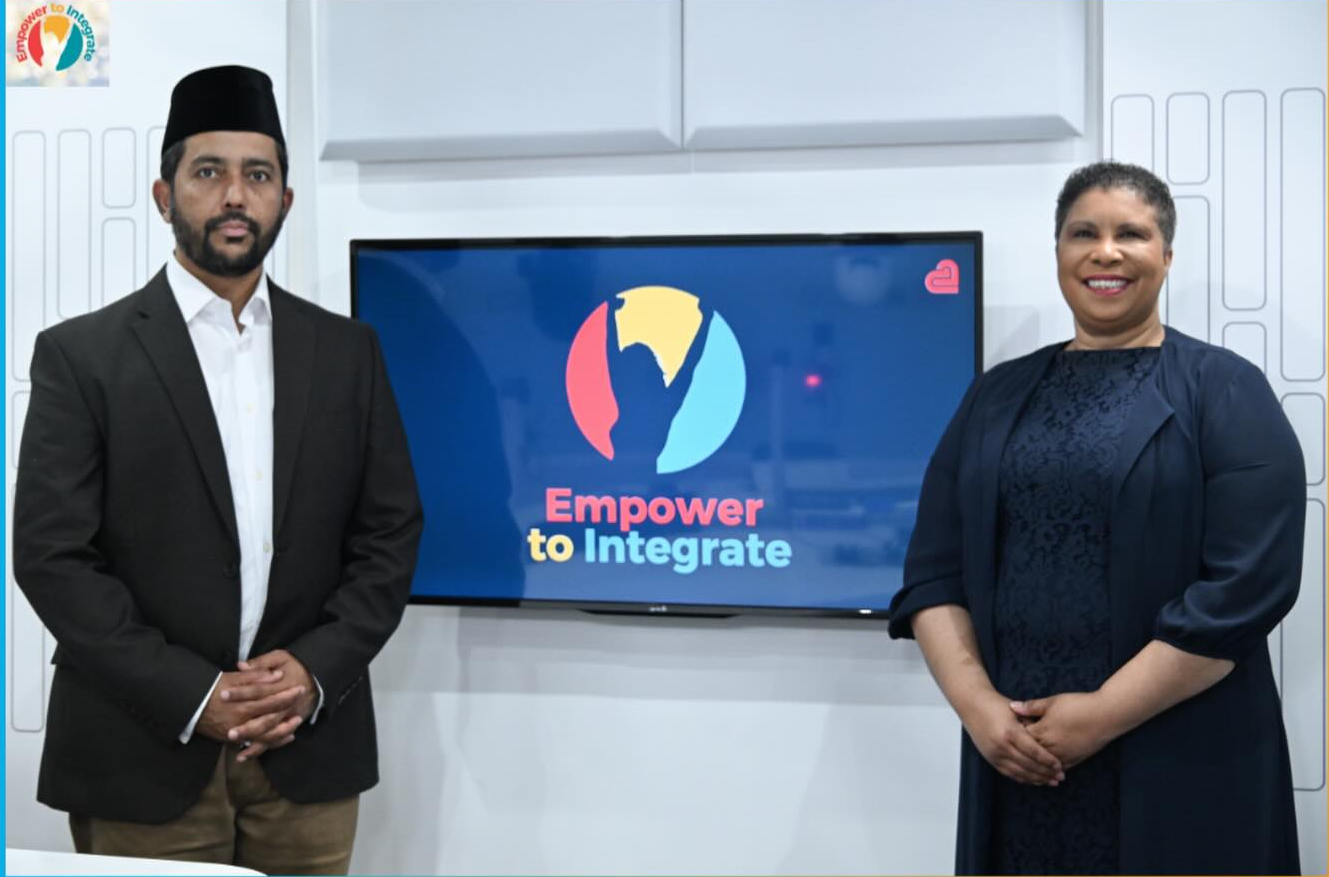
 Photo: Facebook | Africanmediamalta
Source: Newsbook.com.mt | By African Media Association Malta | May 13, 2026 It is a phrase often used to highlight difference but what if that difference is not a barrier, but a bridge?
This question framed the discussion in Episode 7 of Empower to Integrate, aired on RTK103, where host Nazlee Mayhew spoke with Imam Laiq Ahmed Atif, President of the Muslim Community in Malta, about faith, identity, and the role of spirituality in shaping more inclusive societies.
Drawing on his experience in interfaith engagement, Imam Atif described his role as extending far beyond leading prayers. It is, he explained, a mission grounded in guidance supporting individuals not only spiritually, but also socially and morally, while encouraging them to become active and responsible members of society. This broader perspective set the tone for a conversation that moved beyond religion as a point of difference, and instead positioned it as a potential force for connection.
At the heart of the discussion was a simple but powerful idea while religious practices may differ, the values that underpin them are often the same. Compassion, respect, and service to others are principles shared across faiths, offering a common foundation for coexistence. When these shared values are prioritised, faith becomes less about division and more about building understanding.
In Malta’s predominantly Catholic context, this shift is already taking shape. Interfaith dialogue has evolved steadily over the years, with initiatives bringing together Muslim and Christian communities through shared experiences from fasting events to educational programmes. These interactions are not merely symbolic; they create real opportunities for people to meet, listen, and learn from one another, gradually breaking down misconceptions.
Listening, in particular, emerged as a central theme. Integration, the discussion suggested, does not begin with speaking, but with understanding. Taking time to observe, learn the language, and engage with cultural norms allows for more meaningful connections. At the same time, openness from host communities is equally essential, creating an environment where such efforts can lead to genuine inclusion.
Spirituality, when rooted in a commitment to the common good, was also highlighted as a unifying force. Across different beliefs, the call to love one’s neighbour, serve humanity, and promote peace remains consistent. These shared principles offer a pathway for communities to move beyond difference and work together towards a more cohesive society.
The conversation also challenged perceptions around diversity. Rather than viewing it as a source of tension, it was framed as an asset one that enriches perspectives and deepens understanding. Just as variety adds value to everyday life, diversity within communities can strengthen social bonds when approached with openness and curiosity.
This perspective extended to visible expressions of faith, such as the hijab, which are often misunderstood. Rather than symbols of division, these were described as expressions of identity, modesty, and personal belief reminding listeners of the importance of looking beyond assumptions to understand meaning.
Ultimately, the discussion returned to a shared responsibility. Integration is not a one-sided process; it requires effort from both individuals and society. While migrants navigate new environments, communities must also create spaces where people feel recognised, respected, and valued.
Because building inclusive societies is not about erasing difference it is about recognising shared humanity, embracing diversity, and choosing dialogue over division.
You can watch and listen to the episode on Newsbook Malta’s YouTube Channel.


