Ahmadiyya Muslim Community Malta @AhmadiyyaMalta participated in #Listrina2018 an event organised under the auspices of Her Excellency the President of Malta @presidentMT . #Solidarity #Solidarijetà .

Ahmadiyya Muslim Community Malta @AhmadiyyaMalta participated in #Listrina2018 an event organised under the auspices of Her Excellency the President of Malta @presidentMT . #Solidarity #Solidarijetà .
 ĠESÙ FIL-KORAN IMQADDES
Il-Musulmani għandhom imħabba u rispett kbir lejn Ġesù. Huwa parti integrali mis-sisien fundamentali tat-twemmin Iżlamiku li mhux biss jitqies bħala att ta’ korteżija, iżda li wieħed jemmen ġenwinament fil-verità u l-unur tal-messaġġiera kollha ta’ Alla, inkluż Buddha, Krishna, Mosè, Ġesù, u Muħammad, il-paċi tkun fuqhom ilkoll. Il-Koran Imqaddes isostni:
“Għidu: ‘Aħna nemmnu f’Alla, u f’dak li ġie muri lilna, u f’dak li ġie muri lil Abraham, u lil Ismagħel, u lil Iżakk, u lil Ġakobb, u lit-tribujiet, u f’dak li ngħata Mosè u Ġesù, u f’dak li ngħataw il-Profeti minn Sidhom. Aħna ma nagħmlux distinzjoni bejn ħadd minnhom, u aħna f’Idejh intlaqna.”’ (Il-Koran Imqaddes – 2:137)
Il-Koran Imqaddes jiddikjara li Ġesù (il-paċi tkun dejjem fuqu) twieled b’mod mirakoluż mid-devota verġni Marija, u huwa xhieda kostanti tas-safa u tal-karattru nobbli tagħha. Il-Koran Imqaddes jagħti prestiġju kbir lil Marija u jirrifjuta kull akkuża miġjuba lejha. Jistqarr ukoll li omm Ġesù kienet mara twajba ħafna u li x-Xitan ma kellu l-ebda sehem fit-twelid ta’ Ġesù.
Il-Koran Imqaddes jitkellem apertament dwar id-dedikazzjoni, il-pjetà, in-nobbiltà, u l-ħniena ta’ Ġesù. Il-Koran Imqaddes jgħid:
“U lil Ġesù bin Marija tajnieh sinjali ċari u qawwejnieh b’Ruħ il-Qodos (l-Anġlu Gabrijel).” (2:88 u 2:254)
“U Żakkarija, Ġwanni, Ġesù u Elija, kollha mill-ġusti, u Ismagħel, Eliżew, Ġona u Lot; kollha ppreferejniehom mill-oħrajn.” (6:86-87). “Dak huwa Ġesù bin Marija. Dan huwa kliem is-sewwa li huma jiddubitaw.” (19:35)
“Tassew, il-Messija Ġesù bin Marija ma kienx għajr il-mibgħut ta’ Alla u twettiq tal-kelma Tiegħu li nissel f’Marija, u grazzja mingħandu.” (4:172)
“Qal (Ġesù): ‘Jien tabilħaqq il-qaddej ta’ Alla! Huwa tani l-Ktieb u għamilni Profeta. Huwa għamilni mbierek, kull fejn inkun.’” (19:31-32)
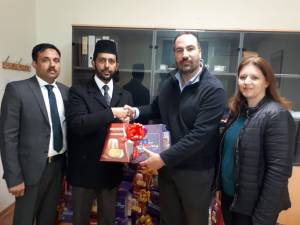 The Ahmadiyya Muslim Jamaat Malta community presented 60 gift hampers to Caritas to be distributed among the people and families who are benefiting from their services.
The hampers were presented to Anthony Gatt, the director of Caritas, by Laiq Ahmed Atif, the president of Ahmadiyya Muslim Jamaat Malta. TIMESOFMALTA – NEWSBOOK
 Id-Dawl (the Light) DECEMBER 2018
(i) JESUS in the Holy QURAN
(ii) The Means for the World Peace
(iii) Second Jalsa Salana – Annual Convention
(iv) Interreligious Conference
(v) President of Malta’s Message
(vi) Donation of Wheelchairs
Click here to read: ID-DAWL DECEMBER 2018
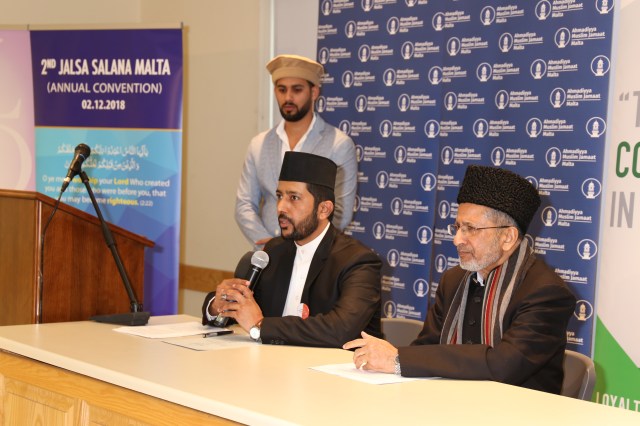 The Ahmadiyya Muslim Jamaat Malta organised an ‘Interfaith Session’ at its Annual Convention (Jalsa Salana) on 2nd December 2018 held at the ‘Centru Familja Mqaddsa’ Msida. The theme of this year’s interfaith session was ‘Love for all, hatred for none’.
For highlighting this unique message of love, compassion and respect, all the participants of the annual convention were wearing the badges with the message of ‘Love for All, Hatred for None’, as a manifestation of harmony, unity, peace and brotherhood. The badges were printed on red and white colours – the colours of the Maltese flag – to further extend the message of unity and loyalty.
Her Excellency, Marie-Louise Coleiro Preca, the President of Malta, very graciously sent her video message for the convention and she highlighted the importance of interfaith dialogue and commended ‘the Ahmadiyya Muslim Community in Malta for their commitment to pursue the building of peace through respect’. She said ‘promoting interfaith dialogue is essential. Dialogue ensures the much needed development for the social and economic and environmental sectors of our countries. I believe that all faith traditions contribute to our human family’.
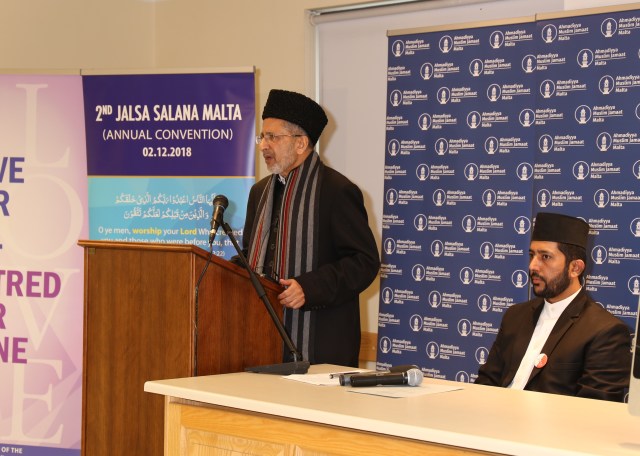 After the recitation of the Holy Quran, in his opening remarks, Imam Haider Ali Zafar Sahib explained the Purpose of the Jalsa Salana. This session was addressed by Hon. Ivan Bartolo, Member of Parliament, Ms. Margaret Baldacchino Cefai, Mayor of Msida, Rev. John Anthony Berry, secretary of the Diocesan Commission for the interreligious dialogue, Rev, Kim Hurst of St. Andrew’s Scots Church, Mr. Conrad Borg Manché, Mayor of Gzira, Mr. Ignatius Farrugia, Mayor of Zurrieq, Ms. Mary Gauci, MEP Candidate and Ms. Myrabelle Corlett, Chairperson of WFWP Malta.
The ‘Interfaith Session’ was concluded with the speech by Imam Laiq Ahmed Atif, president Ahmadiyya Muslim Jamaat in Malta. The topic of his speech was ‘Inter-Religious Peace’. He presented all-times feasible and practicable guiding principles from the teachings of the Holy Quran and the noble examples of the Holy Prophet Muhammad, peace be on him, for the establishment of tolerant, harmonious, prosperous and peaceful inter-religious societies.
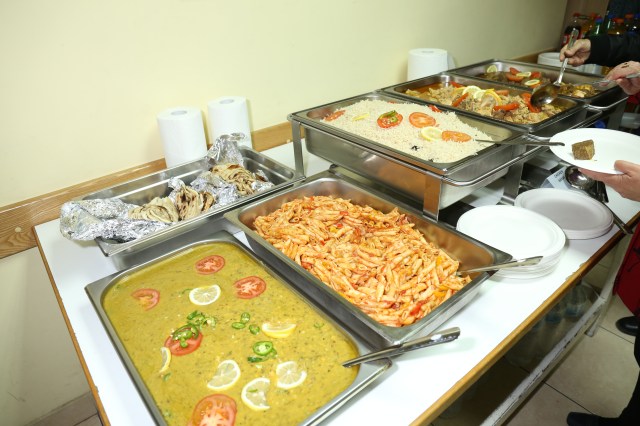
The ‘Interfaith Session’ was concluded with silent prayer. People from different walks of life attended the interfaith session. After the speeches traditional food was served. The Malta Independent 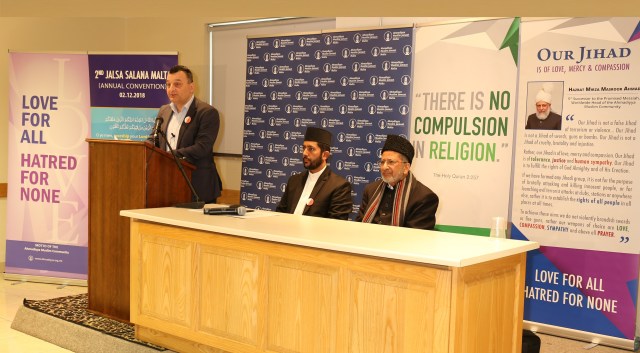
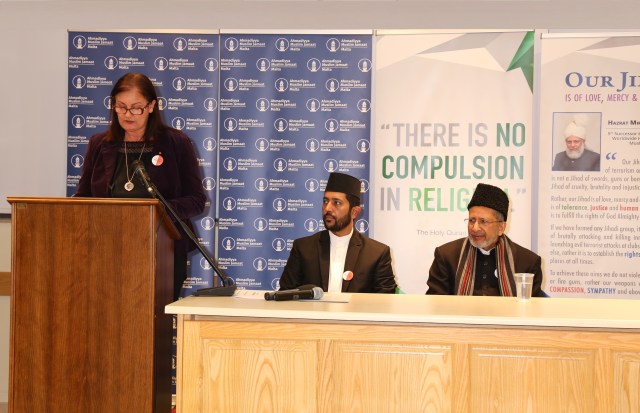
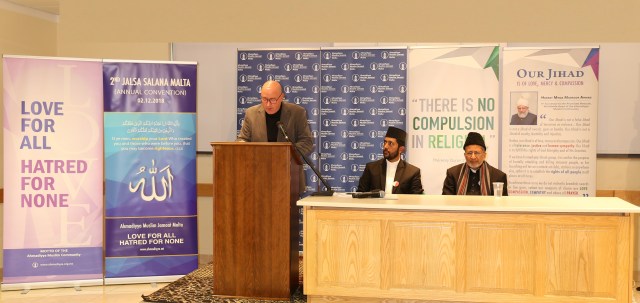
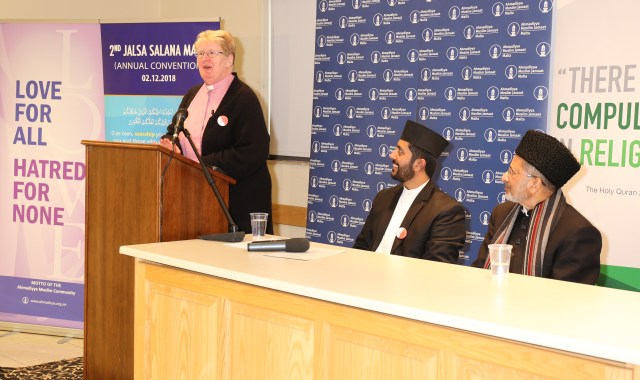
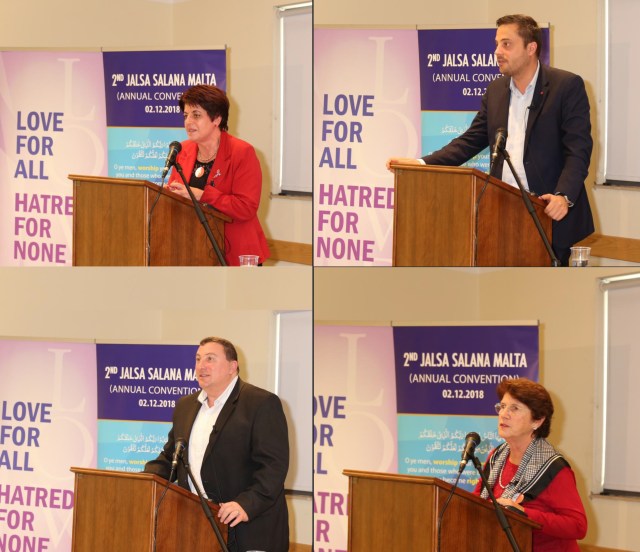
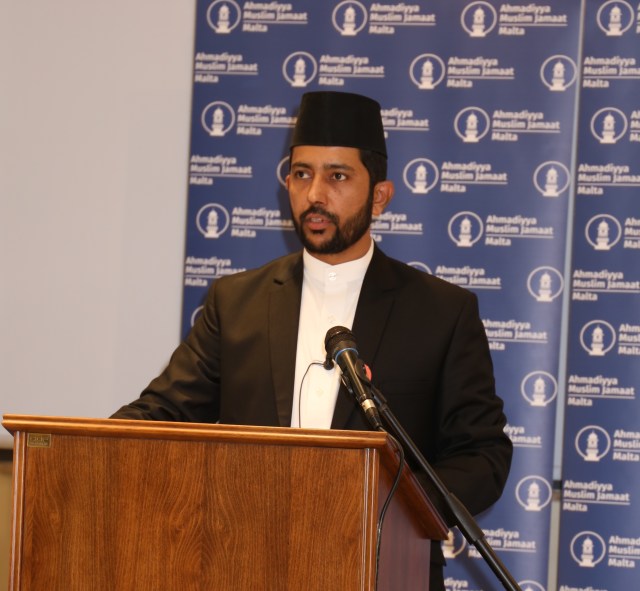
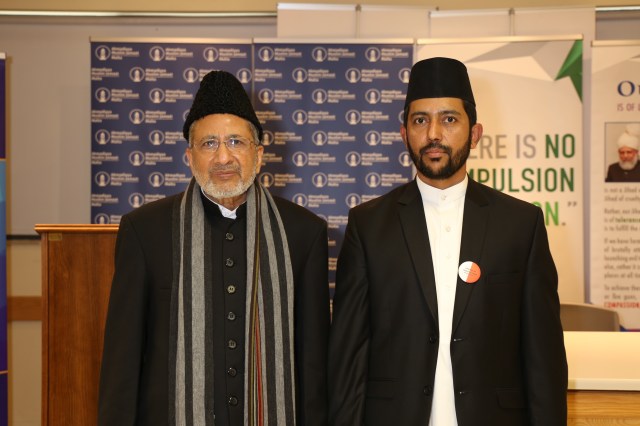
 Second Jalsa Salana (Annual Convention) Malta 2018
 On Sunday, 2 December 2018, Ahmadiyya Muslim Jamaat Malta held its 2nd Jalsa Salana (Annual Convention) at the ‘Ċentru Familja Mqaddsa’, Msida, Malta.
This was the second Jalsa Salana in Malta; it was divided into two sessions. First session was chaired by Imam Haider Ali Zafar Sahib, Vice President of Jamaat Ahmadiyya Germany. A special message from the Worldwide Head of the Ahmadiyya Muslim Jamaat, His Holiness, Hazrat Mirza Masroor Ahmad (aba) was read out at the convention.
 In his message His Holiness highlighted the ‘importance of constantly striving to become rightful Ahmadi Muslims’ and said:
“I urge you to constantly self-reflect and improve your inner selves; continually increase in goodness and righteousness; conduct yourselves in the best manner in your every deed and action; be kind, considerate and caring to all of Allah’s creatures and especially to your fellow human beings; and always remain exemplary Ahmadi Muslims.”
He said, in this regard, the Promised Messiah (as) has explained:
“The purpose of their joining the Movement and establishing with me a relationship like that of a disciple is that they should achieve a high degree of piety and righteousness. No wrongdoing or mischief should ever come near them. They should offer the five daily Prayers regularly and with congregation, and should not lie nor hurt anyone by their tongues. They should not be guilty of any kind of vice and should not let even a thought of mischief, wrongdoing or transgression pass through their minds. They should shun every type of sin, offence, undesirable speech and action, as well as all egoistic passions and unruly behaviour. They should become pure-hearted, harmless and meek servants of God Almighty, and no poisonous germ should flourish in their beings.” (Majmu‘ah Ishtiharat, vol. 3, pp. 46) 
 Speeches on different subjects were delivered in both English and Urdu languages. These speeches included: The Beauty and Glory of the Holy Quran by Haseeb Rahman Sahib, The Purpose of Life is to Worship Almighty Allah by Imam Laiq Ahmed Atif and concluding speech was delivered by Imam Haider Ali Zafar Sahib who emphasised about the importance and blessings of Khilafat – Spiritual Muslim Leadership; he also discussed the social and moral issues and presented solutions from Islamic teachings. Ameen was also held for the children who have successfully completed the recitation of the Holy Quran for the first time. First session was concluded with silent prayer. After a break second session titled ‘Interfaith Session’ was held (further reporting separately).
The Islamic community Ahmadiyya which meets in the heart of Gzira recently held an inter-religious convention with representatives from other religions, in order to promote dialogue to create an atmosphere of love, respect and hope. The convention was held at the Holy Family Centre in Msida.
The dialogue between different religions is the tool which is being used so that believers may understand one another better so that together they can create an atmosphere of peace, love and respect towards the diversity of religious beliefs. The Islamic community Ahmadiyya felt the need to create an opportunity for dialogue where representatives from different religions can speak about their beliefs to strengthen friendship. The convention had as its theme “Love for everyone, hatred towards no one”.
Laiq Ahmed Atif, the President of Ahmadiyya Musulmana said, “We teach our community about Islam and how we should live in a society as responsible citizens, how they should respect everyone and help those in need.”
He added that the convention’s aim was to send a message of unity.
Laiq Ahmed Atif said, “people of different religious beliefs live in Malta and we want to send a message that although our religions are different, as human beings we can focus on the common things between us so that we can have a better society.”
Fr John Barry, who is a delegate for the Diocesan Commission for the Church’s Inter-religious Dialogue, said that religious dialogue creates a culture of peace and can even build bridges between different religions. Find More:
 Source/Credit: http://www.tvm.com.mt
Il-komunità Iżlamika Ahmadiyya li tiltaqa’ għat-talb fil-Gżira tellgħet konvenzjoni inter-reliġjuża biex flimkien ma’ rappreżentanti ta’ reliġjonijiet oħra tippromovi d-djalogu ħalli tinħoloq atmosfera ta’ mħabba, rispett u tama. Il-konvenzjoni nżammet fiċ-Ċentru Familja Mqaddsa fl-Imsida.
Id-djalogu bejn rappreżentanti tar-reliġjonijiet huwa l-għodda li qed tintuża biex dawk li jemmnu jifhmu aktar lil xulxin ħalli flimkien joħolqu atmosfera ta’ paċi, imħabba u rispett minkejja d-diversità fit-twemmin. Il-Komunità Iżlamika Ahmadiyya ħasset li għandha toħloq opportunità ta’ djalogu fejn rappreżentanti ta’ reliġjonijiet differenti jitkellmu dwar it-twemmin tagħhom ħalli tissaħħaħ il-ħbiberija. Il-konvenzjoni li nżammet fiċ-Ċentru Familja Mqaddsa f’Imsida kellu t-tema ‘Imħabba għal Kulħadd, mibegħda lejn ħadd’.
Laiq Ahmed Atif, il-President t’Ahmadiyya Musulmana “nagħtu għarfien lill-komunità tagħna dwar l-Iżlam u kif għandhom jgħixu fis-soċjetà bħala ċittadini responsabbli, għandhom juru rispett lejn kulħadd u jgħinu lill-kulħadd li huwa fil-bżonn.”
Il-President Ahmed Atif qal li l-konvezjoni kellha li jintbagħat messaġġ ta’ għaqda.
Laiq Ahmed Atif qal “nies ta’ twemmin differenti li jgħixu f’Malta u nibagħtu l-messaġġ li għalkemm ir-reliġjonijiet jkunu differenti iżda bħala bnedmin umani nistgħu niffukaw fuq affarijiet komuni bejnietna sabiex nagħmlu s-soċjetà aħjar.”
Fr John Barry li huwa d-deligat tal-Kummissjoni Djoċesana għad-Djalogu Interreliġjuż tal-Knisja qal li d-djalogu reliġjuż joħloq kultura ta’ paċi u anke jibni pontijiet bejn ir-reliġjonijiet. Find More
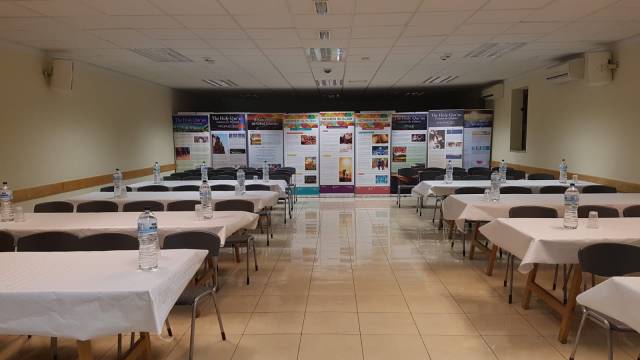
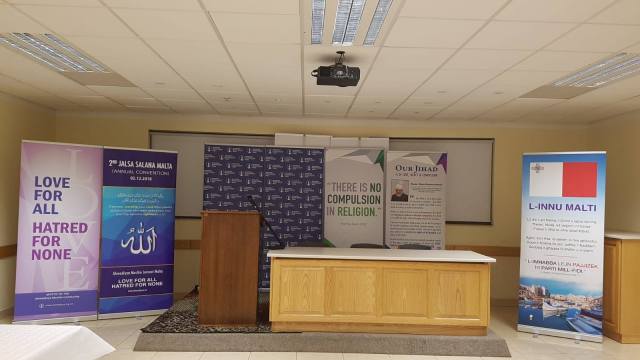
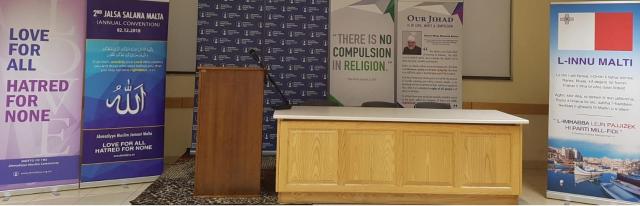 Jalsa Salana Malta 2018 – The Annual Convention
Preparations are completed for the Second Jalsa Salana Malta 2018, taking place in Msida #Malta. #JalsaMalta
Unity – Peace – Love – Brotherhood. Serving with a smile!
 Imam Laiq Ahmed Atif, President Ahmadiyya Muslim Jamaat Malta
The Ahmadiyya Muslim Jamaat Malta actively participated in the Annual Book Festival held at the Mediterranean Conference Centre, Valletta, Malta, between 7 to 11th November 2018.
The Ahmadiyya Muslim Jamaat Malta has translated more than 60 books and flyers about Islam-Ahmadiyya in Maltese language, including children’s books. These books in Maltese and Jamaat’s literature in English were placed on Jamaat’s stand.
During the book festival Ahmadiyya members distributed hundreds of flyers and books to the visitors. The Community’s monthly magazine “Id-Dawl” (the Light), was also presented to people and were briefed about the publication of the magazine. During the book festival people’s questions about Islam-Ahmadiyya were also answered.
Il-Jum Internazzjonali tat-Tolleranza
 Kull sena, madwar id-dinja, is-16 ta’ Novembru jiġi ċċelebrat bħala l-Jum Internazzjonali tat-Tolleranza biex jippromovi l-valuri tat-tolleranza, tal-armonija u tar-rispett; u biex ikattar l-għarfien pubbliku dwar il-perikli tal-intolleranza. Il-ġurnata ntgħażlet mill-Assemblea Ġenerali tal-Ġnus Magħquda fl-1996, wara ċ-ċelebrazzjoni tas-sena 1995 bħala s-Sena tat-Tolleranza.
Il-kelma ‘tolleranza’ tfisser ir-rieda li taċċetta jew tittollera, speċjalment opinjonijiet jew imġibiet li inti ma tantx taqbel magħhom, jew li ġġib ruħek sewwa ma’ dawk li huma differenti minnek. Tfisser li turi rispett lejn ir-razza, il-ġeneru, l-opinjoni, ir-reliġjon u l-ideoloġija ta’ individwi jew gruppi oħra, u li tapprezza l-kwalitajiet u l-ħidmiet tajba ta’ oħrajn. U li tispjega fehmietek b’mod diċenti u dinjituż filwaqt li tirrispetta s-sentimenti tal-oħrajn.
Naħseb li ż-żmien jeħtieġ li iktar milli vendetta jew ritaljazzjoni, huwa ferm aħjar li nuru tjubija u sabar u nżommu l-ogħla livelli possibbli tat-tolleranza u tal-armonija.
Għaliex l-irġiel Musulmani għandhom il-Leħja?
 Il-Musulmani jfittxu li jsegwu l-eżempju nobbli tal-Profeta tal-Iżlam – Muħammadsa. Il-Qaddis Profeta Muħammadsa kellu l-leħja u kien jilbes turban, żewġ użanzi komuni għad-dehra tal-irġiel ta’ dik l-epoka u pajjiż. Madanakollu, dawn ma kinux isiru biss biex wieħed isegwi t-tradizzjoni.
It-tkabbir tal-leħja ilu assoċjat mad-devozzjoni u l-virilità għal eluf ta’ snin fost ħafna kulturi u ċiviltajiet u huwa komuni f’ħafna reliġjonijiet. Fis-Sikiżmu, il-leħja titqies bħala parti mid-dinjità u t-tjubija tal-irġiel. Fil-Ġudaiżmu u l-Kristjaneżmu, il-qassisin tal-imgħoddi ħafna drabi kienu jkabbru l-leħja u t-tqaxxir tagħha kien jitqies bħala sinjal ta’ għajb u diżunur. (1-Kronaki 19:4-5)
L-Iżlam kompla b’din it-tradizzjoni sabiħa, fejn il-Qaddis Profeta Muħammadsa kien iħeġġeġ it-tkabbir tal-leħja u jgħid:
“Żommu l-mustaċċi qosra u kabbru l-leħja.” (Bukhari)
Minn din it-tradizzjoni (diskors) jidher li m’hemmx daqs jew stil wieħed għal-leħja, iżda din għandha tkun itwal mill-mustaċċi. Il-mustaċċi m’għandhomx jitneħħew kompletament u lanqas m’għandhom ikunu twal ħafna għaliex it-tradizzjoni tgħid li l-mustaċċi għandhom jiġu ‘mirquma’. Il-leħja turi wkoll il-ġmiel ta’ raġel għaldaqstant għandha tinżamm nadifa wkoll.
“It-tkabbir ta’ leħja huwa wieħed mis-sinjali tan-natura.” (Muslim)
Il-Qaddis Profeta Muħammadsa kien ukoll ikabbar il-leħja, u l-Koran Imqaddes jgħid lil kull Musulman li jekk int tħobb lil Alla mela għandek issegwi lill-Profeta mbagħad Alla jħobb lilek ukoll. (Ch.3: V.32)
Biex isegwu l-eżempju nobbli tal-Qaddis Profeta Muħammadsa l-irġiel Musulmani jkabbru l-leħja.
 Id-Dawl (the Light) NOVEMBER 2018
(i) World Tolerance Day (ii) Good Behaviour
(iii) Arrogance & Mischief (iv) Islam & Rights of Women
(v) Why do Muslim men have Beards?
(vi) An Excellent Example of Religious Tolerance
(vii) Caliph’s Tour of USA
Click here to read: ID-DAWL NOVEMBER 2018
Id-Dawl Numru 11Id-Dawl Numru 11

(ANNUAL CONVENTION)
The Ahmadiyya Muslim Community Malta is organising the annual convention on Sunday December 2, 2018 in Msida. You are cordially invited to this annual gathering. Please send us an email on amjmalta@gmail.com to receive the programme and a formal invitation to this convention.
The Founder of the Ahmadiyya Muslim Community established the institution of Jalsa Salana (annual convention). The first convention was held in 1891, and seventy-five people attended it. It is a splendid manifestation of spirituality, harmony, peace and brotherhood. http://www.ahmadiyya.mt

“L-Iżlam kif jiddefinixxi s-sovran, jew l-Istat? F’terminoloġija Iżlamika s-sovran jew il-Kalif huwa dak l-individwu rappreżentattiv li poplu ta’ nazzjon jaħtar għall-protezzjoni u s-superviżjoni tal-jeddijiet tiegħu kemm individwali kif ukoll kollettivi. L-Iżlam ma jirrikonoxxi l-ebda forma ta’ tmexxija ħlief dik ta’ gvern rappreżentattiv.
Il-Koran Imqaddes uża l-kelma Amanat (fiduċja) biex jiddeskrivi l-kunċett Iżlamiku ta’ gvern, jiġifieri, il-Kalif jeżerċita setgħa li tkun ingħatat lilu min-nies, u mhux setgħa li ħa hu stess bil-volontà tiegħu jew li ntirtet minnu bħala jedd mit-twelid. Din il-kelma weħidha hija biżżejjed biex turi n-natura u s-setgħat tas-sura Iżlamika ta’ tmexxija.
Il-Koran Imqaddes ma jitkellimx dwar is-setgħa ta’ tmexxija bħala xi ħaġa li tgħaddi mis-sovran għas-sudditi, iżda bħala xi ħaġa li tgħaddi mis-sudditi għas-sovran. Madanakollu, biex napprezzaw sewwa l-kunċett Iżlamiku tal-Istat, huwa neċessarju li nikkwotaw il-vers li, fil-qosor, iżda f’termini komprensivi, jiddeskrivi n-natura u d-dmirijiet tal-ħakkiema u tal-maħkumin. Il-Koran Imqaddes jgħid:
“Alla jamarkom biex tafdaw ir-responsabbiltà tat-tmexxija f’idejn dawk li huma denji tagħha, u dawk minnkom li ssiru mexxejja, għandhom jirrenjaw b’mod ġust; Alla jwiddibkom b’dak li huwa eċċellenti, tassew Huwa Jisma’ Kollox, Jara Kollox.” [Al-Nisa,4:59]
Fl-ewwel parti ta’ din is-silta n-nies qed jingħadilhom li huwa f’idejhom biex jagħżlu l-mexxejja tagħhom, u li ħadd iżjed ma jista’ jaħtar mexxej fuqhom, jiġifieri, is-sovranità mhijiex ereditarja u ħadd mhu intitolat li jsir mexxej għaliex inzerta li huwa iben jew l-eredi ta’ ħakkiem preċedenti.
It-tmexxija mbagħad hija definita bħala fiduċja prezzjuża u n-nies huma mwissija biex ma jafdawhiex f’persuna li mhijiex denja ta’ dik il-fiduċja, iżda li jqiegħdu r-responsabbiltà f’idejn xi ħadd li jaqdi dmiru sewwa, b’onestà u b’fedeltà.
Imbagħad, is-silta tkompli tgħidilna li t-tmexxija mhijiex xi ħaġa indipendenti fiha nnifisha, iżda hija biss tqassim ta’ poteri bil-għan li ċerti drittijiet jiġu inforzati u protetti għaliex in-nies ma jistgħux jinfurzawhom u jħarsuhom b’mod individwali. Għalhekk, hija fiduċja u mhux proprjetà. Id-dritt għall-iggvernar jaqa’ primarjament fuq il-komunità u mhux fuq il-ħakkiem.
Dan tal-aħħar, madanakollu, jintqal lilu li l-awtorità mogħtija lilu hija forma ta’ fiduċja u li huwa ma jistax jabbuża jew jużaha ħażin, u li għandu jgħaddiha lill-benefiċjarji, fil-waqt tal-mewt tiegħu, mingħajr deterjorament jew diminuzzjoni, jiġifieri, huwa jrid joqgħod attent li jipproteġi l-interessi u d-drittijiet nazzjonali u individwali, u li m’għandu l-ebda jedd li jnaqqas jew iħassar xi partijiet minnhom.
Il-mexxejja u l-uffiċjali mbagħad jingħad lilhom biex jaqdu d-dmirijiet rispettivi tagħhom fl-oqsma tagħhom b’ġustizzja u b’fedeltà.
Il-vers imbagħad jindika li l-Musulmani se jabbandunaw din il-forma ta’ tmexxija, u biex jagħmlu bħal popli oħrajn, jerġgħu lura għal forma ta’ ggvernar li hija monarkika u ereditarja, iżda t-twiddiba ta’ Alla – dik li l-Musulmani għandhom jaderixxu l-forma rappreżentattiva ta’ tmexxija, jagħżlu l-aqwa mħuħ biex imexxuhom u jevitaw is-sistema ereditarja ta’ ggvernar – tforni l-aqwa parir. L-aħħar kliem tal-vers jindika li Alla għażel din is-sura ta’ tmexxija għaliex Huwa konxju tal-ħażen ta’ forom oħra ta’ ggvernar magħżula mill-bniedem, u għaliex Huwa sema’ t-talb ta’ dawk li sofrew taħthom, u li, għalhekk, il-Musulmani għandhom jaċċettawha u b’hekk juru l-gratitudni tagħhom għall-pjaċir li Alla għamlilhom.
Minn dan joħroġ ċar li l-forma Iżlamika ta’ gvern trid tkun ibbażata fuq sistema elettiva u rappreżentattiva, u li s-sovran irid jitqies bħala r-rappreżentant tal-poplu fil-kapaċità kollettiva u mhux individwali tagħhom.”
 Id-Dawl (the Light) OCTOBER 2018
(i) Serving (ii) Who is better?
(iii) Inviting People to Allah
(iv) Islamic Form of Government
(v) The Purpose of Religion
Click here to read: ID-DAWL OCTOBER 2018
 Source/Credit: Times of Malta, Thursday, September 27, 2018, by Laiq Ahmed Atif
Freedom of speech and expression is one of the core principles of any progressive and democratic society. However, in the very noisy and distracting social media era – where in a matter of minutes, like wildfire, the tweets and posts are spread far and wide – sometimes they are in the form of hate speech, which are followed by equally painful comments that leave horrific and interminable marks in the memory of those affected by such statements and remarks.
The nonsensical and idle talk or writing sometimes becomes so perilous that it creates social unrest, depression, restlessness, enmity and disorder. People’s lives, work, productivity, health and family are affected negatively. It is also a reality that sometimes such damaging remarks lead to suicidal attempts.
Recently, President Marie-Louise Coleiro Preca, highlighted this matter during a meeting of the non-executive EU presidents of the Arraiolos Group, held in Latvia.
She said: “With the call for freedom of speech we are sometimes fed fake news and misinformation. The ‘weaponisation’ of the media is a reality, often leading to misinformation and hate speech, creating social tensions and stress.”
I believe that the responsible usage of all the available mediums to express oneself is crucial for a healthy, peaceful and progressive society. It is not forbidden to take advantage of new inventions but their wrong use makes them harmful.
During his life, the Holy Prophet Muhammad laid down, in just a few words, a golden principle that is remarkably relevant to this issue. He said that “a person should desire for others whatever he desires for himself”. I believe that this timeless principle is as true today as it ever was in the past.
Certainly, every person craves good standing in their community and the respect of others.
It is not forbidden to take advantage of new inventions but their wrong use makes them harmful
Every person desires love and care for his sentiments and feelings. Moreover, nobody likes for himself any outrageous remark, hate speech or injurious comment.
I fail to understand then, why people show insensitivity towards others when they express themselves? Aren’t all people having the similar hearts, feelings and sentiments?
The syndrome of hate speech, vain talk and futile practices has become so widespread that people do not even take notice of them until the situation really worsens and one is in deep waters. In the Holy Quran, God draws attention towards this phenomenal matter that responsible citizens and true believers are those “who shun all that which is vain” (23:4).
The Arabic word laghw, which is used in this verse connotes all forbidden (haram), unpleasant and abominable things. It also signifies a vain, foolish, worthless or careless talk or speech or that which one utters without seriously meaning it; vain act or an act done carelessly; deviation from the right path; and foolish joking.
Unnecessarily and unconstructively criticising others, spreading fake news and misinformation, lying about others, as well as maligning others, are all acts of hatred and malice, and are below the dignity of a responsible citizen.
 The spirit of mutual respect and regard for the sentiments of others is the means of establishing peace in the society and indeed in the whole world.
It is evident that we must demonstrate good and virtuous conduct and behaviour whenever we speak or write anything. Good, virtuous conduct is that in which there is not even the slightest thought of any kind of excess or wrongdoing, or conceit, or ostentation.
The values of respect, decency, care, politeness and truth should be our hallmark. Because, without good deeds or actions, man is like a tree whose beautiful green branches have been cut off to make it look disfigured.
I think, it is highly essential to make good use of this freedom of speech and rather than spreading hatred and malice, we must use the available mediums for the common and greater good of all humanity.
Every person has the right to express himself, and to have a difference of opinion or to disagree with others’ thoughts and ideologies. However, it should not be at the cost of injuring the sentiments of others. And words needs to be selected carefully, wisely and rationally.
Laiq Ahmed Atif is president Ahmadiyya Muslim Jamaat Malta. amjmalta@gmail.com This is a Times of Malta print opinion piece. FIND MORE:
 Terrorism? Fost l-akbar sfidi li qed naffaċċjaw illum insibu l-estremiżmu u t-terroriżmu, li jinsabu madwar id-dinja kollha u jidhru f’forom varji. Meta niddiskutu s-suġġett tat-terroriżmu jew l-estremiżmu, insibu nies li jaħsbu li r-reliġjon minnha nnifisha tikkawża l-vjolenza u l-aggressjoni. Jien nemmen li r-reliġjon qatt ma tippermetti vjolenza u dejjem topponiha f’kull ċirkostanza.
L-Iżlam ukoll jopponi t-terroriżmu f’kull forma għaliex il-kelma ‘Iżlam’ tfisser litteralment ‘paċi u sliem’. Id-dmir ta’ kull Musulman li jżomm il-paċi għandu tant għeruq fil-fond fl-Iżlam li l-Koran Imqaddes jiddeskrivi l-Musulmani tassew hekk:
“Il-qaddejja ta’ Alla tal-Ħniena huma dawk li jimxu fl-art b’mod dinjituż, u meta l-injuranti jindirizzawhom, huma jgħidu ‘paċi’.” (25:64)
Ir-raba’ Kalif tal-Komunità Ahmadiyya Musulmana, Ħażrat Mirża Taħir Aħmadrh, jispjega l-mod kif l-Iżlam iħares lejn it-terroriżmu bl-iktar mod ċar. Hu qal:
“L-Iżlam kategorikament jiċħad u jikkundanna kull forma ta’ terroriżmu. Ma tipproteġix u ma tiġġustifikax kwalunkwe att vjolenti, kemm jekk isir minn xi individwu kif ukoll minn xi grupp jew gvern… L-Iżlam huwa t-twemmin u r-reliġjon tiegħi; u l-Iżlam ma jippermetti l-ebda forma ta’ diżordni. Għaldaqstant huwa impossibbli li l-Iżlam jgħallem it-terroriżmu…
Jien nikkundanna bil-qawwa kollha kull att u kull forma ta’ terroriżmu għaliex hu t-twemmin tiegħi profond li mhux biss l-Iżlam iżda wkoll l-ebda reliġjon vera, hu x’inhu l-isem tagħha, ma tista’ tapprova l-vjolenza u t-tixrid tad-demm ta’ rġiel, nisa u tfal innoċenti f’Isem Alla.
Alla huwa mħabba, Alla huwa sliem! L-Imħabba qatt ma tnissel il-mibegħda u l-paċi qatt ma twassal għall-gwerra!” CONTINUE READING
(Qtil fl-Isem ta’ Alla, p.116-120)
The Founder of the Ahmadiyya Muslim Community, Hazrat Mirza Ghulam Ahmad, the Promised Messiah and Mahdi (peace be on him) says:
“An essential teaching for you is that you should not abandon the Holy Quran like a thing forsaken, for therein lies your life. Those who honour the Quran will be honoured in heaven.”
The Al-Qalam Project is a first of its kind that aims to produce a unique copy of the Holy Quran: one in which each verse has been penned by a different writer, and thus the complete text of the Holy Quran will be entirely written by members of the public, thereby celebrating the fact that many diverse people can unify behind the teachings of the one book.
The Al-Qalam Project has proved to be a truly influential initiative, bringing together people of different countries and faiths which in essence is the very purpose of this Holy book.
 Id-Dawl (the Light) SEPTEMBER 2018
(i) Terrorism (ii) Against Violence
(iii) Tolerance and Patience
(iv) Sanctity of Human Life
(v) The True Concept of Jihad
Click here to read: ID-DAWL SEPTEMBER 2018
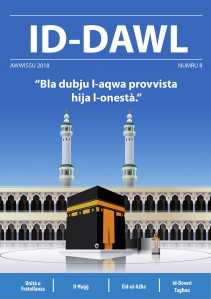
 IL-ĦAĠĠ
Il-ħames att ta’ qima Iżlamika huwa t-twettiq tal-Ħaġġ jew il-pellegrinaġġ lejn Mekka. Il-Musulmani jridu jagħmlu dan il-pellegrinaġġ mill-anqas darba f’ħajjithom dejjem jekk jippermettu l-kundizzjonijiet ekonomiċi u politiċi. Alla l-Omnipotenti jgħid fil-Koran Imqaddes:
“U l-pellegrinaġġ lejn id-Dar huwa obbligu tal-bnedmin — dawk li jistgħu jsibu mezz biex imorru — lejn Alla.” (3:98)
Il-punt prinċipali ta’ dan il-pellegrinaġġ huwa l-Kaaba — l-ewwel Dar li nbniet għall-qima ta’ Alla. Il-Koran Imqaddes isostni:
“Tassew, l-ewwel Dar imwaqqfa għall-bniedem hija dik ta’ Bekka (il-wied ta’ Mekka), mimlija benedizzjonijiet u gwida għall-popli kollha.” (3:97)
Il-Ħaġġ isir biss darba fis-sena matul ix-xahar Iżlamiku ta’ Żul-Ħiġġah li jiġi xahrejn u għaxart ijiem wara ċ-ċelebrazzjoni ta’ Eid-ul-Fitr, li tiġi fi tmiem ir-Ramażan. Jibda fit-tmien jum ta’ Żul-Ħiġġah u jibqa’ sejjer sat-tlettax-il jum.
Il-Ħaġġ jitwettaq billi wieħed jidħol fl-istat ta’ Iħraam. Fil-mument li l-pellegrin ikun fl-istat ta’ Iħraam, irid jinqata’ mill-affarijiet tad-dinja. Il-pellegrin irid jevita l-argumenti, it-tilwim jew il-ġlied. L-istat ta’ Iħraam jirrikjedi li wieħed ikun liebes biss f’żewġ lożor bla ħjatat. Il-Ħaġġ jew Umrah jista’ jitwettaq biss fl-istat ta’ Iħraam. In-nisa mhumiex obbligati li jkunu fl-istat ta’ Iħraam.
Il-Koran Imqaddes jiddikjara:
“Ix-xhur tal-Ħaġġ huma magħrufa sew; għalhekk kull min jiddeċiedi li jagħmel il-Pellegrinaġġ f’dawn ix-xhur għandu jiftakar li m’għandux ikun hemm diskors diżgustanti, vjolazzjoni tal-moralità, jew ġlied tul il-Pellegrinaġġ. U kull ħaġa tajba li tagħmlu, Alla se jkun jaf biha. U sostnu lilkom infuskom bil-provvisti neċessarji, u bla dubju l-aqwa provvista hija l-onestà. U ibżgħu Minni biss, ja bnedmin intelliġenti.” (2:198)
 Id-Dawl (the Light) AUGUST 2018
(i) Unity & Brotherhood ; (ii) Praise of God
(iii) Arrogance ; (iv) Our Duties as Citizens
(v) Cleanliness ; (vi) The Hajj
(vii) Eid-ul-Azha
Click here to read: ID-DAWL AUGUST 2018
(i) Respect ; (ii) Care of Orphans
(iii) The Holy Prophet Muhammad (pbuh)
(iv) True Purification
(v) The Music?
Click here to read: ID-DAWL JULY 2018
EID-UL-FITR
 ‘Eid’ hija kelma bl-Għarbi li tfisser ‘ġurnata li tirritorna ta’ spiss’. Hemm żewġ festi Iżlamiċi tal-Eid f’sena. L-ewwel waħda tissejjaħ ‘Eid-ul-Fitr’ u t-tieni li tiġi xi għaxar ġimgħat wara tissejjaħ ‘Eid-ul-Ażħa’.
Il-festa ta’ Eid-ul-Fitr tiġi ċċelebrata fi tmiem ix-xahar tas-sawm, għalhekk tissejjaħ ukoll il-festa tal-waqfien mis-sawm. Is-sawm fix-xahar ta’ Ramażan huwa wieħed mill-ħames kolonni tal-Iżlam. Huwa, għalhekk, attribut prattiku tal-fidi u jitqies bħala att ta’ devozzjoni.
It-tħejjijiet għall-Eid
Fi tmiem ix-xahar tas-sawm, meta jintlemaħ il-qamar il-ġdid, emozzjoni ta’ hena tiġri fi qlub il-Musulmani kollha, żgħar u kbar, bi stennija għal waħda mill-aktar festi tal-Eid ferrieħa. Tul il-lejl isiru l-arranġamenti meħtieġa. Il-ħwienet jibqgħu miftuħa sa tard billejl għall-konsumaturi. Fil-pajjiżi Musulmani t-toroq ewlenin tal-bliet u l-bini pubbliku jkunu mdawla sew għal billejl u mżejna bi bnadar ikkuluriti. Kmieni filgħodu, fil-jum tal-Eid, wara li kulħadd jieħu banju, kulħadd jilbes l-aħjar ilbies tiegħu. It-tfal, b’mod speċjali, iżanżnu ħwejjeġ ġodda. Kemm l-irġiel kif ukoll in-nisa jagħmlu l-fwieħa bħalma kienet użanza tal-Qaddis Profeta li jagħmel il-fwieħa f’okkażjonijiet bħal dawn. Il-brekfast ħafna drabi jinkludi platt ħelu msejjaħ Sheer Khurma – vermiċelli msajra fil-ħalib bit-tamal niexef, żbib, lewż, u ġewż ieħor. Kulħadd issa jkun anzjuż biex jimxi lejn l-Eidgah (post tat-talb tal-festa), li s-soltu jkun spazju miftuħ jew ġnien pubbliku riservat għas-servizz tal-Eid.
Minħabba l-preżenza ta’ għadd enormi ta’ Musulmani, is-servizz tal-Eid isir fi swali kbar, fil-moskea ċentrali tal-belt jew fil-miftuħ, fejn jitwaqqfu tined kbar bl-għan li jipprovdu l-ilqugħ mit-temp. In-nisa huma mħeġġa bil-qawwa biex jattendu dawn il-laqgħat tal-Eid, għalhekk ikun hemm żona apposta riservata għalihom.
Kif kienet id-drawwa tal-Qaddis Profeta tal-Iżlam, il-fidili jmorru lejn l-Eidgah minn triq partikolari u jitilqu minn oħra differenti.
Wara t-talb tal-Eid, l-Imam jagħmel id-diskors tiegħu, li ġeneralment ikun dwar l-isfond storiku u s-sinifikat spiritwali tal-festa, iżda dan jista’ jinkludi fih xi suġġetti oħra ta’ importanza għall-Musulmani. Wara s-servizz il-fidili jsellmu lil xulxin billi jgħidu ‘Eid Mubarak’ (il-Festa t-Tajba) u jħaddnu lil xulxin, imbagħad imorru lura d-dar.
Platti speċjali huma mbagħad imħejjija għal din l-okkażjoni festiva. Il-ħbieb u l-qraba huma ħafna drabi mistiedna. Rigali u tislimiet huma mqassma tul il-jum. Li titma’ l-fqar, li tgħin lil min hu fil-bżonn u li żżur il-morda kollha jitqiesu bħala azzjonijiet ta’ min ifaħħarhom f’din l-okkażjoni.
L-ispirtu tal-Eid huwa wieħed ta’ sliem, maħfra, u fraternità.
(i) A Memorable Eid
(ii) What is the Holy Quran?
(iii) Malta Rama dan Iftar 2018
(iv) What is Eid-ul-Fitr?
(v) New Dress (vi) Courage
Click here to read: ID-DAWL JUNE 2018
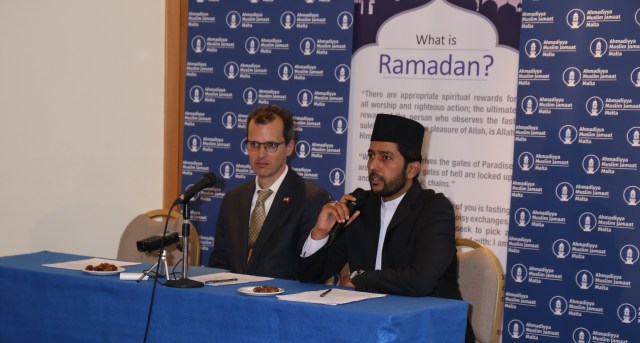
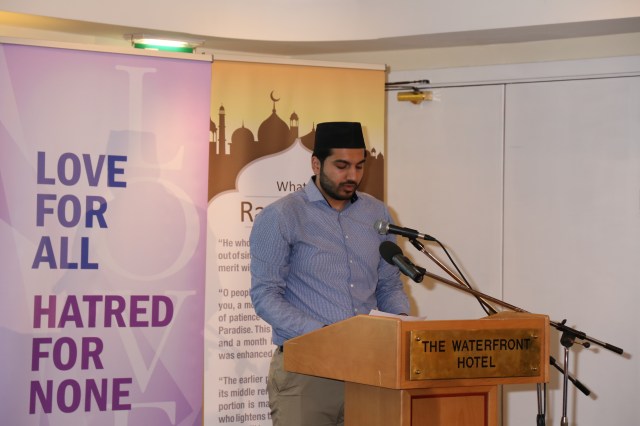
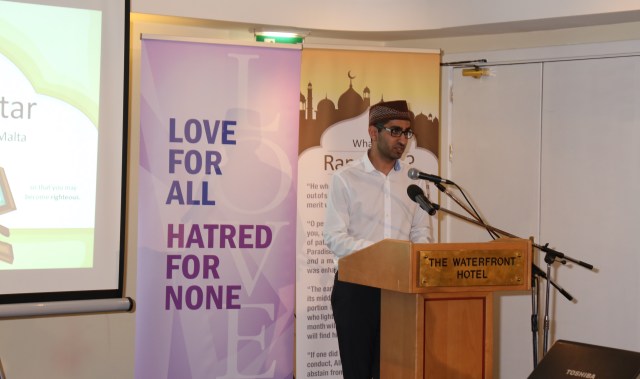
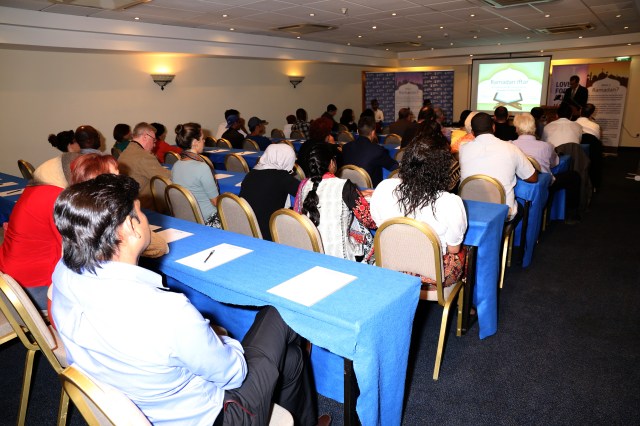
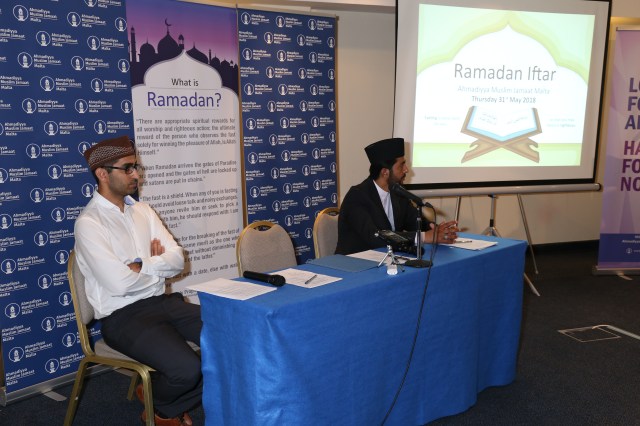
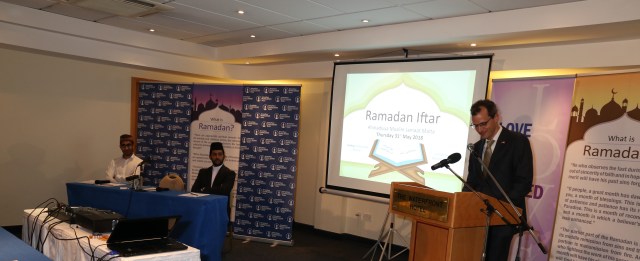 The Ahmadiyya Muslim Jamaat Malta organised a Ramadan Iftar Reception on Thursday 31st May at the Waterfront Hotel, Sliema, which was attended by respectable guests from different walks of life.
The event started with recitation of the Holy Quran and a brief documentary about fasting during Ramadan. The following speakers delivered their speeches and answered the questions from the audience.
 HIS EXCELLENCY MARK A. SCHAPIRO, Deputy Chief of the U.S. Mission to Malta
“Salaam Aleikum, and Ramadan Mubarak.
I would like to take a moment to salute your message, and your disciplined efforts to promote openness, tolerance, and interfaith dialogue. “Love for all, hatred for none” it is simple and powerful; an end to war.
So thank you for this message. Indeed, what unites us, what we share, is far stronger than what divides us. It seems so often in our world today that we have to keep repeating this message that we have to teach and re-teach the value of tolerance and mutual respect. Sometimes it feels like nobody is listening. In America, our commitment to freedom of religion is sacred, but at the same time, we acknowledge in the first lines of our Constitution that we are forever in pursuit of “a more perfect union.” That we always have more work to do. And tolerance and progress are not linear, either. We may never get to that perfect union, that Platonic ideal, but we are committed to working for it, and to repeating messages of tolerance, community, humanity, and love, alongside friends and partners like you who share these same values. Along the way, we all have to stay focused on the message, and ignore the noise – quite a challenge, as we live in the very noisy and distracting social media era.
What we share is far stronger than what divides us.
Thank you once again for giving us the honor of sharing this Iftar with you. Wishing you peace, love and health for you and your families this month and for the year ahead. Saha Ftourkom!”
 IMAM LAIQ AHMED ATIF, President Ahmadiyya Muslim Jamaat Malta
“The command to fast, whatever its details, is to be found in most religions in one form or another. In fact, fasting is a form of devotion and self-discipline.
As far as fasting in Islam is concerned, the fundamental objective and underlying philosophy of fasting has been stated in the Holy Quran as the attainment of Taqwa – meaning piety and righteousness.
The observance of the fast is obligatory upon every adult Muslim during the month of Ramadan. Fasting in Islam begins everywhere at the first appearance of dawn, and ends with sunset. During this period one is expected to abstain from all food and drink completely.
It is not just physical hunger and thirst that constitute the Muslim fast, but the recitation of the Holy Quran, understanding the commandments of God and making those part of everyday life, serving mankind, giving charities, helping those in need, being punctual in five daily obligatory prayers, waking up many hours before dawn for the individual prayer and the remembrance of God, and thus spending a greater part of the night in spiritual exercises make up the very essence of fasting.”
(i) Days of spiritual training (ii) Prayers
(iii) Love and respect towards MOTHER
(iv) Fasting (v) Forgiveness
(vi) What is Islam? (vii) Pillars of Islam
Click here to read: ID-DAWL MAY 2018
 Id-Dawl (the Light) April 2018
(i) PEACE: A Common Good; (ii) Falsehood destroys;
(iii) Ahmadiyya Muslim Jamaat;
(iv) The Mission of the Promised Messiah (as)
(v) Compassion for Mankind; (vi) Woman as a daughter
(vii) Malta Peace Symposium 2018
Id-Dawl_Numru_004 Click to read: ID-DAWL April 2018
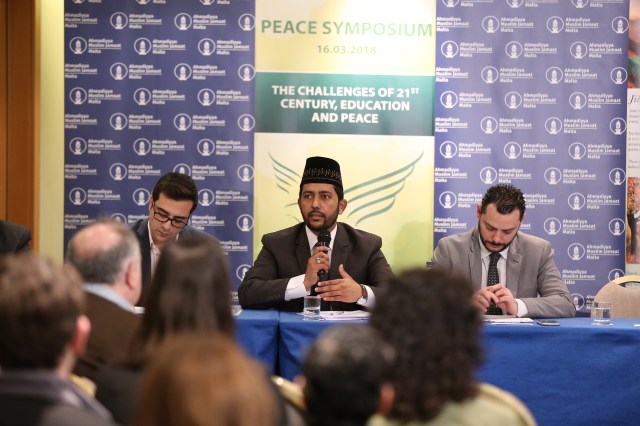
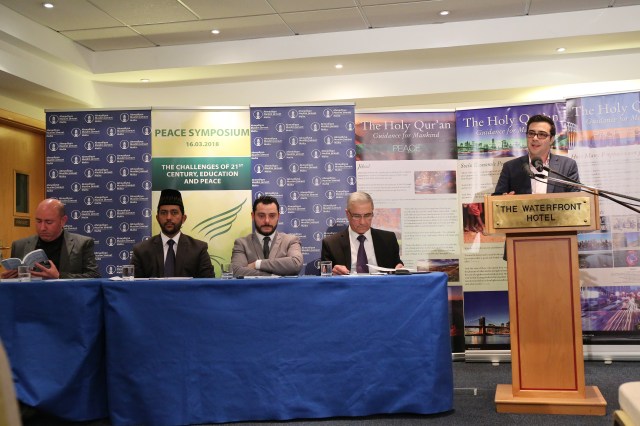
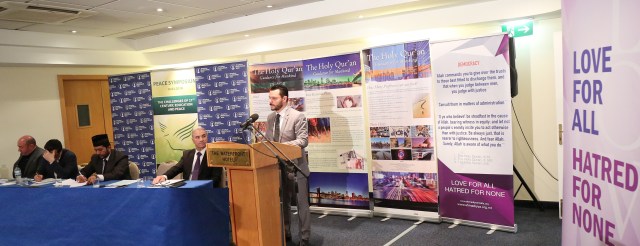
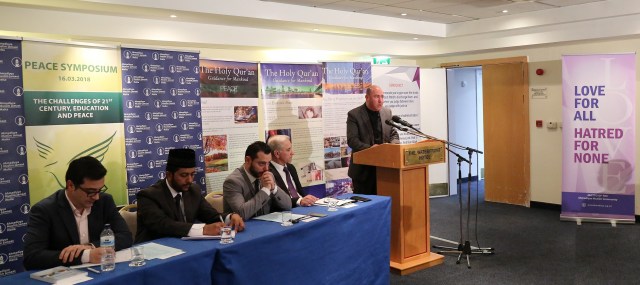
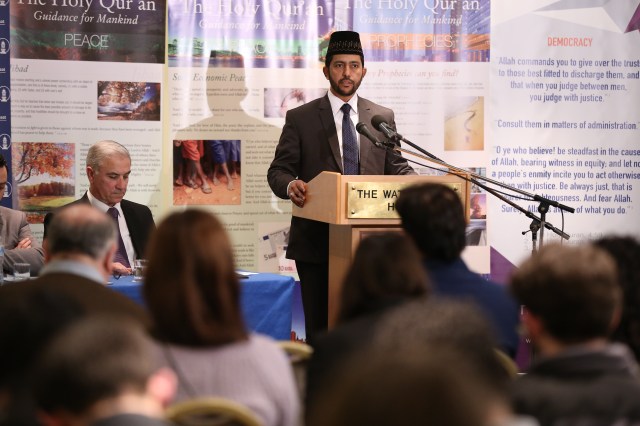
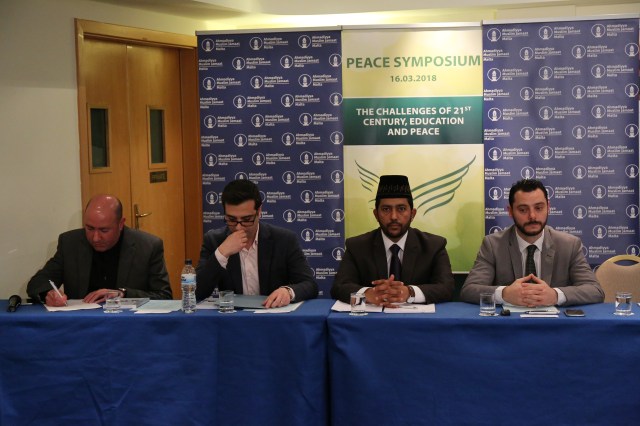
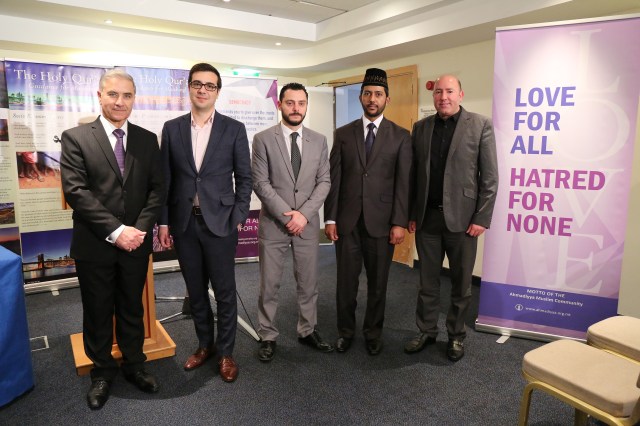
The Ahmadiyya Muslim Jamaat Malta organised the Annual Peace Symposium 2018 with the theme of “The Challenges of 21st Century, Education and Peace” at the Waterfront Hotel, the Strand Sliema, on Friday 16thMarch 2018.
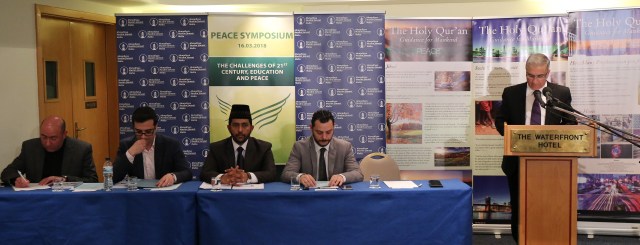 The event was presided over by the well-known Maltese journalist Mr. Joe Dimech. After the four speeches the panel also answered the questions from the audience.
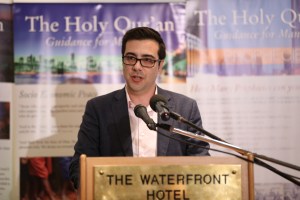 Mr. Aaron Abdilla delivered his talk on behalf of Hon. Minister for Education & Employment. In his speech he highlighted the threat of radicalisation and clash of civilisations. He said that ‘there is an imminent need, to find a common language between the secular and the religious. This is only possible if we bring both world-views together and to learn to talk with each other rather than about each other.’ He concluded his speech with a saying of Muhammad Rumi that captures the implications of democracy as education that: ‘Raise your words, not voice. It is rain that grows flowers, not thunder.’
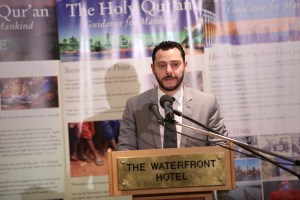 Mr. Justin Schembri on behalf of Hon. Shadow Minister for Education spoke about the dominance of social media and the need of being responsible when online. While highlighting the current challenges he said that: ‘Education is the means to tackle such issues. Education leads to human development, it leads to peace. Education, especially when it’s combined with technical training has been proven to reduce poverty. This is one driving force behind education for peace. With education comes knowledge, power, safety, security, and of course peace.’
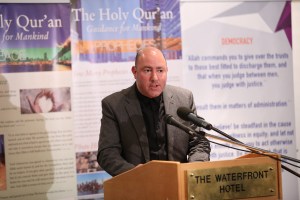 Representing Christianity, Rev John Berry, Lecturer Faculty of Theology at the University of Malta, said that: ‘Faith has a role to play in the public square and it is our duty to strengthen our efforts in acting as peace builders for a better world. Peace is a gift from God and a fruit of human endeavour. There can be no peace without justice and equality among all.’ He highlighted three main challenges such as, (i) short-sightedness (ii) prejudice and impatience and (iii) scepticism. Moreover, he presented three basic principles for peace: (i) respect, (ii) collaboration and (iii) safeguarding.
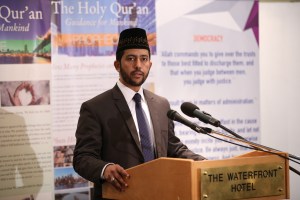 Representing Islam-Ahmadiyya, Imam Laiq Ahmed Atif, President Ahmadiyya Muslim Jamaat Malta, spoke on the subject of “The Challenges of 21st Century and Fundamental Principles for Lasting Peace − an Islamic Perspective.” He pointed out the threats to peace such as extremism, hate speech, racism, injustices, inequalities, conflicts, violence, persecution, greed and the race for the nuclear and sophisticated weapons.
Imam Atif, presented numerous references from the Holy Quran and underlined some fundamental principles for peace. He said that ‘effective and positive education for all, equality between all human beings, indiscriminate freedom of expression and freedom of religion, caring for each others’ sentiments and justice are some of the core principles for lasting peace’.
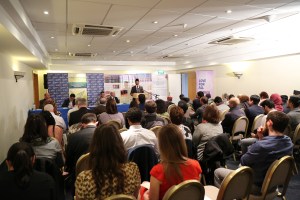 He said: The world today is fraught with danger and turmoil. We sit at an extremely critical juncture. The dark clouds of third world war are looming above our heads, and are getting darker and heavier every day. The Head of the Ahmadiyya Muslim Community had foreseen such a threat to world peace and said:
“It is my fear, that in view of the direction in which things are moving today, the political and economic dynamics of the countries of the world may lead to a world war. It is not only the poorer countries of the world, but also the richer nations that are being affected by this. Therefore, it is the duty of the superpowers to sit down and find a solution to save humanity from the brink of disaster.”
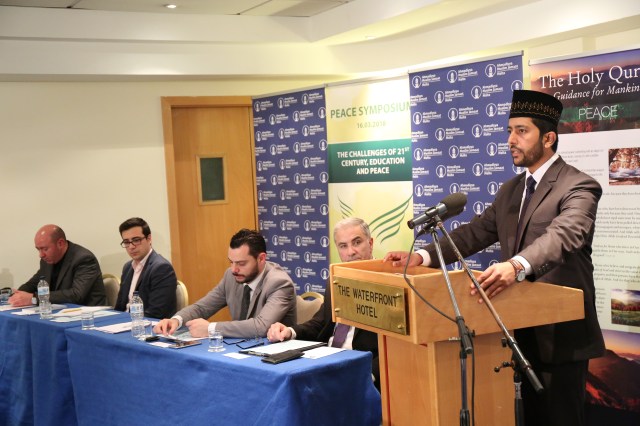 Imam Atif called for ‘indiscriminate deweaponisation and denuclearisation of the entire world’ and said that ‘the time has arrived to face these grave challenges with sincerity, loyalty, wisdom and with great responsibility’.
He further said that: “The motto – ‘Love for all – hatred for none’ – of the Ahmadiyya Muslim community – which in fact is the essence of Islamic teachings – is also a wonderful principle for peace and prosperity.”
Imam Atif concluded his speech by highlighting the ultimate Islamic philosophy that: “Without returning to God one cannot attain peace and without that peace, peace in society cannot be built. If there is no God, there is no peace. That is the ultimate wisdom.” – Malta Peace – Alhakam –
 | Nemat Ali on The life of humility and … |
| Nemat Ali on Interfaith Diversity Week 2024… |
| Nemat Ali on Is the Holy Quran inspired by… |
 | prayer time on The Holy Quran – A Casket of… |
 | prayer time on The Holy Quran – A Casket of… |